

La hidroeléctrica aporta algo que ni la eólica ni la solar pueden ofrecer por sí solas: generación regulable en cuestión de segundos. Cuando las nubes cubren los paneles o el viento cesa, son las turbinas hidráulicas las que mantienen la frecuencia de la red. A medida que España avanza hacia su objetivo de 81 % de generación eléctrica renovable en 2030, esa capacidad de respuesta convierte a la hidroeléctrica en una pieza insustituible de la transición energética - y en una fuente estable de empleo a largo plazo.
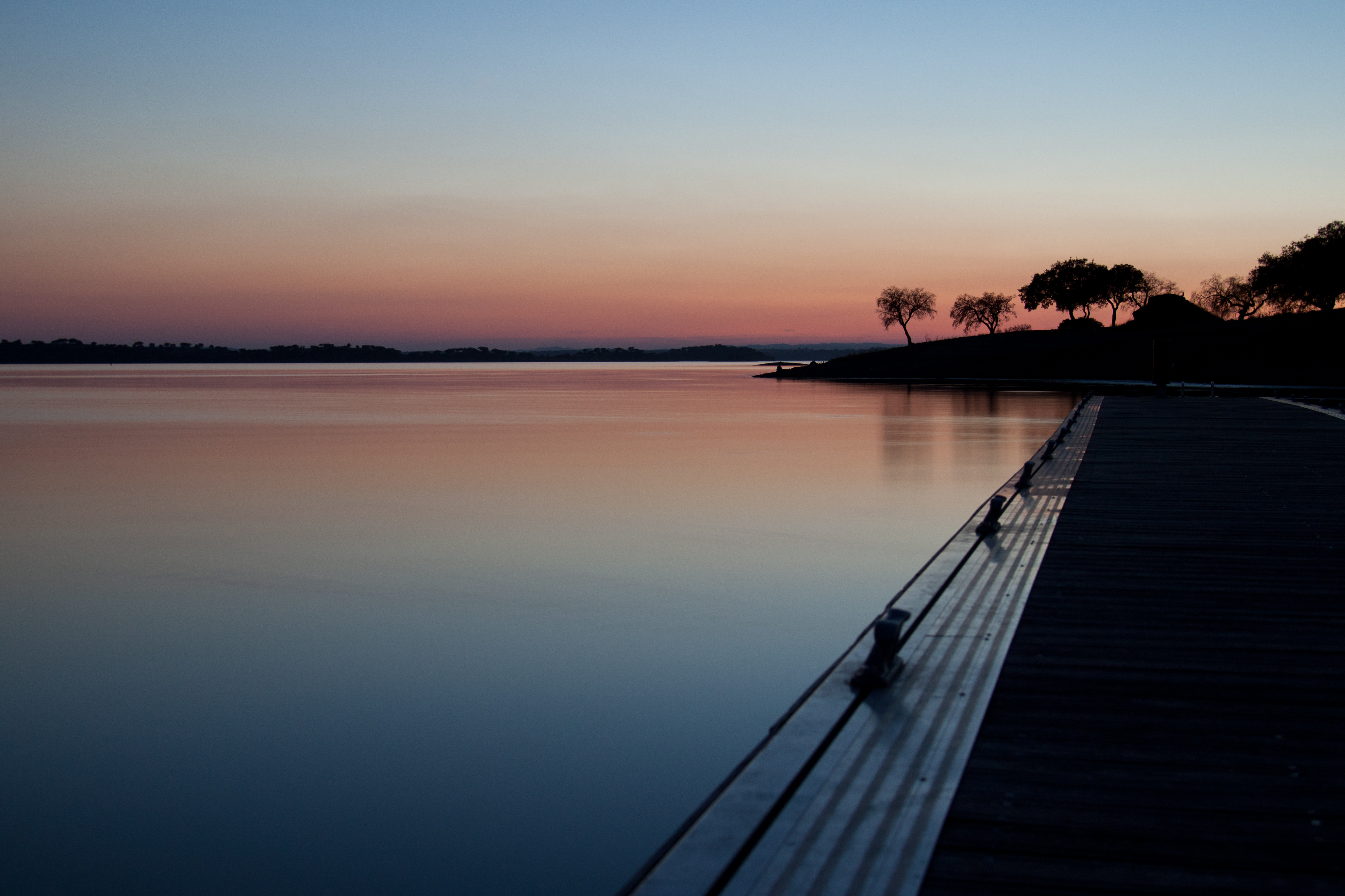
Expansión del bombeo hidráulico
El almacenamiento por bombeo representa más del 90 % de la capacidad de almacenamiento a gran escala instalada en el mundo. España cuenta con el mayor complejo de bombeo de Europa - Cortes-La Muela (1.762 MW, Valencia, Iberdrola) - y tiene en marcha una cartera de proyectos que transformará el mercado laboral del sector en la próxima década.
Proyectos en construcción y desarrollo
- Conso II (Iberdrola, Ourense) - 1.800 MW previstos, una de las mayores centrales de bombeo en desarrollo en Europa. Inversión superior a 1.500 millones de euros, 690 m de desnivel, construcción completamente subterránea. Se estiman unos 3.000 empleos durante los seis años de obra.
- Aguayo II (Repsol, Cantabria) - 1 GW de potencia con cuatro grupos turbina/bomba reversibles (1.014 MW de turbinación, 1.181 MW de bombeo), inversión cercana a 900 millones de euros. El proyecto recibió una subvención de 180 millones de euros de la UE - la mayor concedida a España en infraestructura energética. Puesta en marcha prevista a comienzos de la década de 2030.
- Salto de Chira (Redeia, Gran Canaria) - 200 MW, primera gran instalación de almacenamiento en Canarias. Inversión cercana a 589 millones de euros, con un préstamo del BEI de 300 millones. Ha generado 4.300 puestos de trabajo (1.423 directos, 1.987 indirectos). Turbinas suministradas por GE Vernova. Puesta en servicio en 2027.
- Valdecañas (Iberdrola, Extremadura) - 225 MW de bombeo + batería de 15 MW, primer híbrido hidráulico-batería de España. Puesta en marcha en marzo de 2025, con 165 empleos directos y 500 indirectos.
- Alcántara II (Iberdrola, Extremadura) - 440 MW con dos turbinas reversibles de 220 MW que conectan los embalses de Cedillo y Alcántara. Declaración de Impacto Ambiental favorable obtenida en septiembre de 2024.
- Navaleo (Alpiq, Castilla y León) - proyecto adquirido por la suiza Alpiq, con operación comercial prevista a principios de la década de 2030.
El PNIEC español fija un objetivo de 22,5 GW de almacenamiento energético para 2030, y en enero de 2026 el IDAE abrió una convocatoria de 90 millones de euros específica para bombeo. A escala europea, la IHA cifra en cerca de 35 GW la capacidad de bombeo en cartera de proyectos en Europa. El bombeo combina competencias de hidroeléctrica convencional con conocimiento de almacenamiento de energía y mercados eléctricos - un perfil híbrido con demanda creciente.
Tabla salarial
La hidroeléctrica se sitúa entre los sectores mejor pagados de las energías renovables, según un análisis del National Renewable Energy Laboratory. Esto refleja la complejidad técnica, la longevidad de la infraestructura y el alto valor de los activos gestionados.
| Puesto | España | Noruega | Suiza |
|---|---|---|---|
| Operador de central | 25.000 - 42.000 € | 500.000 - 700.000 NOK | 85.000 - 110.000 CHF |
| Ingeniero civil/hidráulico | 38.000 - 58.000 € | 600.000 - 850.000 NOK | 100.000 - 140.000 CHF |
| Ingeniero de turbinas | 36.000 - 55.000 € | 580.000 - 800.000 NOK | 95.000 - 130.000 CHF |
| Ingeniero eléctrico | 38.000 - 62.000 € | 600.000 - 900.000 NOK | 100.000 - 140.000 CHF |
| Hidrólogo | 38.000 - 60.000 € | 550.000 - 750.000 NOK | 90.000 - 120.000 CHF |
| Especialista medioambiental | 34.000 - 52.000 € | 500.000 - 700.000 NOK | 85.000 - 115.000 CHF |
| Director de proyecto | 42.000 - 70.000 € | 700.000 - 1.000.000 NOK | 120.000 - 160.000 CHF |
Salarios brutos anuales, datos de 2024-2025. Fuentes: SalaryExpert, TuSalario.es, Glassdoor, ERI. Noruega y Suiza reflejan un coste de vida significativamente superior. Conversiones aproximadas: 1 EUR ≈ 11,5 NOK; 1 CHF ≈ 1,06 EUR. Las grandes utilities españolas (Iberdrola, Endesa) suelen pagar un 10-15 % por encima de la media del mercado.
Para contextualizar: el salario medio bruto en España ronda los 29.540 €. Los puestos técnicos en hidroeléctrica superan ese umbral incluso en posiciones de entrada, y la experiencia en proyectos de bombeo o en entornos alpinos multiplica la prima salarial.
Profesiones a lo largo de la cadena de valor
Las carreras en hidroeléctrica se distinguen de otros sectores renovables por la longevidad de la infraestructura: una central opera entre 50 y 100 años. El grueso del empleo se concentra en operación, mantenimiento y modernización, no en construcción nueva. La IHA estima que la modernización de centrales existentes puede aumentar su producción un 5-10 % sin construir un solo embalse nuevo - una propuesta que genera demanda sostenida de ingenieros y técnicos.
Ingeniería de presas y obra civil
Los ingenieros de presas diseñan, evalúan y rehabilitan las estructuras de hormigón y tierra que embalsan los ríos. Es ingeniería civil con consecuencias directas sobre la seguridad de poblaciones aguas abajo - un fallo puede ser catastrófico. En España, el Reglamento Técnico sobre Seguridad de Presas y Embalses exige inspecciones periódicas formales por ingenieros cualificados.
Los ingenieros geotécnicos evalúan cimentaciones, estabilidad de taludes y mecánica de rocas. La ingeniería geotécnica en hidroeléctrica implica con frecuencia construcción subterránea - túneles, cavernas y pozos - que requiere competencias especializadas más allá de la geotecnia convencional. Proyectos como Conso II, con su central completamente excavada en roca, demandan este perfil de forma intensiva.
Los hidrólogos modelan disponibilidad hídrica, riesgo de inundación y gestión de embalses. El cambio climático está transformando este rol: el retroceso glaciar en los Pirineos, la alteración de los patrones de precipitación y los episodios de lluvias torrenciales más frecuentes modifican las condiciones operativas de muchas centrales españolas.
Turbinas y mecánica
Los ingenieros de turbinas trabajan en el corazón de cada central. Las turbinas hidráulicas (Francis, Kaplan, Pelton, bulbo) son máquinas altamente especializadas - las grandes unidades se diseñan a medida para cada instalación. Las revisiones generales, necesarias cada 15 a 25 años, requieren meses de trabajo y el desmontaje de componentes de varias toneladas en espacios confinados.
Los técnicos de operaciones de turbinas mantienen y reparan turbinas, reguladores, cojinetes y sistemas auxiliares. Es trabajo mecánico de precisión: mediciones, alineación, soldadura y mecanizado en condiciones exigentes.
Electricidad y red
Los ingenieros eléctricos diseñan y mantienen generadores, transformadores, aparamenta y sistemas de protección. Las centrales hidroeléctricas son activos críticos para la integración a la red porque regulan potencia en segundos - frecuencia, reserva de giro y capacidad de arranque en negro. Con la penetración creciente de renovables intermitentes, esta flexibilidad gana valor.
Los ingenieros de sistemas de control trabajan con SCADA, PLC y sistemas distribuidos de control. Muchas centrales antiguas están sustituyendo protecciones basadas en relés por sistemas digitales con monitorización remota y analítica predictiva - un campo que conecta la hidroeléctrica con las redes inteligentes.
Medio ambiente y regulación
Los especialistas en gestión medioambiental abordan la huella ecológica de la hidroeléctrica: pasos de peces, transporte de sedimentos, caudales ecológicos y calidad del agua aguas abajo. La Directiva Marco del Agua de la UE impone obligaciones significativas a los operadores, y su cumplimiento es un área de empleo en expansión.
Los ingenieros de pasos de peces diseñan y monitorizan escalas, canales de derivación y rejillas. Esta especialidad combina ingeniería hidráulica con biología fluvial. A medida que crece la presión regulatoria para restaurar la conectividad ecológica de los ríos europeos, la demanda de estos perfiles aumenta. Las funciones más amplias de gestión del agua cubren protección contra inundaciones, coordinación del riego y acuerdos de uso compartido del recurso hídrico.
Mercados europeos y latinoamericanos
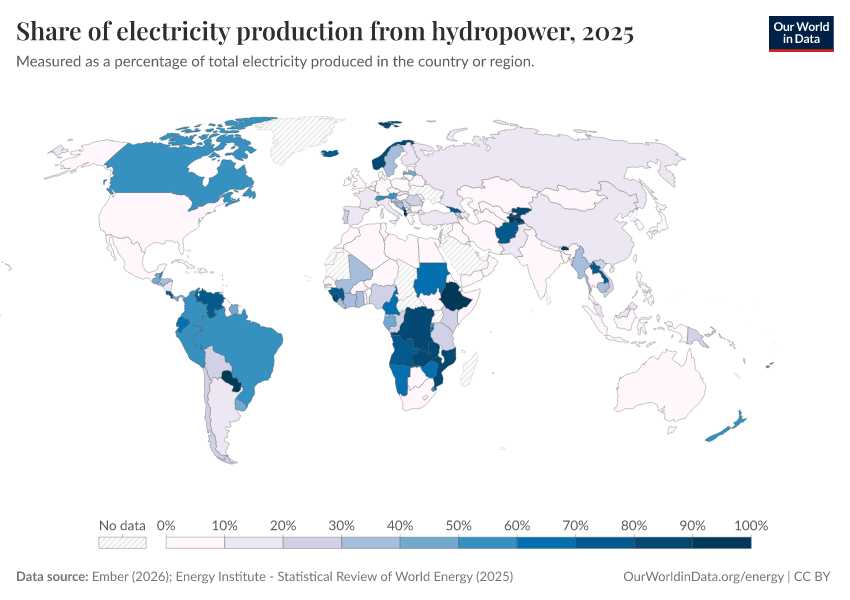
Noruega es la potencia hidroeléctrica europea, con 33,9 GW de capacidad instalada y más del 90 % de su electricidad generada con agua. Statkraft, el mayor productor de energía renovable de Europa, opera alrededor de 365 centrales. Para profesionales hispanohablantes con formación en ingeniería, Noruega ofrece salarios entre los más altos del sector y una alta demanda de relevo generacional.
Suiza genera el 60 % de su electricidad con hidroeléctrica a partir de 706 centrales y 16,6 GW de capacidad. Empresas como Axpo, Alpiq y BKW operan en un entorno alpino técnicamente exigente que retribuye en consecuencia.
Austria, con 14 GW y alrededor del 60 % de generación hidroeléctrica, alberga a VERBUND - el mayor operador hidroeléctrico cotizado de Europa, con más de 130 centrales y 8.400 MW de capacidad.
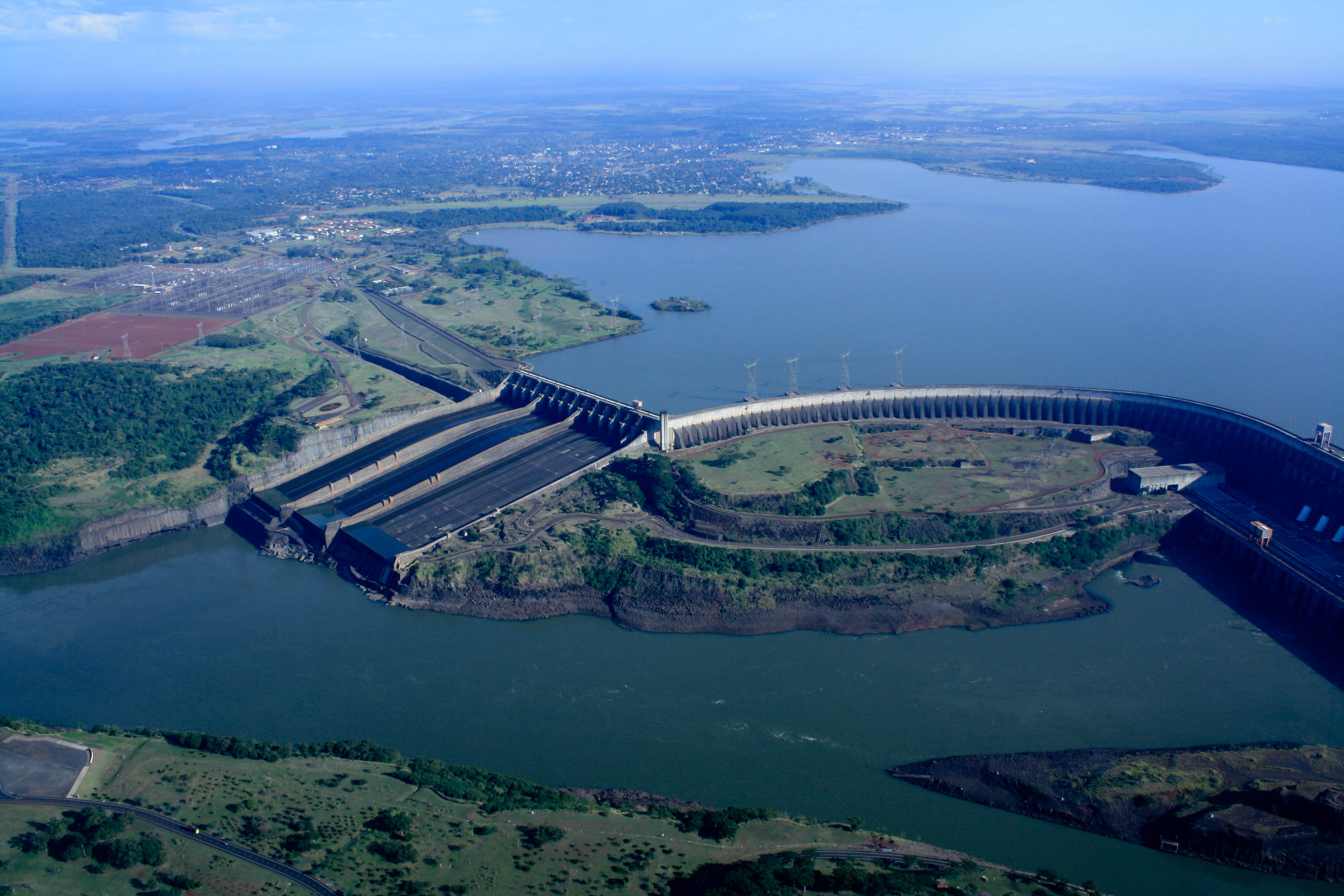
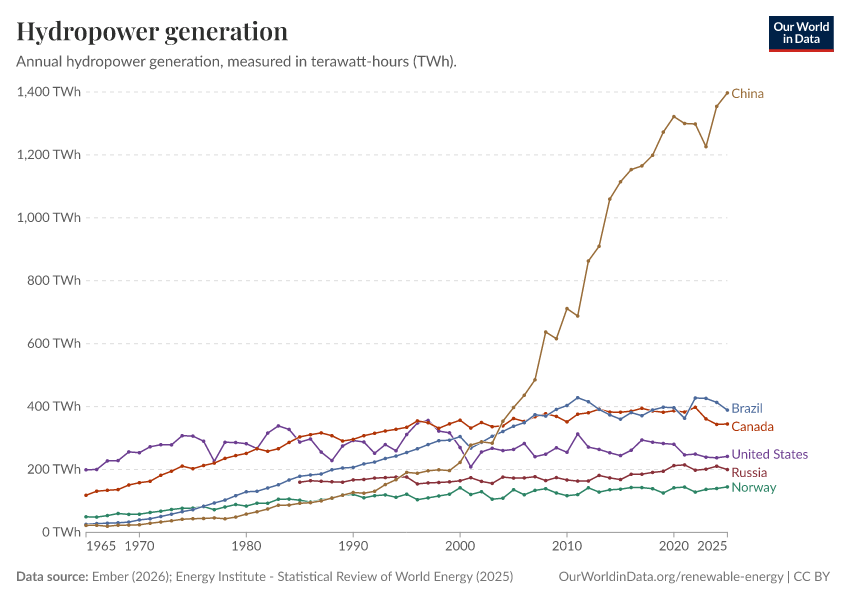
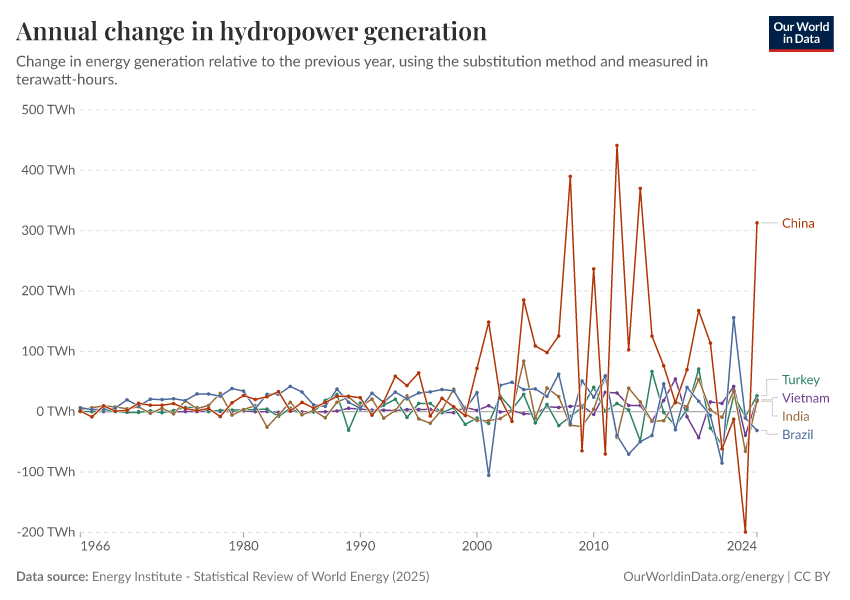
Latinoamérica representa una opción natural para profesionales formados en España. Brasil opera 109 GW de capacidad hidroeléctrica - incluyendo Itaipu (14 GW, compartida con Paraguay), la segunda mayor central del mundo. Itaipú Binacional emplea a alrededor de 3.000 personas en operación y mantenimiento, y Engie Brasil Energia gestiona una cartera hidroeléctrica de alrededor de 6,4 GW que demanda ingenieros mecánicos, electrónicos y de operaciones. Colombia avanza con Hidroituango, que opera con 1.200 MW y alcanzará 2.400 MW al completarse sus ocho turbinas tras años de dificultades técnicas: el operador, Empresas Públicas de Medellín (EPM), y la transportista ISA son referentes regionales con plantillas técnicas amplias. En Chile, Colbún y AES Andes operan parques hidroeléctricos en el centro-sur y desarrollan nuevos aprovechamientos en cuencas patagónicas. Empresas españolas como Iberdrola y Acciona tienen presencia directa en estos mercados, lo que genera movilidad profesional entre ambos continentes para perfiles de ingeniería civil, operación y mantenimiento.
Condiciones de trabajo
Ubicaciones remotas son habituales. Centrales en los Pirineos, la cordillera Cantábrica o los saltos del Duero se sitúan lejos de las grandes ciudades. Para operadores y técnicos de mantenimiento, esto puede significar vivir en localidades pequeñas o desplazamientos largos. Para algunos, la ubicación en entornos naturales es precisamente el atractivo del sector.
Trabajo subterráneo en proyectos de bombeo. Las salas de máquinas, tuberías forzadas y túneles de acceso en centrales de bombeo se excavan dentro de montañas. Proyectos como Conso II y Salto de Chira requieren personal habituado a espacios confinados, con formación específica en seguridad y conocimiento de mecánica de rocas.
Turnos para operadores. Las grandes centrales funcionan las 24 horas y requieren turnos rotativos para el personal de sala de control. Las centrales fluyentes de menor tamaño se operan cada vez más por control remoto, con técnicos desplazados desde bases regionales.
Estacionalidad distinta a la solar. La generación hidroeléctrica en sistemas nivales alcanza su máximo en primavera tardía y verano, durante el deshielo. Las paradas de mantenimiento se programan para períodos de estiaje. En España, los años de sequía reducen la generación y alteran la carga de trabajo - una variable cada vez menos predecible con el cambio climático.
Flexibilidad en puestos de oficina. Ingenieros de diseño, hidrólogos, especialistas medioambientales y directores de proyecto trabajan cada vez más en formatos híbridos. Empresas como Iberdrola (Bilbao, Madrid), IDOM (Bilbao) o Sener (Getxo) ofrecen estas condiciones.
Brecha de diversidad persistente. Las mujeres representan solo el 25 % de la plantilla hidroeléctrica a escala mundial - por debajo del 32 % de media en renovables. En España, la situación es incluso más desigual: las mujeres ocupan solo el 18,2 % del empleo renovable, y las proyecciones indican que la paridad de género no se alcanzaría antes de 2043 incluso con políticas activas.
Principales empleadores
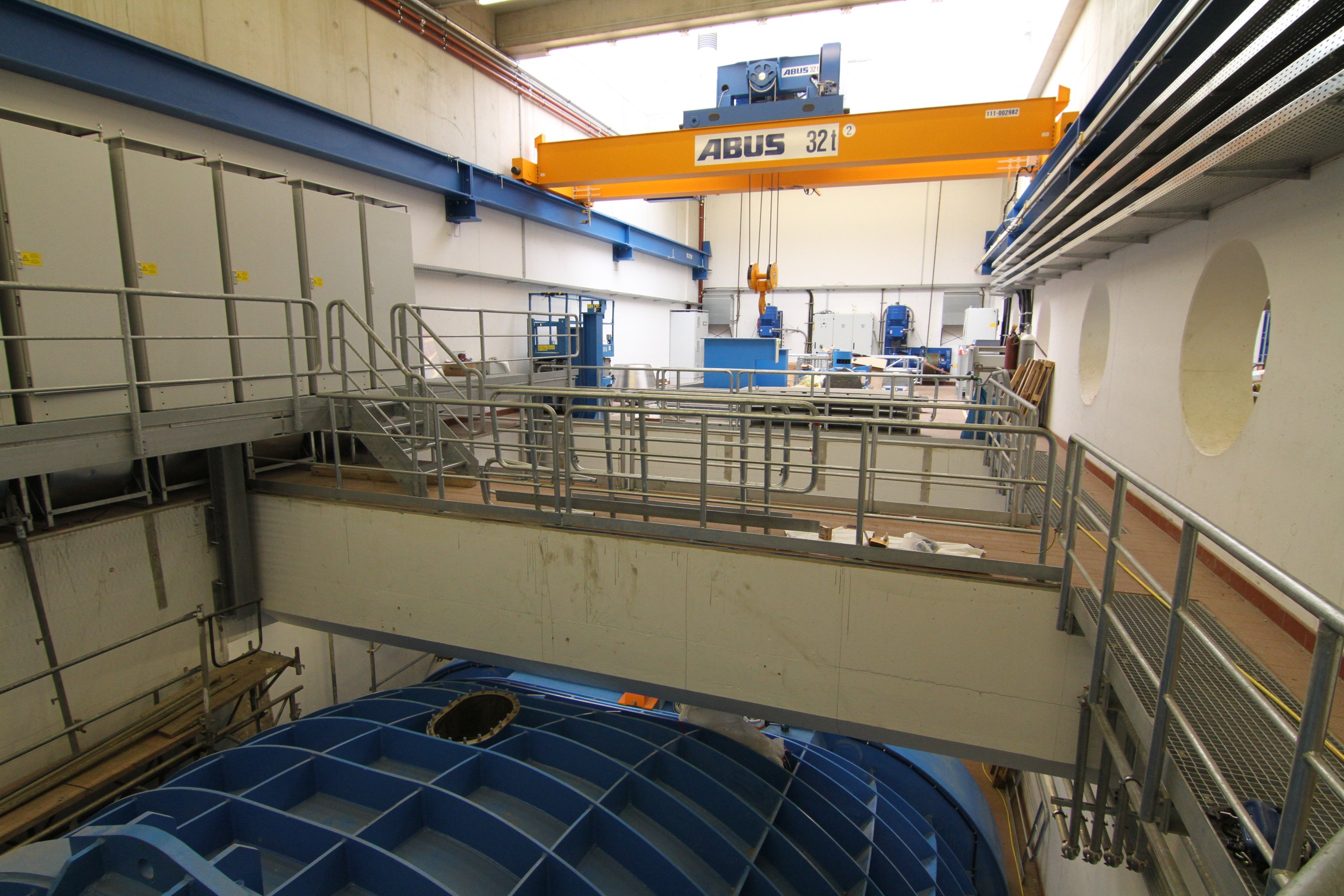
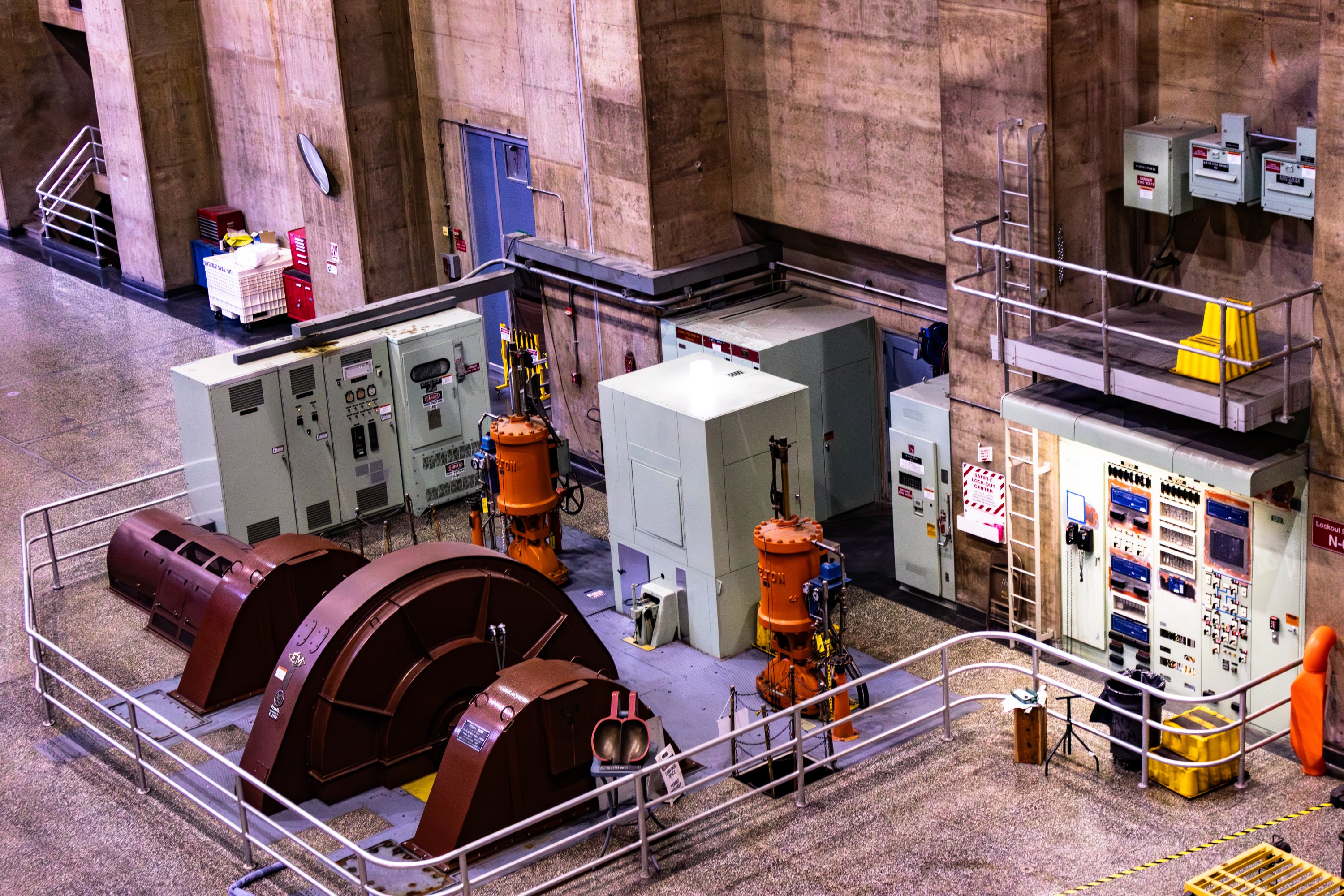
Sala de turbinas y generadores en la planta hidroeléctrica Weserkraftwerk, Bremen. Foto: Florean Fortescue, CC0 / Wikimedia Commons
Utilities y operadores
- Iberdrola - España, 120+ centrales hidroeléctricas, 11.000+ MW en la península; opera Cortes-La Muela (1.762 MW) y desarrolla Conso II (1.800 MW), Alcántara II (440 MW) y Valdecañas (225 MW)
- Endesa / Enel Green Power - Italia/España, tras adquirir 34 centrales (626 MW) de Acciona por 1.000 millones de euros en 2025, su cartera hidroeléctrica supera los 5,3 GW en la Península Ibérica
- Naturgy - España, 2.100 MW, 47 centrales y 23 grandes presas supervisadas desde el Centro de Control Integrado de Ourense; desarrolla 3 proyectos híbridos hidroeléctrica-solar
- Repsol - España, impulsa Aguayo II (1 GW) en Cantabria
- EDP España - Portugal/España, 10 centrales en Asturias; nueva instalación de 3,2 MW en la presa de Rioseco prevista para 2026
- Statkraft - Noruega, mayor productor de renovables de Europa, alrededor de 365 centrales hidroeléctricas
- VERBUND - Austria, 130+ centrales, 8.400 MW de capacidad
Fabricantes de equipos
- Andritz Hydro - Austria (Graz), más de 6.000 empleados en la división hidráulica, 33.200+ turbinas instaladas en 185 años de historia
- Voith Hydro - Alemania (Heidenheim), 3.576 empleados en la división hidro; turbinas, generadores y automatización
- GE Vernova Hydro - Francia/global, suministrador de turbinas para Salto de Chira
Ingenierías y consultoras
- IDOM - Bilbao, 3.000+ empleados en 17 países, ingeniería de Aguayo II
- Sener - Getxo, ingeniería de Salto de Chira incluyendo túneles, cavernas y equipos electromecánicos
- TYPSA - Madrid, 60 años de trayectoria, central de Itoiz (28,6 MW, Navarra)
- Cobra IS (Grupo ACS) - Madrid, parte del consorcio constructor de Salto de Chira
- AFRY - Finlandia/Suecia, una de las mayores consultoras de hidroeléctrica a nivel mundial
Formación y acceso al sector
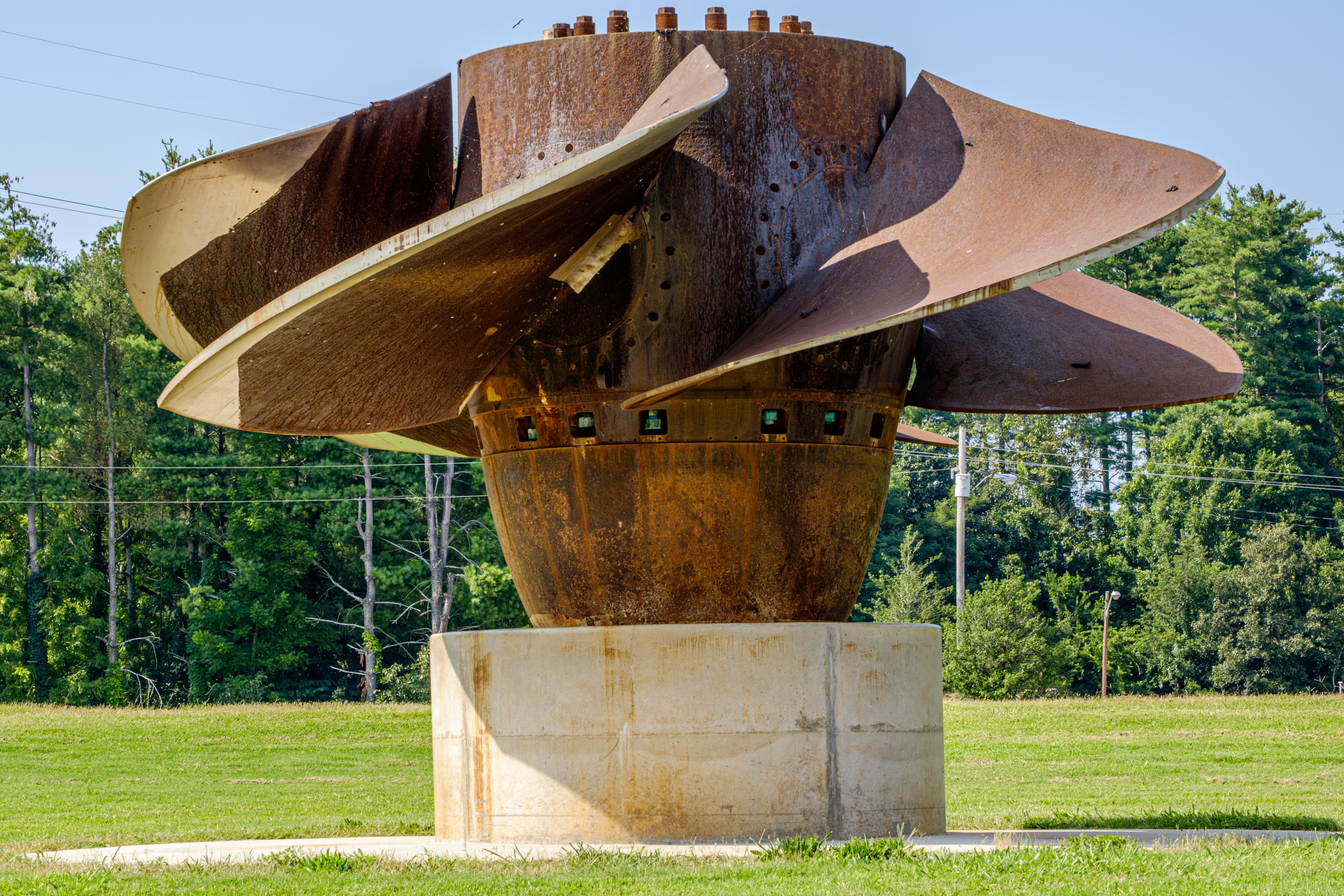
Hélice de turbina hidroeléctrica desmantelada que muestra la geometría de las palas, exhibida en Lenoir City, Tennessee.
Titulación universitaria
El camino más directo hacia la ingeniería hidroeléctrica pasa por un grado en Ingeniería Civil, Mecánica o Eléctrica, seguido de especialización. Varios másteres españoles preparan específicamente para el sector:
- UPM - Máster en Ingeniería Civil: Hidráulica, Energía y Medio Ambiente - planificación y gestión de recursos hídricos, modelización hidrológica e hidráulica, ingeniería energética y ambiental
- UPC - Master's Degree in Water Engineering - 90 ECTS, impartido en inglés en Barcelona; forma ingenieros hidráulicos para centrales, presas y redes de distribución. Opción de doble titulación Erasmus Mundus en Hidroinformática (EuroAquae+) con 5 universidades europeas
- UPV - Máster en Ingeniería Hidráulica y Medio Ambiente - Valencia, asociado al doctorado en Ingeniería del Agua y Medioambiental con Mención de Calidad del Ministerio
- UGR - Máster Interuniversitario en Hidráulica Ambiental - programa conjunto de Granada, Córdoba y Málaga, con convenios de prácticas en TYPSA, Sener y Ayesa
A nivel internacional, el programa de Hidroeléctrica de la NTNU (Trondheim, Noruega) y el Máster de la TU Graz son dos de las formaciones más reconocidas del sector.
Formación Profesional y técnica
Para puestos operativos, las vías más relevantes son los ciclos de Técnico en Instalaciones Eléctricas y Automáticas (Grado Medio) y Técnico Superior en Energías Renovables (Grado Superior). VERBUND ofrece en Baviera un programa propio de formación de operadores, y la Voith HydroSchool imparte cursos especializados en mantenimiento de turbinas y automatización de centrales - una de las pocas plataformas de formación del sector independientes de fabricante.
Transición desde otros sectores
Construcción e ingeniería civil. Ingenieros de túneles, presas y obra pesada aportan competencias directamente aplicables. La adaptación se centra en regulación específica de hidroeléctrica e hidrología básica.
Petróleo y gas. Ingenieros de proceso, especialistas en maquinaria rotativa y directores de proyecto tienen habilidades transferibles, aunque el ritmo y la cultura difieren - la hidroeléctrica trabaja con ciclos más largos y márgenes más ajustados.
Servicios de agua. Profesionales del tratamiento de agua y abastecimiento aportan conocimiento de sistemas hidráulicos, bombas, válvulas y regulación medioambiental directamente aplicable al sector.
IT y ciencia de datos. La digitalización de la hidroeléctrica - gemelos digitales, mantenimiento predictivo, SCADA avanzado - crea puestos para desarrolladores y científicos de datos. La experiencia previa en el sector no es requisito; el conocimiento del dominio se adquiere en el puesto.
La confluencia de una plantilla envejecida y varios gigavatios de bombeo en construcción abre una ventana de incorporación que no se repetirá en décadas. Quien se forme ahora en ingeniería hidráulica, geotecnia o automatización de centrales entra en un mercado donde la demanda supera a la oferta - y donde los activos que gestionará seguirán en operación dentro de cincuenta años.

.jpg)


