
Renewable energy jobs · Fuel Cell Technology
-
Expired
 Pittston, United StatesOn-site Full time 32 days agoUSD 24–25 hourly
 -
Expired
 Torrington, Connecticut, United StatesOn-site Full time 46 days agoUSD 93k–103k yearly
 -
Expired
New Jersey, United States + 4 locationsHybrid Full time 36 days agoUSD 27–38 per hour
-
Expired
Locust Grove, United StatesOn-site Full time 27 days ago
- Stack engineers designing membrane-electrode assemblies, bipolar plates, and gasketing
- Process and reliability engineers running cell-build lines and failure analysis
- Commissioning specialists taking 12.5 MW packaged blocks from factory to live site
- Hydrogen safety and H2 service specialists for refuelling stations and on-site H2 handling
- Controls and automation engineers writing BMS and balance-of-plant software
-
Expired
Seattle, Washington, United States + 3 locationsHybrid Full time 39 days agoUSD 27–40 hourly
-
Expired
 European UnionFlexible Full time 25 days ago
 -
Expired
 Fremont, California, United StatesOn-site Full time 41 days agoUSD 21–31 hourly
 -
Expired
Fremont, California, United StatesOn-site Full time 13 days agoUSD 32–46 hourly
-
Expired
Bengaluru, IndiaOn-site Full time 41 days ago
-
Expired
Torrington, Connecticut, United StatesHybrid Full time 55 days agoUSD 72k–80k yearly
-
Expired
Danbury, Connecticut, United StatesHybrid Full time 55 days agoUSD 115k–128k yearly
-
Expired
San Jose, California, United StatesOn-site Full time 14 days agoUSD 209k–301k yearly
-
Expired
Bridgeport, United StatesOn-site Full time 60 days agoUSD 30–38 per hour
-
Expired
Fremont, California, United StatesOn-site Full time 48 days agoUSD 98k–142k yearly
-
Expired
San Jose, California, United StatesOn-site Full time 39 days agoUSD 142k–204k yearly
Fuel Cell Technology Jobs in Renewable Energy
Fuel cell engineers design, manufacture, commission, and service the electrochemical stacks that convert hydrogen, natural gas, or biogas into electricity without combustion, with applications ranging from data-centre baseload power to heavy trucks and forklifts. These roles sit at the intersection of hydrogen energy and energy storage, pulling on chemical, mechanical, and power-electronics expertise that few other clean-energy sectors require together.
Demand surged in 2024-2025 as fuel cells found their breakout commercial niche: powering AI data centres. Bloom Energy signed a 1 GW supply agreement with American Electric Power and a separate 2.8 GW commitment with Oracle, the largest commercial fuel-cell procurements ever recorded. FuelCell Energy is expanding its Torrington, Connecticut plant from roughly 100 MW to 350 MW of annual production capacity to meet the resulting backlog.
Where the hiring happens
The active employer set is small and concentrated. Bloom Energy (solid-oxide fuel cells) and Plug Power (PEM, plus electrolyzers) dominate North American postings out of San Jose, Newark (Delaware), Fremont, and Albany. HDF Energy builds multi-megawatt PEM systems coupled to solar from Blanquefort, France. South Korea, Germany (Brunnthal), and the UK round out the cluster.
PEM cells accounted for 86% of the roughly 2.5 GW of fuel cells shipped globally in 2022, and they dominate transport postings. Stationary work skews toward SOFCs (Bloom) and molten-carbonate cells (FuelCell Energy), where higher operating temperatures allow combined heat-and-power configurations.
Roles you will see
Field service technicians dominate listings by volume. Bloom and Plug Power regularly post 50+ open Field Service Technician roles, including German "m/w/d" variants tied to European deployments. Behind those, expect:
US hydrogen engineers typically start around $81,000, with mid-career roles in the $115,000-$121,000 band.
What is changing
Capital investment in low-emissions hydrogen rose to $4.3 billion in 2024 and was projected near $8 billion in 2025, an 80% year-on-year jump. By September 2025, $110 billion across 500+ projects had passed final investment decision. Doosan Fuel Cell opened a 500 MW SOFC factory in Jeollabuk-do in July 2025, signalling that Asian manufacturing capacity is catching up with the US and European installed base.
The premium skill stack in 2026 combines stack-level electrochemistry, large-format power electronics, and data-centre-grade reliability engineering. Candidates who can move between PEM and SOFC platforms, or between mobility and stationary applications, remain rare enough to negotiate hard.
For adjacent fields see Green Hydrogen, Electrolysis & Electrolyzers, and Long Duration Energy Storage.
Last updated on Jun 3, 2026 | Report an issue
Get job alerts
Get alerts for Fuel Cell Technology jobs
Join Talent Pool
Let clean energy employers find you
Featured jobs





Renewable energy blog posts
-

Renewable Energy Forecast for 2030
By 2030, renewables are poised to supply nearly half of global electricity, with solar and wind leading this explosive expansion. In this data-driven piece, we explore job creation forecasts, supply chain bottlenecks, and policy hurdles. -

Fastest Growing Renewable Energy Sector: Data and Trends
In 2023, solar photovoltaics surged by 32.59%, officially making it the fastest-growing renewable energy source worldwide. Yet offshore wind, which soared by 57.87% in 2021, remains a formidable competitor in total electricity output due to its high capacity factor. This concise overview highlights how policy incentives, cost reductions, and manufacturing advances are propelling solar to the forefront of the global energy transition. -
Career Opportunities in Solar Energy
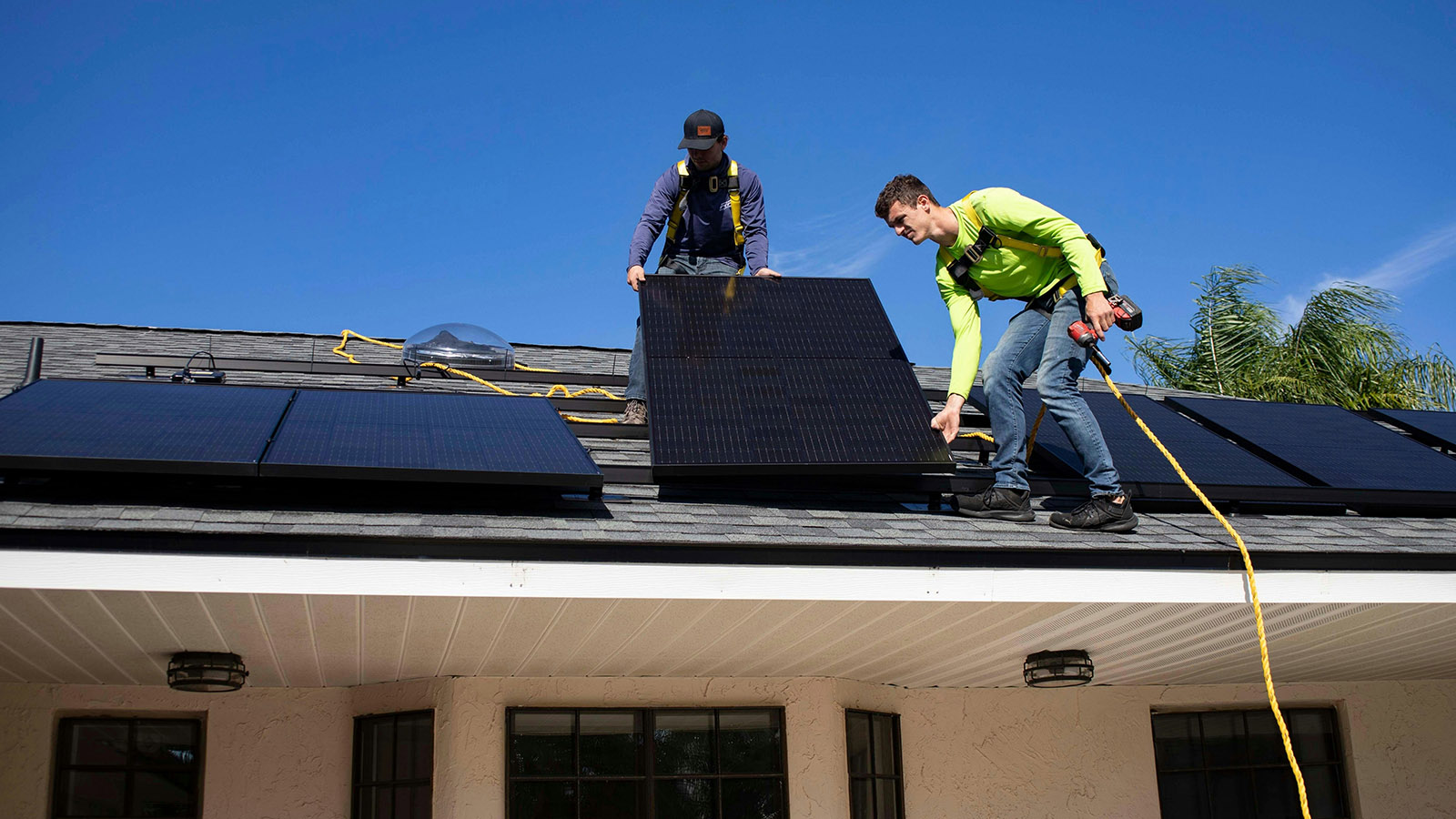
The solar energy sector is experiencing unprecedented growth, with over 7.1 million jobs in solar PV alone as of 2023. For professionals considering a career shift into renewable energy, solar offers pathways across R&D, manufacturing, project development, and operations.
