
Europe now hosts over 1.2 million public charge points operated by 3,500 companies employing 80,000 people, and the workforce is projected to reach 222,000 by 2035. EV charging infrastructure is the physical network of AC and DC chargers that supplies electricity to road vehicles, and closing the gap between those two employment figures is what the sector now hires for.
AFIR turns targets into enforcement
The EU's Alternative Fuels Infrastructure Regulation set 31 December 2025 as the deadline this market had to build towards, and it has now passed. Each member state had to deliver its final national policy framework by year-end 2025, and in January 2026 the Commission began assessing whether targets are on track. Along core TEN-T corridors, fast-charging stations of at least 150 kW must sit every 60 km for cars; for heavy-duty vehicles, 350 kW points sit in pools every 120 km along 15% of the network, tightening to 60 km on core corridors by 2030.
That regulation is now the single largest demand signal in European transportation electrification. It also reshapes who gets hired. ACEA estimates Europe needs 8.8 million charge points by 2030 - roughly 22,000 new installations every week - against today's roughly 1.2 million. The Netherlands, France, and Germany already host 61% of all EU public chargers, and AFIR enforcement is pulling deployment outward from those clusters into Iberia, Poland, the Baltics, and South-East Europe.
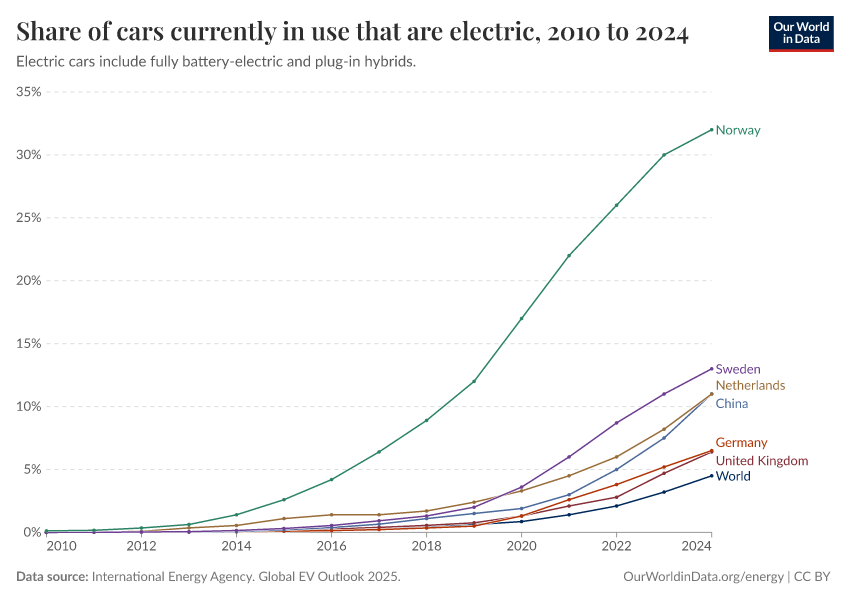
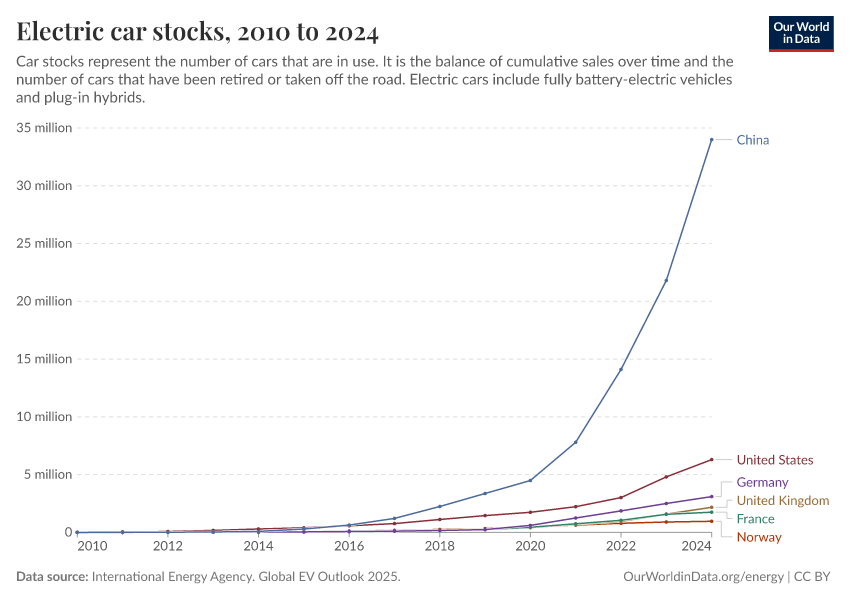
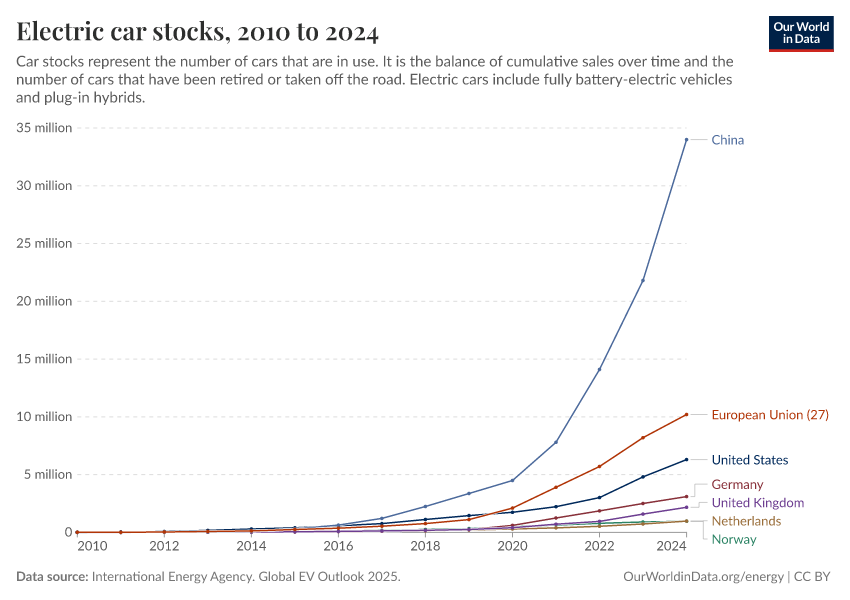
Some 75 million electric cars are already on roads worldwide, and one in four new cars sold globally in 2025 was electric. Battery-electric vehicles reached 19% of new European car registrations in 2025, with Norway at 96%, the Netherlands at 40%, and Germany recovering to 19%. The fleet is fixed; the charging build is the variable.
Charger types and power classes
EV charging is not one trade. The power class determines the workplace, the qualifications, and where the work clusters geographically.
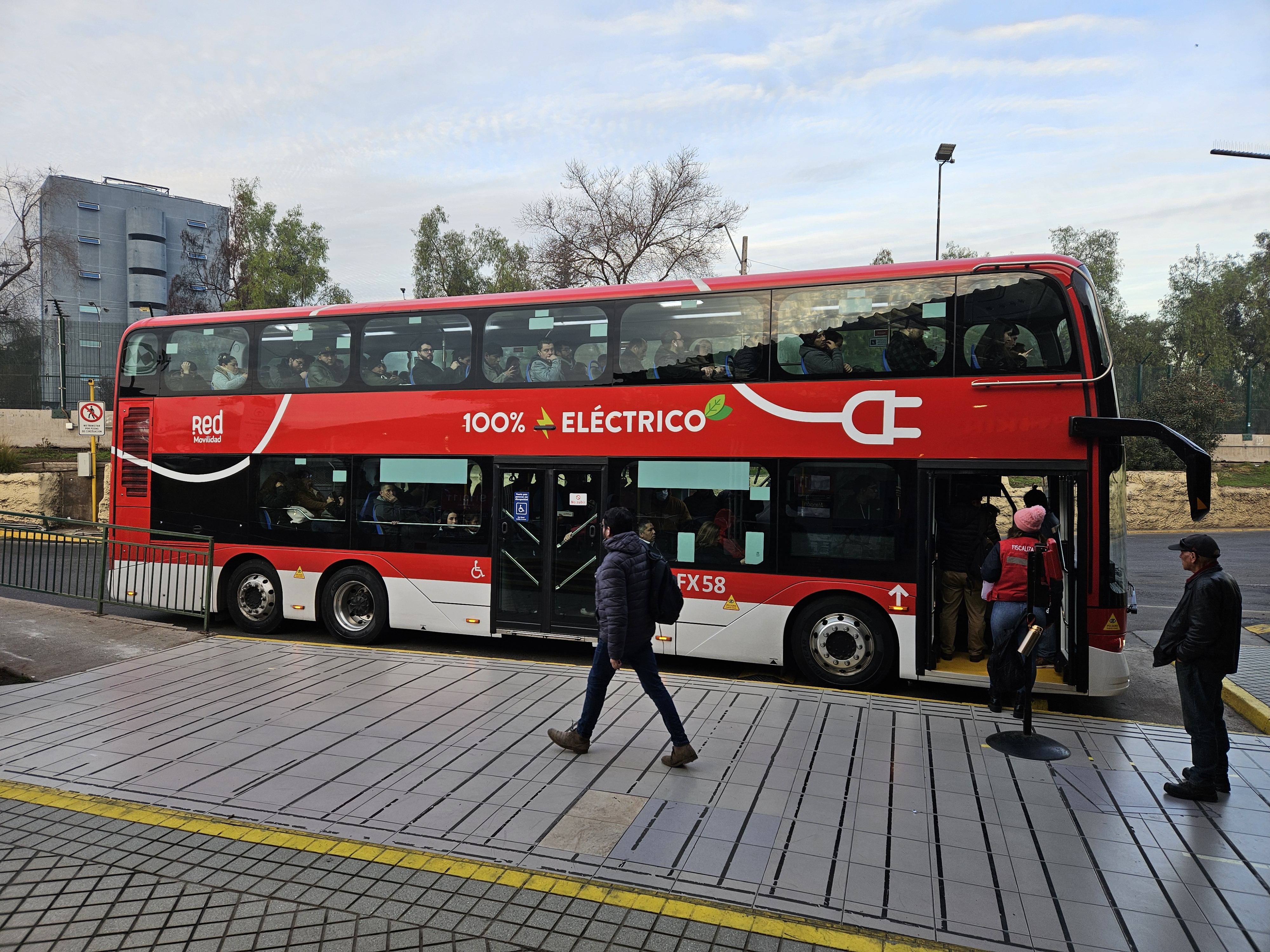
AC charging (up to 22 kW) remains the workhorse. Wall boxes in homes, workplace car parks, and on-street lamppost units fall into this category. Installation is straightforward electrical work: a qualified electrician with an EV-specific credential can fit a domestic charger in a few hours. The volume is enormous - the Netherlands alone runs over 180,000 public charge points, the majority AC. For electricians moving into clean energy, this is the most direct entry point.
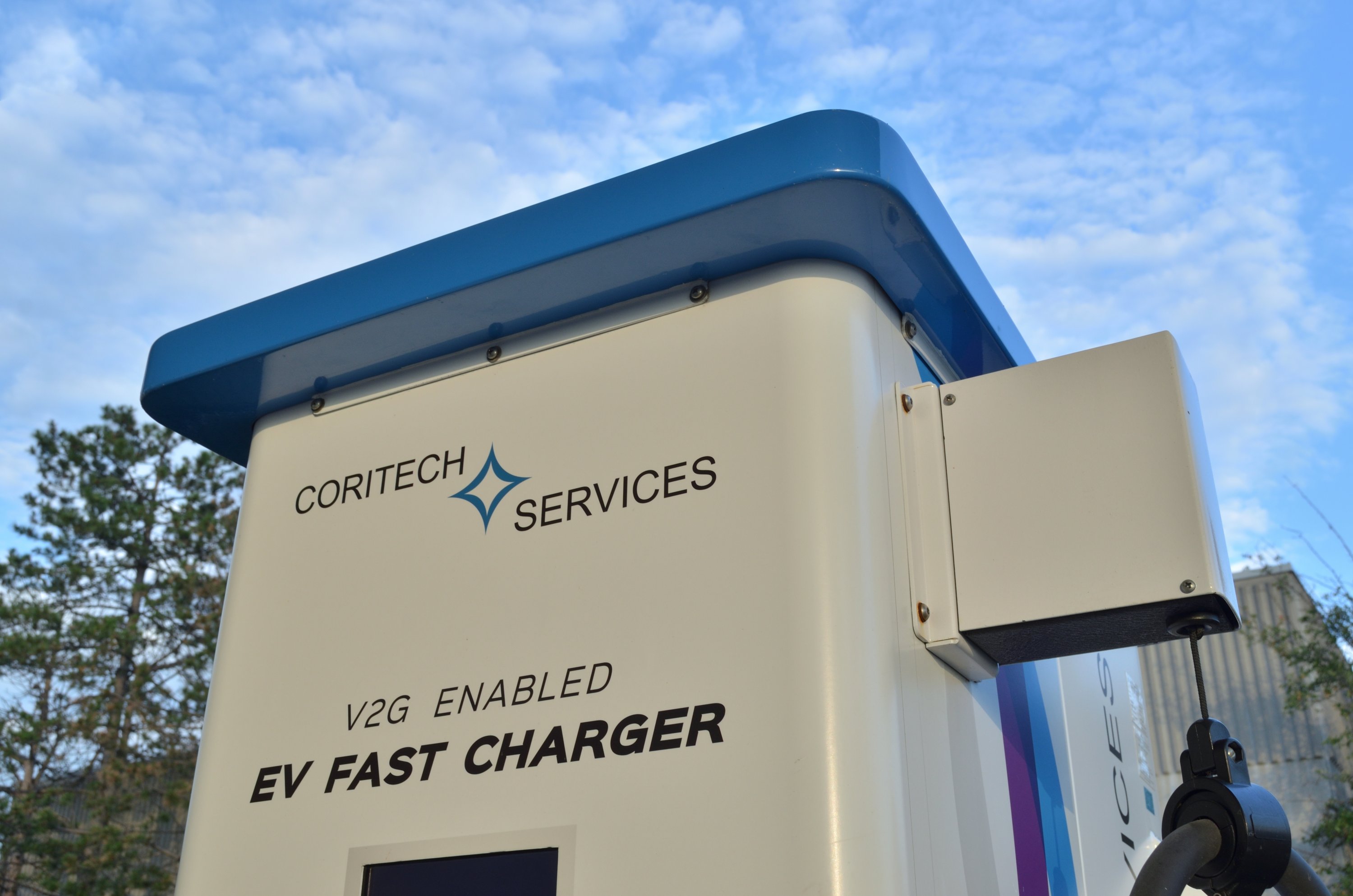
DC fast charging (50 to 150 kW) is where the complexity steps up. Three-phase supply, often a transformer upgrade, civil works, and medium-voltage grid integration come into play. Each unit is also a networked computer: maintaining DC chargers requires competence in both power electronics and software diagnostics, since the device runs firmware and connects via cellular IoT to a central management platform. A loss of data connectivity disables payment authentication regardless of whether electrons are flowing.
Ultra-fast charging (150 to 400 kW) and the emerging megawatt class is closer to substation engineering than to wiring a wall box. High-voltage grid connections, battery buffer storage, and complex electrical design dominate the work. Tesla's V4 Superchargers, EnBW's flagship hub at Kamener Kreuz, and the consortium-built Deutschlandnetz parks illustrate the scale: multi-million-euro builds that employ civil engineers, high-voltage specialists, and project managers for months at a time.
For heavy-duty vehicles, the Megawatt Charging System (MCS) is now operational. Germany's HoLa project commissioned the first public MCS site on the A2 autobahn in September 2025, delivering up to 1.2 MW with a 30-to-45-minute charge that returns several hundred kilometres of range. E.ON, Voltix, and GreenWay are building 330 MCS points across 55 locations in nine European countries by autumn 2028, the first big truck-charging network built without a manufacturer behind it. The MCS site is its own engineering category: it sits at the intersection of charging, energy storage, and smart grid work.
Roles along the value chain
Planning and site development
Before a charger exists, somebody has to find the site, secure the rights, and get the power. Site acquisition managers weigh footfall, grid headroom, motorway access, and planning constraints against commercial criteria, then negotiate leases. Grid connection engineers manage applications to distribution network operators, specify capacity requirements, and coordinate last-mile reinforcement, which is now the binding constraint on most build programmes: European grid connection timelines average two years, against three months in China. Planning and permitting specialists navigate local authority approvals and environmental assessments, with regulatory variation between Bavarian Landkreise and Dutch gemeenten alone material enough to keep specialist consultants busy.
Hiring shifted through 2025 from growth-mode generalists to operators who can deliver permitted sites on schedule. Country managers and project execution leads now sit at the top of most operator wish lists.
Installation and commissioning
This is the largest single employment category. An ICCT study projects more than 78,000 of the 160,000 US EV charging jobs in 2032 will sit in electrical installation, maintenance, and repair - and the European mix is comparable. Work ranges from a half-day domestic wall box fit to multi-charger hub construction spanning weeks of civils, trenching, transformer installation, and commissioning.
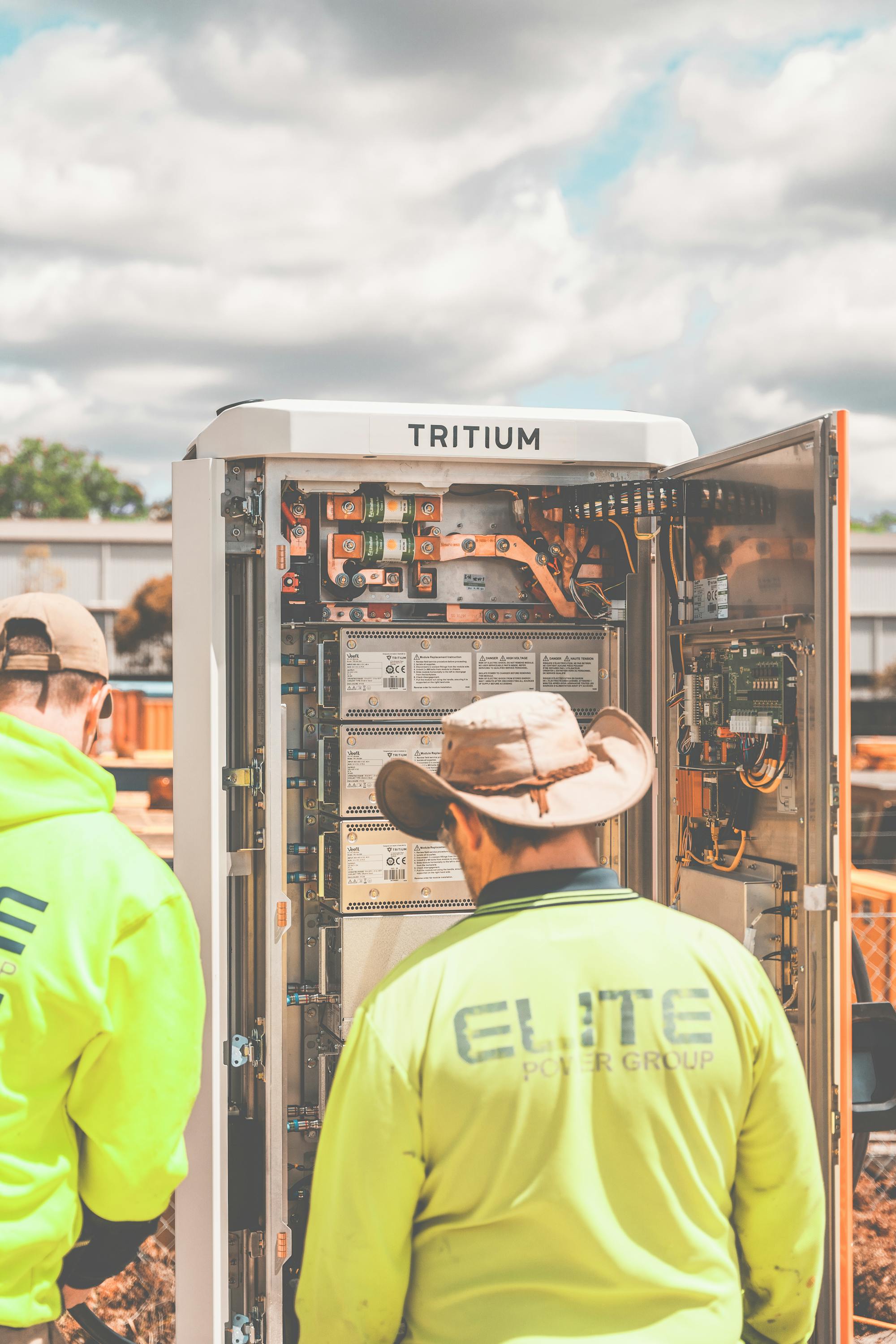
EV charging installation technicians carry out site surveys, mount hardware, run cabling, configure chargers, and commission - testing ground fault protection, verifying communication with the backend platform, and handing over to the operator. Commissioning engineers bring larger DC and ultra-fast sites online, testing protection relays, verifying power curves, and confirming compliance with the grid connection agreement. The OZEV authorised installer route in the UK and the BNetzA/§14a EnWG framework in Germany shape who can sign off on which type of work.
Field service and maintenance
Once chargers are live, they have to stay live. Field service engineers travel between sites in a defined territory, troubleshooting faults that span software glitches, failed contactors, vandalised cables, screen replacements, and the network engineering problems that arise when a charger loses its cellular connection. The kit list includes multimeters, power analysers, EV charging test sets, and cellular signal equipment. Over 50% of energy companies report critical hiring bottlenecks for applied technical roles, and EV charging field service is consistently named among the hardest.
Network operations
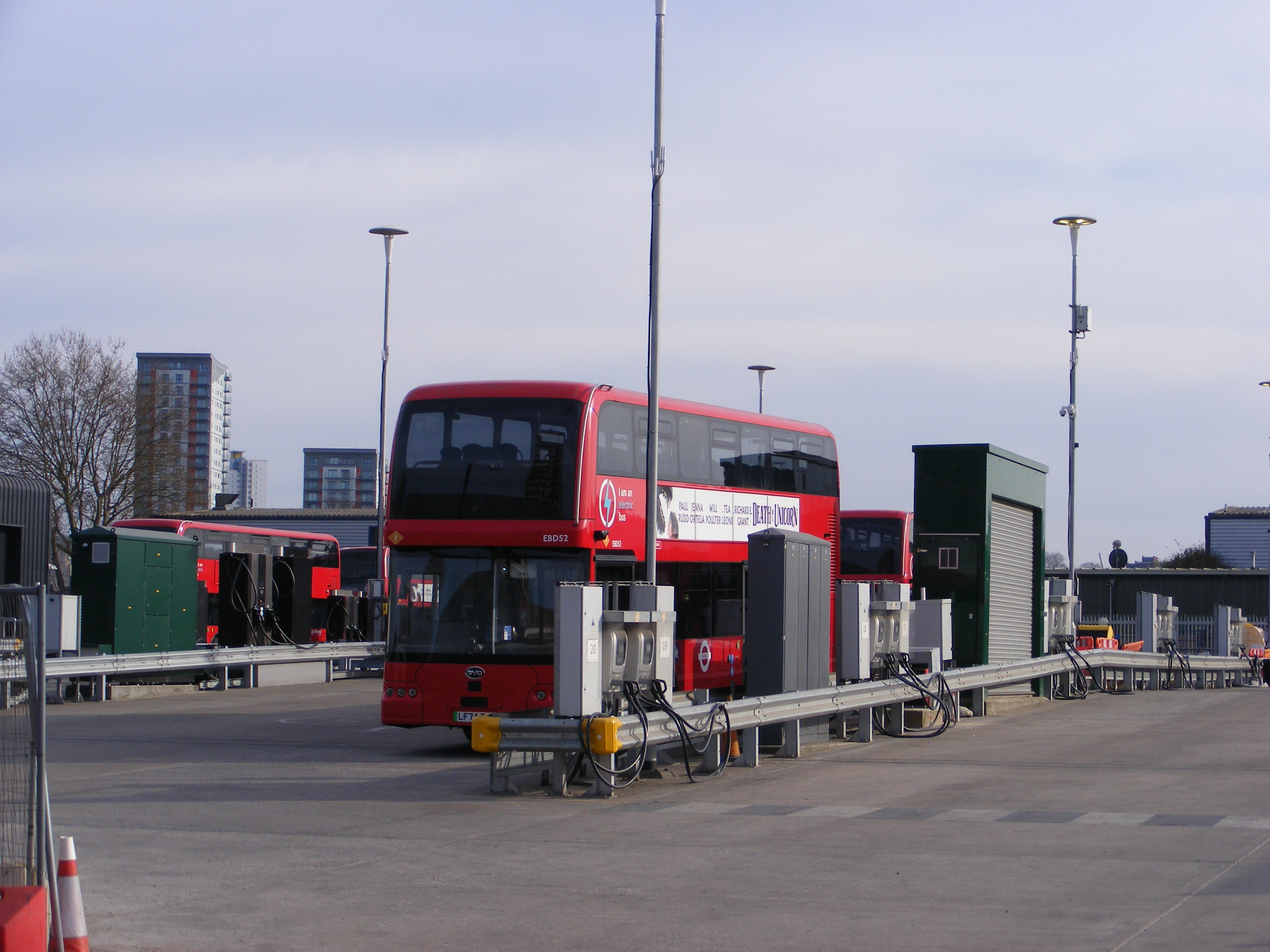
Charging networks are monitored from centralised operations rooms. NOC engineers track uptime, diagnose faults remotely, push firmware updates, and escalate hardware issues to field teams. Dispatch and energy management specialists shape charging schedules to minimise grid impact and electricity cost - critical for depot charging, where dozens of buses or vans charge overnight and demand has to be flattened to avoid peak tariffs. The work sits at the join between power systems and software operations.
Software and platform engineering
EV charging is a software sector as much as an energy one. Every public charger communicates with a Central System Management Software platform via OCPP, the Open Charge Point Protocol. OCPP 2.1, released in 2025, added native support for bidirectional power transfer and distributed energy resource control, which is what makes the next wave of vehicle-to-grid products commercially possible.
Backend software engineers build the microservices for billing, analytics, firmware-over-the-air updates, and inter-network roaming. Data engineers work on load optimisation, predictive maintenance, and the dashboards operators use to monitor portfolios in real time. Cybersecurity specialists handle TLS encryption, PCI-DSS payment compliance, and the attack surface unique to connected infrastructure sitting on the public network.
Hardware engineering
Power electronics engineers design the core of DC chargers: AC-to-DC conversion stages, power factor correction, and thermal management. This is a persistently hard-to-fill specialisation, and as chargers move from 350 kW towards 1 MW with bidirectional capability the engineering complexity rises sharply. Embedded firmware engineers programme the onboard controllers - everything from user interface logic to safety interlocks. Hardware R&D roles concentrate at the manufacturers (Alpitronic, Kempower, ABB E-mobility, Delta Electronics) and routinely command the top of the salary band.
Fleet electrification
Commercial fleet management is now a distinct sub-sector. Fleet electrification managers plan the transition of bus, truck, and van fleets from diesel to electric, sizing depot infrastructure and modelling energy demand. Charge management engineers build the smart charging logic that distributes available power across dozens of vehicles based on departure schedules, state of charge, and tariffs. Zenobe, Geotab, and The Mobility House specialise in this work, and the MCS rollout is opening an adjacent set of corridor-charging roles. The vehicle electrification demand from logistics fleets is now the fastest-growing thread in transportation hiring.
Salary overview
| Role | Germany (EUR) | UK (GBP) | Netherlands (EUR) |
|---|---|---|---|
| EV charging installation technician | 39,000 - 68,000 | 30,000 - 45,000 | 50,000 - 82,000 |
| Electrical design engineer | 53,000 - 84,000 | 31,000 - 55,000 | 52,000 - 81,000 |
| Power electronics engineer | 55,000 - 84,000 | 36,000 - 68,000 | 60,000 - 90,000 |
| Software engineer (charging platforms) | 74,000 - 112,000 | 70,000 - 110,000 | 73,000 - 110,000 |
| Network operations manager | 60,000 - 100,000 | 41,000 - 74,000 | 65,000 - 95,000 |
| Project manager (EV charging) | 58,000 - 98,000 | 55,000 - 88,000 | 60,000 - 95,000 |
Annual gross salaries from 2024-2025 data. Software engineer figures reflect mid-level to senior bands (Ravio P3/M3). Installation technician ranges span entry to experienced. EV-specific roles command a 10-25% premium over general electrical engineering equivalents thanks to scarce specialist competence. UK day rates for self-employed installers sit at GBP 300-500. Approximate conversion: 1 GBP ~ 1.17 EUR. Sources: SalaryExpert, Glassdoor, Ravio, PayScale.
UK renewables professionals averaged GBP 82,808 in 2025, a 13.2% increase year on year, and renewable energy salaries now sit 40% above the global market rate. Specialist DC and MCS engineering commands additional premium where supply is thinnest.
Working conditions
The work splits into two worlds: the field and the screen.
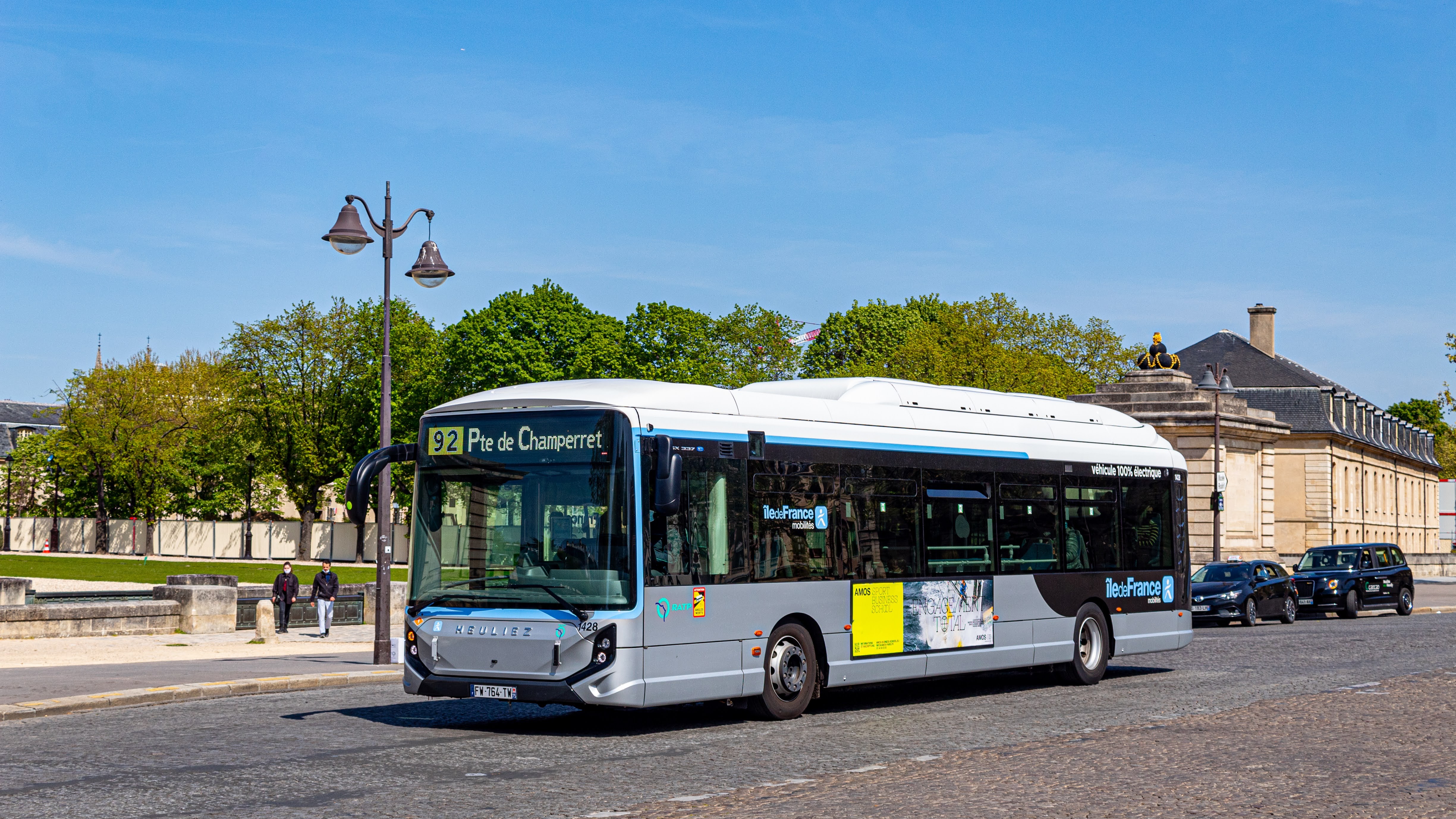
Field roles are physical, mobile, and weather-exposed. Installation technicians and service engineers drive between sites daily, working outdoors in all conditions, lifting components up to 18 kg, and routing cable in confined spaces. DC and ultra-fast installations are construction sites - hard hats, safety boots, high-visibility clothing. High-voltage DC systems running at 400 to 1,000 V demand strict lockout-tagout procedures, arc flash protection, and job hazard analysis before each task. Charger installations at petrol-station forecourts require CompEx Ex07-Ex08 certification for work in explosive atmosphere zones. Field service involves after-hours emergency calls; a broken charger on a motorway service area on Friday night does not wait for Monday morning.
Office and remote roles are knowledge-intensive. Software engineers, data analysts, and most NOC staff work standard hours, though network operations runs 24/7 on shift rotations. Platform development at companies like Monta, ev.energy, and Octopus Electroverse is often fully remote with distributed teams. Commercial roles - site acquisition, business development, partnerships - involve steady travel for site visits and landlord meetings.
Diversity remains uneven. Women represent approximately 20% of the energy workforce and a smaller fraction of field installation roles. Roughly a fifth of automotive technicians are currently proficient in EV maintenance, and fewer than 10% hold the high-voltage qualifications that DC and MCS work increasingly require. ChargeUp Europe's Women in eMobility and ChargerHelp!'s all-women installer cohorts are attempting to widen the funnel, though progress measured in headcount remains modest.
Getting in: qualifications and transitions
The most common entry route runs through the electrical trades. In the UK, a qualified electrician adds EV-specific certification - City & Guilds 2921 or equivalent - in a two-to-three-day course covering charging modes, connectors, load assessment, and earthing arrangements. Prerequisites are a Level 3 electrotechnical qualification, the 18th Edition Wiring Regulations (BS 7671), and Competent Person Scheme membership through NICEIC, NAPIT, or ELECSA. Government grant work requires OZEV authorised installer status on top. In Germany, the equivalent pathway runs through the Elektroniker für Energie- und Gebäudetechnik Ausbildung with a §14a EnWG smart-meter and EEBus module bolted on. In the US, EVITP certification (USD 275, around 20 hours) is legally required for NEVI-funded installations.
Telecoms and network engineering offer the cleanest transition of all. OCPP - the protocol governing charger-to-cloud communication - is structurally close to telecoms network management, and fault management, 4G/5G connectivity, and systems integration experience transfers almost directly into NOC and smart charging roles.
Backend developers, cloud engineers, and DevOps professionals find immediate work in CSMS development, OCPP implementation, API integration, and analytics. Python, Kubernetes, microservices, and real-time systems experience are the high-value combination.
Oil and gas sends commissioning engineers, HSE professionals, and project managers, who bring the high-voltage, large-scale delivery, and process-safety competence the sector struggles to grow from a standing start.
The automotive trades look closer than they are. Mechanics understand diagnostics and 12 V electrical systems, but the bridge to 400 V-plus charging infrastructure requires targeted retraining, and the programmes that should run that bridge remain underdeveloped.
Key employers
Charge point operators
- Ionity - Germany, around 6,400 charging points across 24 European countries; joint venture of BMW, Ford, Hyundai, Mercedes-Benz, and VW Group with BlackRock; secured EUR 600 million in May 2025 for a network refresh; founding member of Spark Alliance alongside Fastned, Electra, and Atlante
- Fastned - Netherlands, over 400 stations across nine countries with the distinctive solar-canopy stations; Euronext-listed; targeting 1,000 stations by 2030
- Allego - Netherlands, 34,000-plus charge points across 16 European countries; over 1,000 HPC stations; acquired by Meridiam after delisting from NYSE
- bp pulse - UK, 8,000-plus charge points and a EUR 1 billion joint venture with Iberdrola for 11,700 HPC points across Spain and Portugal by 2030
- EnBW mobility+ - Germany, 8,000-plus fast-charging points; Germany's largest HPC network; flagship Kamener Kreuz HPC park
- EWE Go / Hochtief - Germany, awarded two Deutschlandnetz regions (north-west and west); around 850 charge points planned, with 40 sites already operational or under construction by late 2025
- Tesla Supercharger - United States, around 1,500 stations in Europe with V4 hardware rollout opening selected stalls to non-Tesla CCS2 vehicles
- TotalEnergies - France, around 75,000 charge points across Europe; strong urban on-street AC presence following Dutch and Belgian acquisitions
- Driveco - France, 10,000-plus charge points domestically; opened subsidiaries in Belgium, Spain, and Italy in 2025 targeting 60,000 charge points across Europe by 2030
- Mer - Norway, 35,000-plus charging points across Europe; owned by Statkraft
Hardware manufacturers
- ABB E-mobility - Switzerland, a million-plus chargers delivered across 85-plus countries; in DC fast charging since 2010; MCS provider for the HoLa A2 project
- Alpitronic - Italy, maker of the Hypercharger, Europe's most widely deployed HPC charger; around 1,000 employees; family-owned
- Kempower - Finland, modular "satellite" architecture; around 800 employees; one of the early movers on the MCS specification for heavy-duty corridor charging; Nasdaq Helsinki-listed
- Wallbox - Spain, pioneer in bidirectional V2X home charging with the Quasar product line; NYSE-listed
- Delta Electronics - Taiwan, ultra-fast chargers up to 500 kW (UFC 500 platform); also supplies inverters and storage
- Schneider Electric - France, EVlink AC and DC chargers integrated into building and workplace electrical systems
- Chargepoly - France, heavy-duty vehicle charging specialist serving logistics and bus depots; partner in the MAN Truck & Bus France e-mobility programme
Software and platforms
- Monta - Denmark, managing 165,000-plus commercial charging points; 200-plus employees across 47 nationalities; expanded into the US in 2024
- Hubject - Germany, operator of the world's largest eRoaming network connecting more than 1 million charging points across 70-plus countries
- Octopus Electroverse - UK, passed 1 million connected public chargers globally in 2025; runs the "Plunge Pricing" discount mechanic when renewable electricity is abundant
- ev.energy - UK, smart charging algorithm optimising for cost and carbon; fully remote team across 12 countries
- The Mobility House - Germany, pioneer in V2G deployment; ChargePilot platform manages 2,700-plus fleet charging facilities; V2G partnership with Mercedes-Benz launched in 2025
Fleet and heavy-duty specialists
- Zenobe - UK, largest owner-operator of electric buses with around 25% UK market share; supports 3,400-plus electric vehicles across 122 depots
- Geotab - Canada, connected vehicle telematics with EV-specific fleet assessment and charging optimisation across more than 300 EV models
- ChargePoint - United States, North America's largest charging network by managed ports; acquired has-to-be (Austria) and ViriCiti (Amsterdam) for European software depth
- E.ON Drive - Germany, 50,000-plus installed charge points across 14 European countries; joined Voltix and GreenWay to deploy 330 MCS points by 2028
Utilities with dedicated charging divisions
- Vattenfall InCharge - Sweden, manages around 75,000 charge points (1,000 MW capacity) across Sweden, Germany, and the Netherlands; 100% fossil-free electricity supply; Plug & Charge ready since 2025
- Iberdrola - Spain, 10,000-plus public charge points; EUR 1 billion joint venture with bp pulse for Iberian build-out
- Enel X Way - Italy, 118,000-plus charge points across Europe after consolidating its focus on the European market in 2024
- Octopus Energy - UK, first commercial V2G bundle with BYD launched in June 2025, packaging a leased BYD Dolphin, a Zaptec Pro bidirectional charger, and the Power Pack tariff at under GBP 300 per month
China deploys more in two years than Europe plans by 2030
Europe's roughly 1.2 million public charge points are a rounding error against the Chinese network. China crossed 21 million total charging units by the end of February 2026, a 47.8% year-on-year jump that climbed from 10 million to 20 million in just eighteen months. Public chargers alone reached 4.83 million, private home chargers 16.18 million. The State Council's three-year action plan, published in October 2025, targets 28 million charging facilities and 300 GW of public capacity by end-2027 - enough to serve more than 80 million EVs. Against that benchmark, ACEA's 8.8 million European target for 2030 is a fraction of what China expects to deploy in the next two years.
Operator concentration is also distinctive. TELD led the public-charging segment with 807,000 ports as of July 2025, with Star Charge close behind on 703,000, and the top 15 operators between them ran 84% of the public stock. State Grid EV's own network manages over 700,000 charging points across 176 cities, heavily weighted toward 120 kW DC corridors along the Beijing-Shanghai and Chengdu ring expressways, with Plug & Charge and V2G commercially deployed rather than piloted. NIO Power runs a parallel model built on battery swap: 3,676 swap stations in operation by end-2025, 110 million lifetime swaps, and a strategic partnership with CATL that opens swap-compatible chemistry to the wider market. Tesla operates its Shanghai Supercharger network as a separate sub-network. The structural advantage is grid-connection speed: typical Chinese public-site commissioning runs around three months, against 18-24 months for an equivalent UK or German urban site - a gap European operators study in detail but cannot replicate without DSO reform.
The career implication for English-speaking engineers is becoming substantive rather than academic. Chinese operators are now hiring at scale outside China: Star Charge's European business, headquartered near Frankfurt and restructured as a joint venture with Schneider Electric covering EV charging, PV inverters and storage, runs R&D and sales for European deployment; Sungrow, Huawei Digital Power, and BYD all recruit field application engineers, power-electronics designers, and key-account managers across Germany, the Netherlands, and Spain. Chinese hardware now ships into a growing share of European charging projects, so European integrators are also building cell-supplier and inverter-supplier engagement into the project engineer brief. The NEV supply chain - vehicles, chargers, swap stations, and adjacent services - is projected to support more than 10 million direct and indirect jobs in China by 2030, with charging infrastructure engineering, smart charging software, and high-voltage DC design listed among the persistent shortage roles.
United States: NEVI restarts as states take the lead
The US is the second-largest single-country charging market and the one moving most erratically. Public ports passed 250,000 by mid-2026, an order of magnitude behind China and roughly a fifth of Europe's installed base, but the NEVI corridor programme - $5 billion across 2022-2026 - is now restarting after a fraught year. The Federal Highway Administration paused NEVI in February 2025, faced multi-state lawsuits, and issued revised guidance in August 2025. By the end of 2025 the programme had built at least 384 ports at 96 stations, with $885 million apportioned for FY 2026 and most states reopening their own funding rounds. ChargePoint runs the largest US managed network by ports. EVgo deployed more than 1,200 new DC stalls in 2025 to reach 5,100 fast-charging stalls across 47 states, backed by a $1.25 billion DOE Loan Programs Office guarantee for 7,500 additional stalls; Electrify America sits in a similar size band, and BTC Power, Wallbox US, and Blink occupy the smaller-operator tier. State programmes in California (CALeVIP and HVIP), Texas (TxVEMP), and New York (EVolve NY) now drive more annual deployment than NEVI.
Tesla's Supercharger network is the connective tissue. The company added roughly 2,200 stalls in Q1 2025 and 2,900 in Q2 2025 to cross 70,000 globally by mid-year. More than 20,000 stalls in North America are now accessible to non-Tesla EVs, reached through Magic Dock retrofits, adapters or native NACS ports on vehicles from Ford, GM, Rivian, Hyundai, BMW, Mercedes-Benz, and the VW Group. NACS/SAE J3400 is now the default connector for new US builds, with CCS1 being phased out; by mid-2026 roughly 70% of North American Supercharger stalls served non-Tesla EVs. For installers and field engineers that means migrating tooling, test equipment, and certification courses to NACS during 2026-2028. EVITP remains mandatory for NEVI-funded work. DC fast-charge installers in major metros - Los Angeles, the Bay Area, Houston, Dallas, the New York metro - earn roughly 30% above European equivalents, the premium that has pulled European storage and charging specialists across the Atlantic since the IRA.
Adjacent sectors
EV charging sits where energy, transport, and software meet. Grid integration specialists move between charging and smart-grid work, and power electronics engineers share fundamentals with battery storage and hydrogen fuel cell design. Fleet electrification overlaps directly with depot-scale battery storage, and V2G - now commercial through the Octopus-BYD bundle in the UK and Mercedes-Benz/The Mobility House in Germany - is dissolving the boundary between charging infrastructure and distributed power systems. The MCS rollout will pull heavy logistics into the same hiring pool over the next five years.
Against a 1.2 million-strong public charger base in Europe today, ACEA's 8.8 million target by 2030 implies roughly 22,000 new installations every week. That arithmetic, not the headline EV sales number, is what the EV charging job market is now organised around.