

Bioenergy is the largest single source of renewable energy in the EU, supplying roughly 60% of all renewable energy consumed across the bloc, and it employs around 3.9 million people worldwide - second only to solar PV. It converts organic feedstocks - crops, residues, manure, forestry by-products, and household waste - into heat, power, gas, and liquid fuels through digestion, combustion, fermentation, or hydrotreating.
The headcount distribution looks nothing like the public conversation. Roughly 2.8 million of those jobs sit in liquid biofuels in Brazil, Indonesia, and the United States, concentrated in seasonal agricultural supply chains. Around 765,000 work in solid biomass and 316,000 in biogas. The EU heat-and-power side alone supports 304,000 jobs and turns over €32 billion, rising to roughly 564,000 jobs once transport biofuels are included. For job seekers in northern and western Europe, three of those segments matter day to day: biomethane upgrading, waste-to-energy operation, and the emerging cluster of sustainable aviation fuel and bioenergy carbon capture sites now passing final investment decision - the point where the money is formally committed.
Bioenergy sub-sectors
Biomethane is scaling, wood pellets are contracting, and the SAF and BECCS build-out is hiring for plant types that barely existed five years ago.
The first is biomethane. The European Biogas Association recorded 22 bcm of combined biogas and biomethane production in 2024, with biomethane alone at 5.2 bcm and installed capacity at 8.2 bcm/year by mid-2026. Europe now counts 1,975 biomethane-producing plants, 327 of them commissioned in the past year, and 86% are already grid-connected. Private investment commitments through 2030 stand at €28.4 billion.
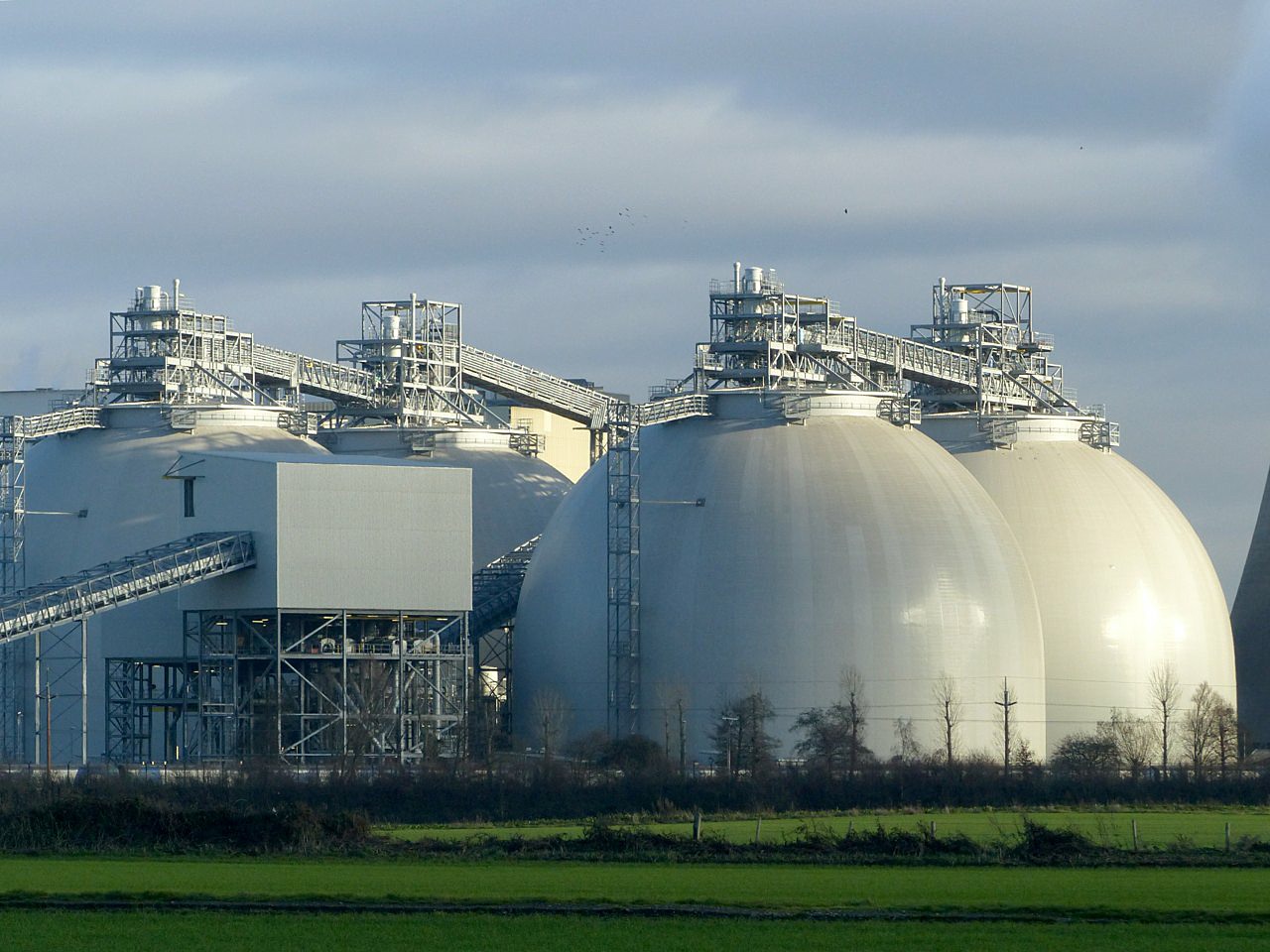
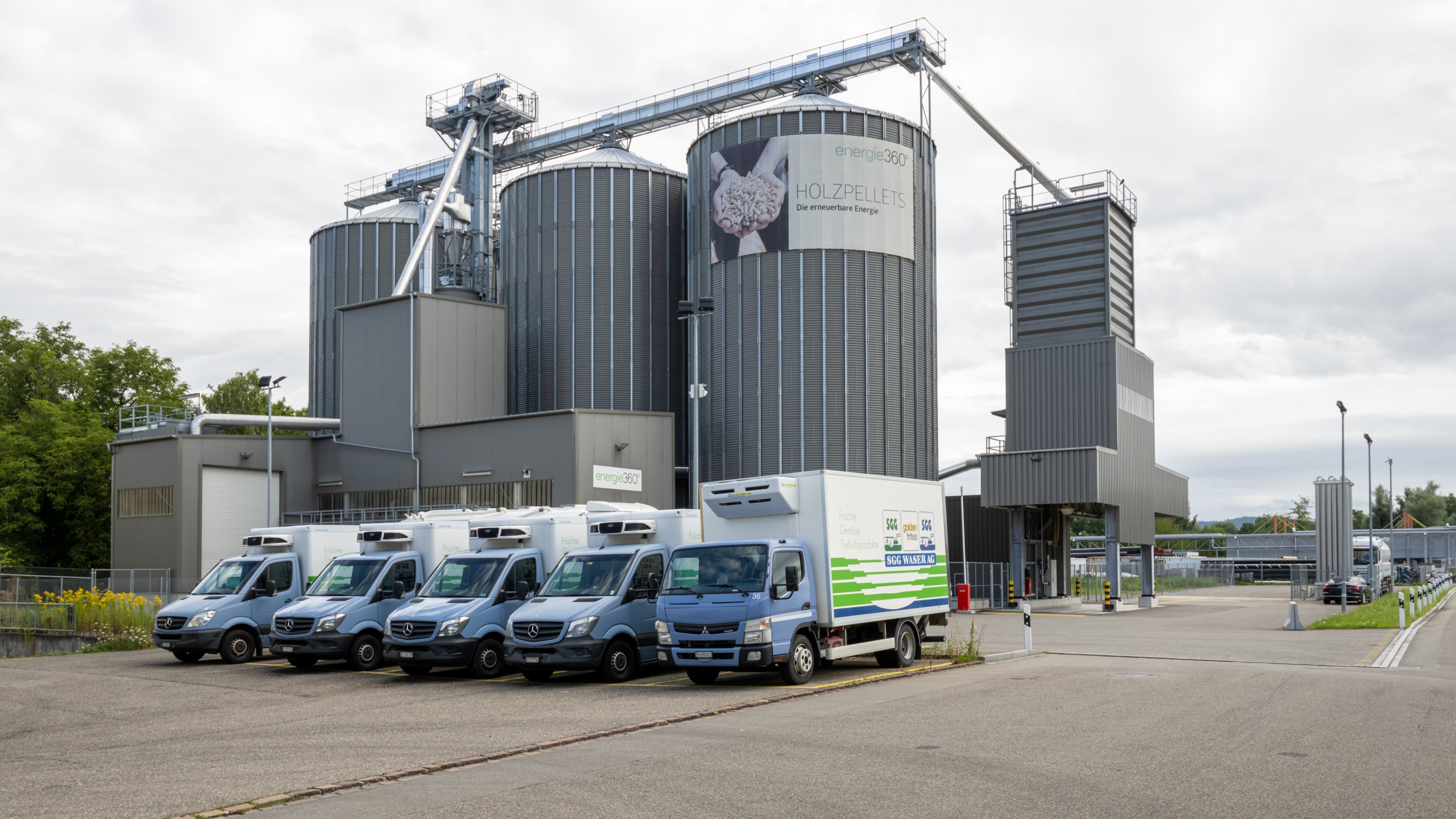
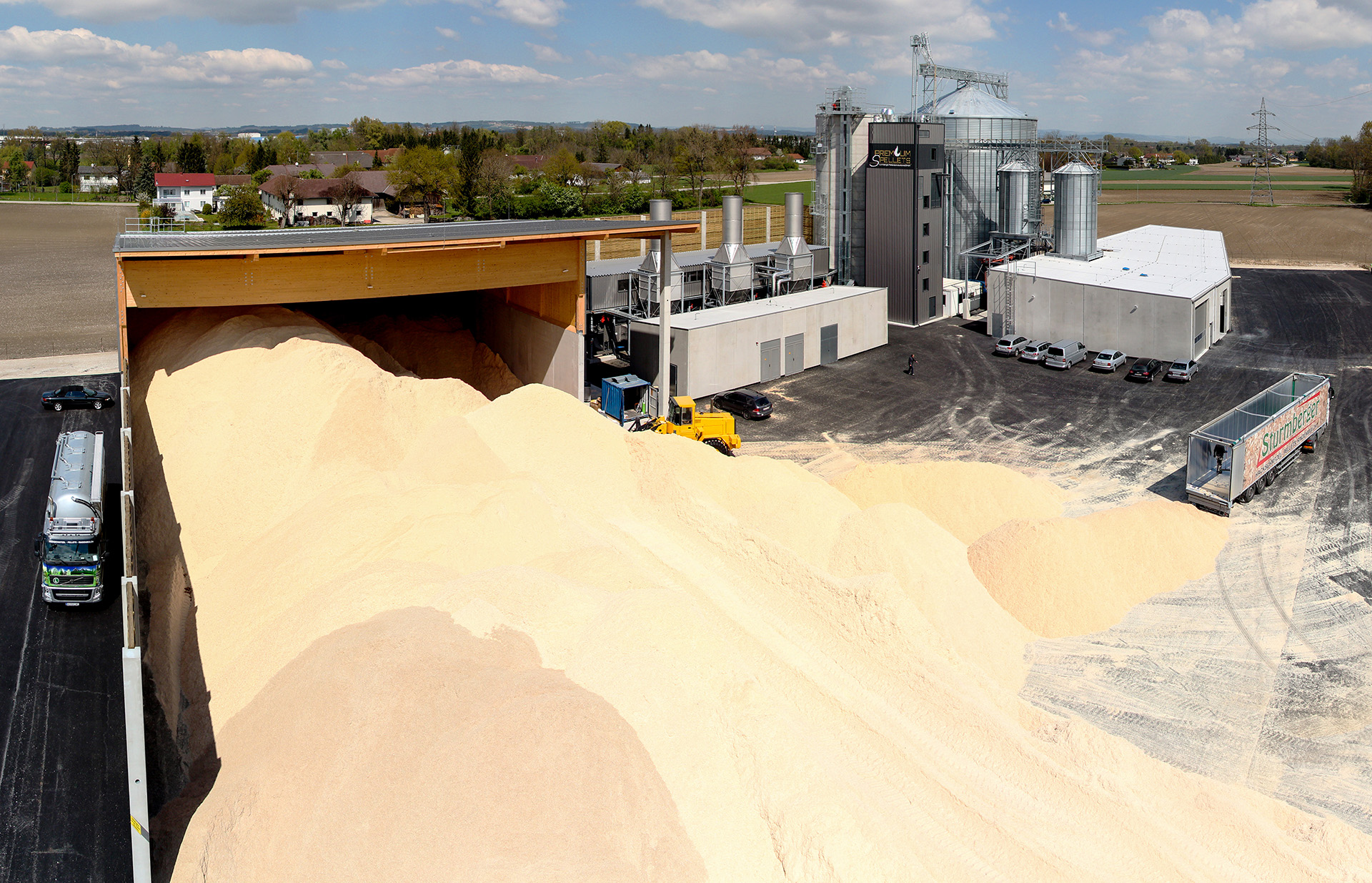
The second is wood pellets, and it is contracting. EU pellet consumption fell for the first time since 2015 across 2023 and 2024, with industrial demand hit by power-plant outages and residential demand undercut by heat-pump competition. Boiler sales dropped 53% in Germany and 45% in France in 2024. The EU Deforestation Regulation tightens supply-chain rules on wood pellets from late 2026, and South Korea began closing woody biomass out of its green-subsidy regime in January 2025. Demand is forecast to recover modestly, but the structural picture has changed.
The third is the new build-out at the high-value end: sustainable aviation fuel (SAF) and bioenergy with carbon capture and storage (BECCS). ReFuelEU Aviation's 2% SAF blending mandate took effect in January 2025, rising to 6% by 2030, 20% by 2035, and 70% by 2050. Stockholm Exergi took final investment decision on the world's first large-scale BECCS plant in March 2025. Both are hiring categories that did not exist at industrial scale five years ago.
Where bioenergy professionals work
Biogas and biomethane
Anaerobic digestion (AD) is the bacterial breakdown of organic matter in sealed tanks to produce methane-rich biogas. Germany operates roughly 9,900 plants, more than any other country; Italy, Denmark, France, and the UK round out the leading group. The growth segment is biomethane upgrading: purifying raw biogas to natural-gas specification and either injecting it into the grid or compressing it for vehicle fuel.
Operating a biogas plant is part agronomy, part chemical engineering, part plumbing. Operators monitor digester temperature, pH, gas composition, and feeding schedules. Feedstock arrives by lorry and has to be received, blended, and stored; digestate is managed as fertiliser. Small farm-based sites run with one or two operators. Industrial-scale plants like the Nature Energy facilities in Denmark carry teams of 15-30 spanning operations, maintenance, laboratory analysis, and logistics.
Solid biomass
Wood chips, pellets, straw, and forestry residues feed the bioenergy that supplies 73% of all renewable heat worldwide, with Europe consuming about three-quarters of global bioheat. The sub-sector spans small district-heating boilers in Scandinavian municipalities up to Drax in North Yorkshire (2.6 GW of biomass, still the UK's single largest renewable-electricity generator). Roles include forestry and harvesting, pellet manufacturing, logistics, plant operation, and flue-gas treatment. The supply chain runs global: Vietnam now produces over half of Asian wood pellet output, much of it shipped to Japanese and South Korean utilities, though the Korean market is shrinking as subsidies withdraw. That trade keeps sustainability certification (FSC, SBP) and lifecycle management specialists in demand alongside plant operators.
Waste-to-energy
Europe runs close to 500 WtE facilities, led by Germany, France, the Netherlands, and the Nordics. These are complex 24/7 industrial sites employing plant operators, combustion engineers, emission-control specialists, ash-management technicians, and environmental compliance officers. The Netherlands operates two of the largest single-site fleets in Europe through AVR (Rotterdam region) and HVC (Alkmaar; 1,417 employees, 660,000 tonnes processed across four incineration lines). Waste-to-energy is politically contested in the recycling debate, but from an employment perspective it provides stable, year-round industrial work tightly integrated with municipal waste systems.
Liquid biofuels and SAF
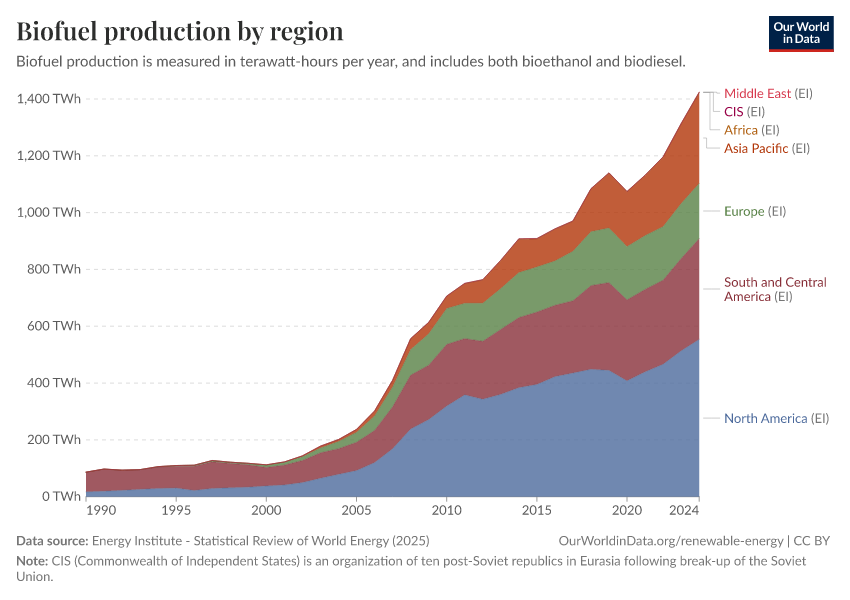
Bioethanol and biodiesel account for roughly 70% of global bioenergy employment - largely Brazilian sugarcane and Indonesian palm oil. The European hiring story has shifted to SAF and renewable diesel. Neste started SAF production at its Rotterdam refinery in 2025 with 500,000 tonnes of initial capacity and is mid-way through a €2.5 billion expansion that will double Rotterdam output to 2.7 million tonnes by 2027, making it the world's largest renewable-fuels refinery. TotalEnergies is ramping SAF at Grandpuits and La Mède in France. SAF is produced through HEFA (hydroprocessed esters and fatty acids), Fischer-Tropsch synthesis, or alcohol-to-jet pathways - each demanding chemical engineering experience, process operators, and catalyst specialists. A large share of those people currently work in conventional refining.
Pyrolysis and advanced biofuels
A smaller but technically interesting strand sits in fast pyrolysis: converting solid biomass to bio-oil that can be upgraded into drop-in fuels. BTG Bioliquids in the Netherlands is the European pure-play, partnered with NanosTech on a 500-barrel-per-day modular biorefinery design targeted at SAF, renewable diesel, and marine fuels. Roles are weighted heavily toward process engineering, catalyst development, and pilot-plant operations.
Where the European jobs concentrate
European biogas employment maps almost directly onto where post-2004 subsidy regimes ran longest and where biomethane policy is now strongest.
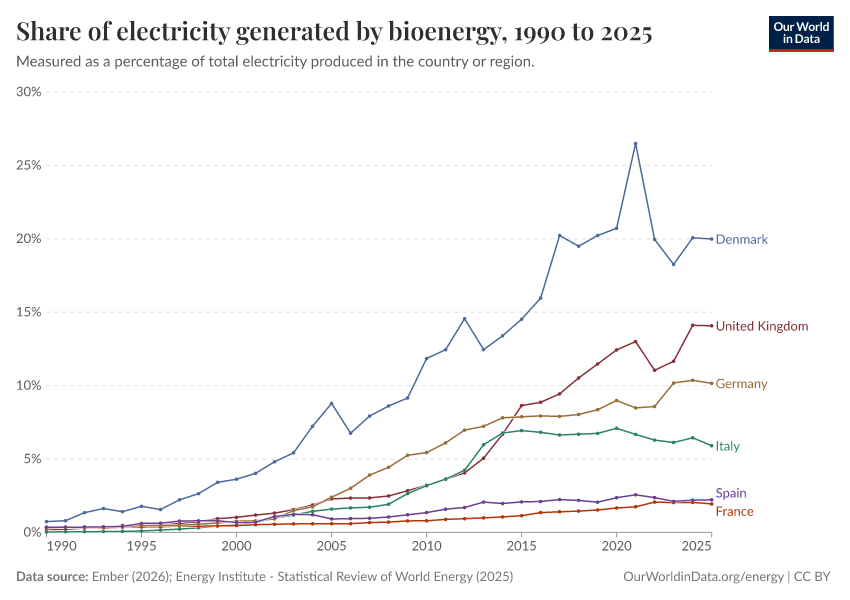
Germany still has the largest installed fleet at roughly 9,900 plants, mostly farm-based sites from the EEG subsidy era of 2004-2014. Many face subsidy expiry and a choice between upgrading to biomethane injection, running leaner, or shutting down. The transition itself is hiring: engineers who can retrofit legacy plants and lift their yields are in steady demand. The German Biogas Association (Fachverband Biogas) counts 67,300 jobs directly or indirectly tied to biogas. MVV operates the Biokraftwerk Königs Wusterhausen (20 MW waste-wood biomass) outside Berlin and Verbio runs its bioethanol and biomethane sites at Schwedt and Zörbig.
Denmark has become the biomethane leader by share of grid. Nature Energy was acquired by Shell for about €2 billion in late 2022 and now operates 13 Danish plants, with over 400 employees and a 30-plant pipeline across Europe and North America. Biogas now covers roughly 40% of the gas flowing through the Danish grid. European Energy and other Danish developers are building some of the continent's largest plants, each employing 20-40 permanent staff.
Italy runs the second-largest European biogas fleet, with over 2,000 plants concentrated in the Po Valley - tightly coupled to dairy farming and food-processing waste streams.
France is targeting 10% biomethane in its gas grid by 2030, and the UK runs over 700 AD plants. Both markets are scaling, particularly in food-waste processing and grid injection. Future Biogas signed the UK's first unsubsidised biomethane-to-grid project in 2023.
The Netherlands anchors waste-to-energy through AVR and HVC, and the Port of Rotterdam holds Europe's largest concentration of advanced biofuel refining, Neste's renewables refinery included.
Liquid biofuels dominate the global workforce
Outside Europe, bioenergy employment is dominated by liquid-biofuel supply chains in the tropics. European biogas and SAF are the sliver of the sector most European job seekers ever see; the bulk of the work sits elsewhere.
Brazil is the world's largest bioenergy employer. The sugarcane-energy sector employed over 750,000 people in 2024, of which roughly half are classified as biofuels jobs. Brazil and the United States together produce 80% of the world's bioethanol (118 billion litres globally in 2024). The Brazilian sector runs the full value chain: sugarcane cultivation and harvesting, ethanol distilleries, bagasse-fired cogeneration, and a growing second-generation cellulosic industry. Raízen, the Shell/Cosan joint venture, is the world's largest individual sugarcane processor and a major employer. For engineers and managers with Portuguese or Spanish, Brazil offers scale that does not exist anywhere in Europe.
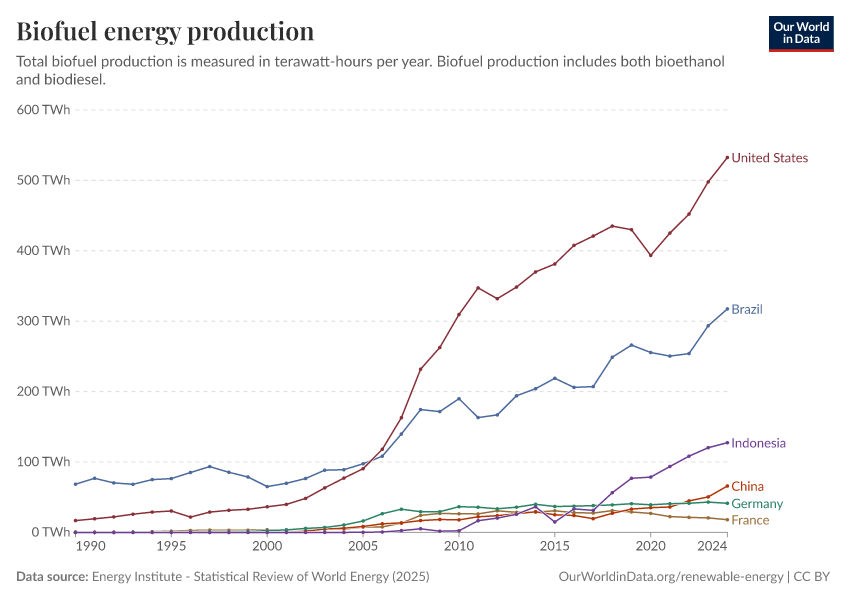
Indonesia is the second-largest biofuels employer at an estimated 650,000-800,000 jobs in palm-oil biodiesel, with 14 billion litres of biodiesel produced in 2023. As in Brazil, that headcount sits in the plantation and milling supply chain rather than in the refineries themselves.
The United States is the world's largest ethanol producer and a major biodiesel market. POET runs 35 plants, ADM is integrated across the corn belt, and Diamond Green Diesel (Valero/Darling JV) leads in renewable diesel and SAF feedstock processing.
China employs an estimated 467,000 people in bioenergy (2024 data): 215,000 in solid biomass, 187,000 in biogas, 65,000 in liquid biofuels. China accounts for 30% of global biopower output and dominates biogas-equipment manufacturing.
India is the third-largest ethanol producer at 9.8 billion litres in 2025 and employs around 178,000 people, with the federal ethanol-blending programme driving the growth.
BECCS: first commercial projects
For more than a decade BECCS - capturing CO2 from biomass combustion and storing it underground - sat in academic papers and IPCC scenarios. Four projects moved it into commercial territory across 2024 and 2025.
Stockholm Exergi took final investment decision in March 2025 on the world's first large-scale BECCS plant, attached to its biomass CHP at Värtaverket in Stockholm. Construction has begun on a SEK 13 billion (€1.2 billion) facility designed to remove 800,000 tonnes of biogenic CO2 per year from 2028, using Capsol's carbon-capture technology. The project carries €180 million from the EU Innovation Fund, a €260 million EIB loan, and offtake contracts with Microsoft and Frontier. Captured CO2 will be shipped to the Northern Lights storage complex under the North Sea.
Ørsted is building the Kalundborg CO2 Hub around its biomass CHP at Asnæsværket in western Zealand and the straw-fired boiler at Avedøre near Copenhagen. Both capture units are under construction, with operations now due to begin in 2027 at a combined 430,000 tonnes per year, delivered into a Microsoft offtake contract for one million tonnes. The Avedøre work is particularly notable: a coal asset that pivoted to biomass and is now adding capture in the same generation.
MVV Energie ran a BECCS pilot at Mannheim from late 2023, alternating between its biomass power plant and its waste-to-energy site, and plans staged scale-up across the portfolio by 2030.
Drax holds Development Consent Order approval for converting two UK biomass units to BECCS at North Yorkshire - potentially 8 Mt of removals per year. Drax is in formal discussions with the UK government on a long-term support framework, but active development is on hold pending clearer policy on carbon removals.
The hiring implications are modest through 2026 - capture-plant commissioning teams, MRV (monitoring, reporting, verification) specialists, CO2 shipping logistics, pipeline integrity engineers - and step up as Ørsted starts up in 2027 and Stockholm Exergi follows in 2028.
Roles along the value chain
Feedstock and supply chain
Feedstock managers source biomass - agricultural residues, food waste, forestry by-products, used cooking oils - and structure long-term supply contracts. Companies like Neste run dedicated feedstock-sourcing teams across continents because feedstock cost and availability are the single biggest commercial risk in biofuels.
Sustainability and certification specialists verify that feedstocks meet criteria under the EU Renewable Energy Directive (RED III), ISCC or RSB. RED III tightened those criteria, and the EU Deforestation Regulation adds a parallel layer from December 2026. The role is part regulatory specialist, part field auditor, part data analyst.
Plant operations and engineering
Biogas and biomass plant operators run day-to-day operations: monitoring processes, adjusting feed rates, managing equipment, and ensuring safety and environmental permitting compliance. This is shift-based work at operational plants.
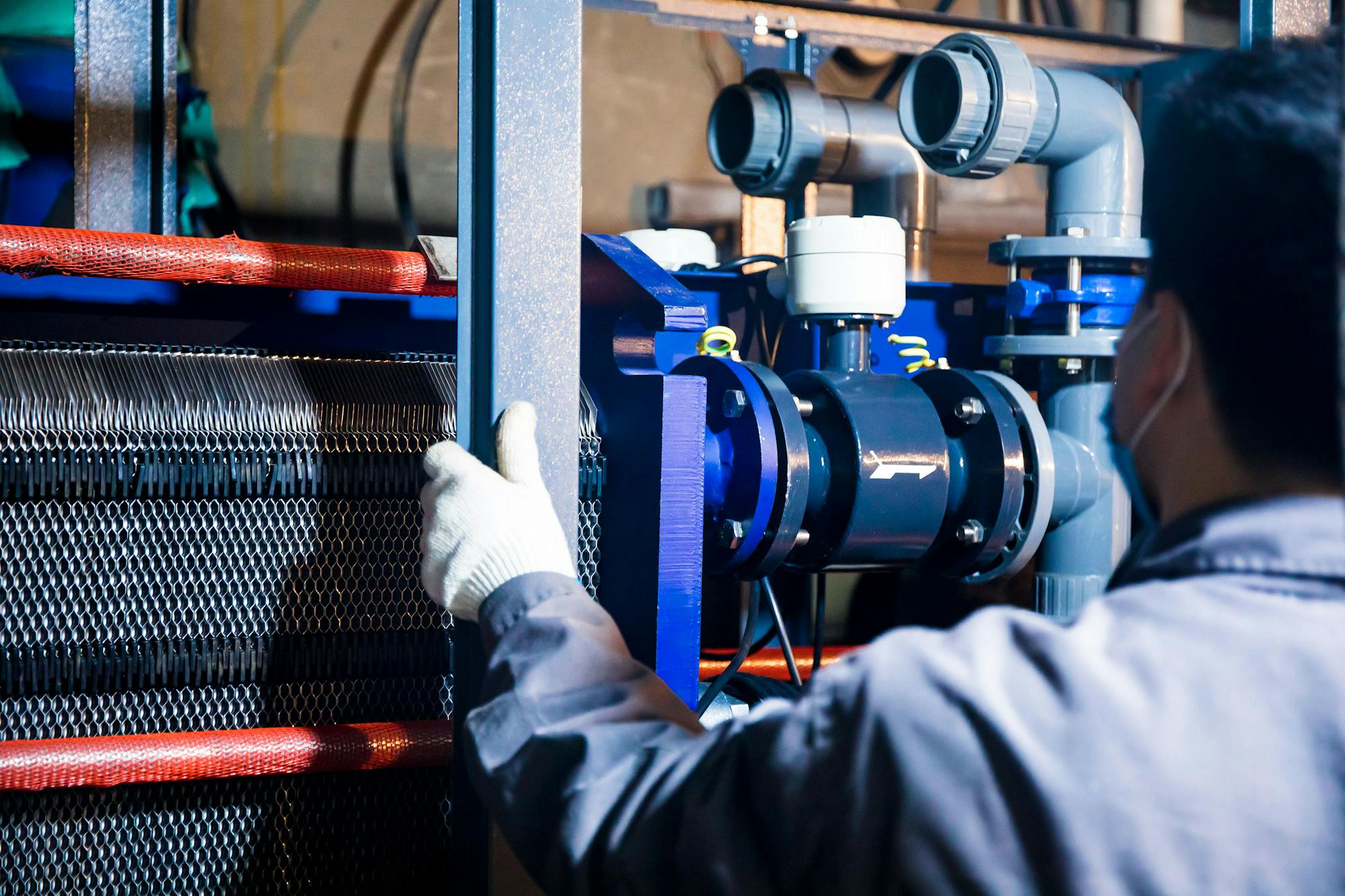
Process engineers design and debottleneck conversion: anaerobic digestion, fermentation, gasification, pyrolysis, or hydrotreating. In biofuel refineries, chemical engineers handle the catalysis and reactor design; in biogas, they tune gas yields and the microbiology of the digester.
Maintenance technicians keep rotating equipment, pumps, heat exchangers, gas engines, and instrumentation running. The mechanical infrastructure overlaps heavily with conventional process industries, so skills transfer cleanly from oil and gas, water treatment, or food processing.
Electrical and control-systems engineers run the SCADA systems, PLCs, and increasingly automated plant controls. Real-time gas analysis, automated feeding, and remote monitoring have raised the bar on automation expertise across the sector.
Environmental and regulatory
Environmental management specialists handle permits, emissions monitoring, odour management, and community relations. Biogas and WtE plants draw close local scrutiny on odour, traffic, and air emissions, and handling that scrutiny is a core part of the role rather than an add-on.
Emission-control engineers design and maintain flue-gas treatment (SCR, SNCR, scrubbers, bag filters) at biomass power stations and WtE plants. The Industrial Emissions Directive sets continuous-monitoring obligations that require specialist expertise.
Project development
Project developers identify sites, secure planning permission, arrange finance, and manage construction. In biogas, that increasingly means navigating feedstock security, grid integration for biomethane injection, and the local-acceptance work with farmers, hauliers, and neighbouring residents.
Project managers coordinate engineering, procurement, and construction (EPC). Bioenergy projects typically run 2-4 years from development to commissioning - shorter than large wind or hydropower projects, but with their own complexity around feedstock contracts and consent.
Salary overview
Bioenergy salaries reflect the sector's split between farm-scale biogas (modest pay, agricultural labour markets) and industrial-scale biofuel refining and WtE plant management (industrial-grade compensation, closer to oil-and-gas levels). The UK generally pays a premium over mainland Europe at engineer level.
| Role | Germany | UK | Denmark |
|---|---|---|---|
| Biogas plant operator / technician | €35,000 - €60,000 | £28,000 - £40,000 | 350,000 - 500,000 DKK |
| Process / biofuels engineer | €48,000 - €72,000 | £59,000 - £107,000 | 475,000 - 720,000 DKK |
| Plant manager (biogas / WtE) | €61,000 - €120,000 | £62,000 - £110,000 | 550,000 - 850,000 DKK |
| Project developer / manager | €55,000 - €85,000 | £55,000 - £90,000 | 600,000 - 960,000 DKK |
| Sustainability / environmental manager | €45,000 - €70,000 | £40,000 - £65,000 | 450,000 - 700,000 DKK |
Annual gross salary estimates from 2024-2025 data on SalaryExpert, Glassdoor and the Astute People Renewable Energy Salary Guide 2025. Danish ranges reflect Copenhagen and national averages. Approximate conversions: 1 GBP ≈ 1.17 EUR, 1 DKK ≈ 0.13 EUR.
Working conditions
Bioenergy work is rural, shift-based, and closer to heavy process industry than anything else in renewables.
Odour is a real factor. Biogas plants process manure, food waste, and slaughterhouse by-products. The receiving hall, where feedstock is tipped into hoppers, can be intensely odorous. Operators develop a tolerance, but it is a genuine quality-of-life consideration. Modern plants use enclosed receiving areas, negative pressure systems, and biofilters to contain odours; they do not eliminate them.
Shift work is standard at operational sites. Biogas, biomass and WtE plants typically run 24/7 or close to it. Operators rotate 12-hour patterns (commonly two days, two nights, four off) or continental shift systems. Biofuel refineries follow conventional refinery shift patterns.
Most jobs are rural or semi-rural. Biogas plants sit in agricultural regions - northern Germany, the Po Valley, Jutland, East Anglia. WtE sites are on the outskirts of cities. Either way, these are not city-centre roles. For professionals coming from agriculture or rural trades, that is a natural fit; for others, it is a lifestyle choice worth making consciously.
Confined spaces and toxic gas are routine. Biogas (mostly methane and CO2) is flammable and asphyxiating in confined spaces. Hydrogen sulphide is a routine trace component and toxic at low concentrations. WtE plants handle combustion gases and residual ash. All bioenergy roles require strong safety awareness; many require ATEX (explosive atmosphere) training, confined-space entry certification, and first-aid qualifications.
Seasonal feedstock variation. Agricultural feedstocks - crop residues, silage, energy crops - are seasonal. Operators have to manage changing feed compositions through the year and adjust digester biology accordingly. Research has documented methane-yield variations of over 30% between seasons depending on feedstock mix. Plants on food-waste or industrial-by-product feedstocks see less seasonality but face different supply-chain risks.
Office and hybrid roles exist. Project developers, sustainability managers, feedstock specialists, and corporate roles at Neste, Veolia, and Shell/Nature Energy generally work from offices with site visits. Several offer genuine hybrid arrangements.
Diversity is uneven. Like much of the energy sector, bioenergy skews male and older, particularly in operations and technical roles. Nordic operators tend to have better gender balance than counterparts in southern or central Europe; the sector has work to do.
Career transitions into bioenergy
Bioenergy is unusually accessible to career changers because its underlying processes overlap with several adjacent industries.
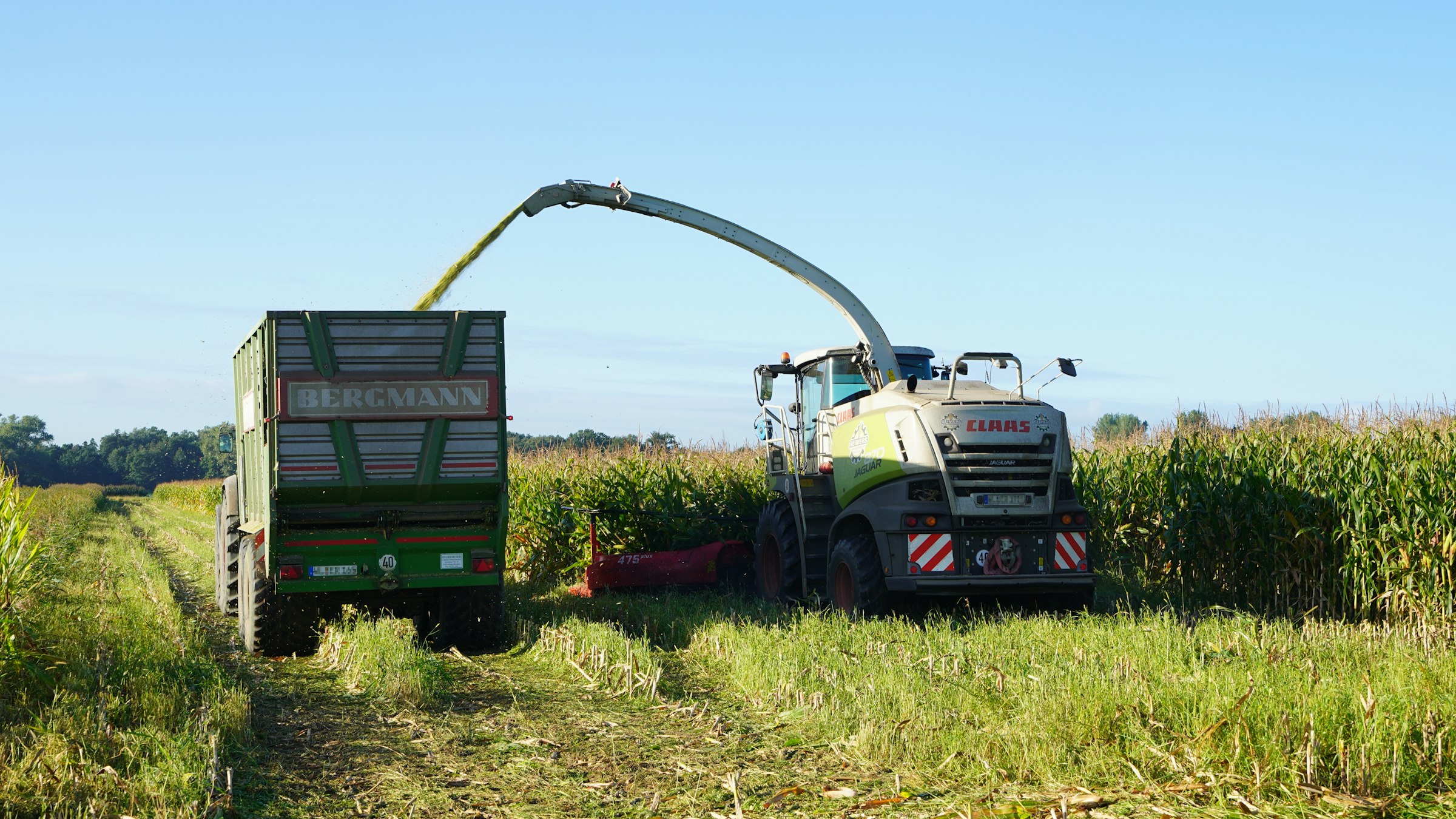
From agriculture. Farmers and agricultural workers understand feedstocks, logistics, and land management. The transition to biogas plant operation is short - many German biogas operators are former or active farmers, and agricultural engineering qualifications transfer cleanly to plant maintenance.
From oil, gas, and chemical processing. Process engineers, refinery operators, and chemical engineers bring directly relevant skills to biofuel production and biomass conversion. Managing continuous processes, handling flammable materials, working within process-safety frameworks - these are identical across the divide. Several large biofuel producers actively recruit from petrochemicals; Shell's acquisition of Nature Energy is a concrete example of fossil-fuel infrastructure pivoting into bioenergy at corporate level.
From water and waste management. Water treatment professionals understand biological processes, pumps, pipework, and environmental regulation, all directly applicable to biogas operation. Much of the day-to-day vocabulary transfers along with the skills.
From food processing. Food-manufacturing professionals understand hygiene, batch processing, quality control, and supply-chain management for organic materials. Food-waste AD plants operate on similar principles to food production, just in the opposite direction.
Policy drivers
More than any other renewable sector, bioenergy employment is shaped by regulation. Three EU frameworks do most of the work, and national strategies decide where the jobs land.
The EU Renewable Energy Directive (RED III), adopted in 2023, tightens sustainability criteria for biomass and introduces a "cascading principle" - biomass should be used for materials before energy where practical. RED III constrains some solid-biomass applications and supports waste-based and advanced biofuels.
ReFuelEU Aviation sets mandatory SAF blending: 2% from January 2025, 6% by 2030, 20% by 2035, 70% by 2050. Major EU airports must make SAF refuelling available. The mandate has triggered the SAF capacity build-out at Neste Rotterdam, TotalEnergies Grandpuits and a growing pipeline of greenfield projects.
The EU Deforestation Regulation, which takes full effect on 30 December 2026, applies due-diligence requirements to wood pellets and wood chips entering the EU market. Combined with the structural retreat in residential pellet demand, it changes the hiring profile in solid biomass: more sustainability auditors and supply-chain analysts, fewer new boiler installations.
National biogas strategies in Germany and Denmark shape where construction and operational jobs land. Germany's National Biomass Strategy points to biomethane expansion through 2030 but sets no binding federal volume; Denmark is pushing toward a fully green gas grid by 2030.
Key employers
Biogas and biomethane
- Nature Energy / Shell - Denmark, 13 plants, 400+ employees, 30-project pipeline across Europe and North America
- European Energy - Denmark, large-scale biomethane plant developer
- Weltec Biopower - Germany, biogas plant EPC
- EnviTec Biogas - Germany, biogas plant EPC and operations
- Future Biogas - UK, signed the country's first unsubsidised biomethane-to-grid project
- HoSt Group - Netherlands, biogas/biomethane plant EPC
Liquid biofuels and SAF
- Neste - Finland/Netherlands, world's largest renewable diesel and SAF producer; €2.5 billion Rotterdam expansion to 2.7 Mt by 2027
- TotalEnergies - France, SAF production at Grandpuits and La Mède
- Eni - Italy, biorefining at Venice and Gela
- St1 - Finland/Sweden, advanced ethanol and renewable diesel
- UPM Biofuels - Finland, tall-oil-based renewable diesel
- Verbio - Germany, bioethanol and biomethane sites at Schwedt and Zörbig
- BTG Bioliquids - Netherlands, fast-pyrolysis technology for advanced biofuels
- Raízen - Brazil, world's largest sugarcane processor (Shell/Cosan JV)
- POET - US, world's largest bioethanol producer, 35 plants
- ADM - US, integrated bioethanol and biodiesel
- Diamond Green Diesel - US (Valero/Darling JV), renewable diesel and SAF
Solid biomass and biomass CHP
- Ørsted - Denmark, five biomass CHP plants serving roughly 400,000 households; Kalundborg CO2 Hub in construction, operations from 2027
- Drax - UK, 2.6 GW biomass at North Yorkshire; BECCS DCO approved, awaiting policy framework
- Stockholm Exergi - Sweden, first large-scale BECCS plant under construction, operations 2028
- Fortum - Finland/Sweden, biomass CHP and Nordic district heating
- MVV Energie - Germany, Königs Wusterhausen biomass plant and BECCS pilot at Mannheim
- Enviva - US, world's largest wood pellet producer
- Graanul Invest - Estonia, Europe's largest pellet producer
Waste-to-energy
- Veolia - France, 60 WtE facilities globally
- SUEZ - France, integrated waste and WtE
- AVR - Netherlands, Rotterdam region WtE
- HVC - Netherlands, 1,417 employees, 660,000 t/year at Alkmaar
- Reworld - US, 30+ plants processing over 18 Mt/year
Consulting and engineering
- NIRAS - Denmark, biogas and biomethane plant engineering
- Ramboll - Denmark, bioenergy and CCS engineering
- Fichtner - Germany, biomass and WtE engineering
Adjacent sectors
Bioenergy sits at the intersection of several other clean-energy sectors. Professionals in the field often move between bioenergy and energy storage (grid balancing and thermal energy storage), hydrogen (biogas reforming for hydrogen, and the new intersection of biogenic CO2 supply with e-fuel synthesis), and smart grid work (demand response and flexible generation from biomass CHP). The connection to district heating is particularly strong in Scandinavia and Germany, where biomass CHP underpins the heat networks that serve millions of homes. Anyone working in sustainable agriculture or waste management is, at one remove, already in the bioenergy supply chain.
Outlook to 2030
Three numbers frame the hiring picture through 2030. Biomethane capacity in Europe sits at 8.2 bcm/year against €28.4 billion of committed private investment to 2030 - implying a tripling of operational plants and the operators, sustainability auditors and grid-injection specialists to run them. The ReFuelEU Aviation mandate steps from 2% in 2025 to 6% in 2030, which alone justifies the €2.5 billion Neste Rotterdam expansion and a wave of follow-on projects across the bloc. And BECCS has moved from PowerPoint into construction: Stockholm Exergi's 800,000 tonnes per year from 2028 and Ørsted Kalundborg's 430,000 tonnes from 2027 mark the first commercial commissioning teams in a category that does not yet have an established workforce. Against that, the residential pellet market is contracting, EEG-era German biogas is in subsidy expiry, and Drax's UK BECCS pipeline remains in regulatory limbo. The shape of bioenergy employment in 2030 is not larger or smaller than today - it is structurally different.


.jpg)
