
Grid and utility jobs cover everything between a power station and a socket: the high-voltage transmission lines and substations that move bulk power, the distribution networks that carry it into streets, the meters at the end, and the utilities that run, trade, and bill for it. Around 8 million people construct, maintain, and operate grids worldwide, and the IEA estimates that this workforce must grow by 1.5 million by 2030 under today's policies. The grid generates nothing, so it is not a renewable technology, but it sets the pace at which renewables can be used: in 2024 the IEA tracked 1,650 GW of solar and wind projects in advanced development that were still waiting for a grid connection. Clearing that backlog takes lineworkers, cable jointers, protection engineers, and control-room operators, and the people who do that work are ageing. In grid roles, 1.4 workers are approaching retirement for every young worker entering.
The employers are an unusual mix. Transmission system operators (TSOs, which run the high-voltage backbone) and distribution system operators (DSOs, which run the local networks) are regulated monopolies with investment plans fixed years in advance. Around them sit utilities and retailers, equipment makers such as Siemens Energy and Hitachi Energy, and a younger layer of flexibility and software firms that earn their money on power markets. A finance analyst at a network operator works in this sector as much as a lineworker does, and the business functions hire on the same long cycle.
Why the grid is the bottleneck of the energy transition
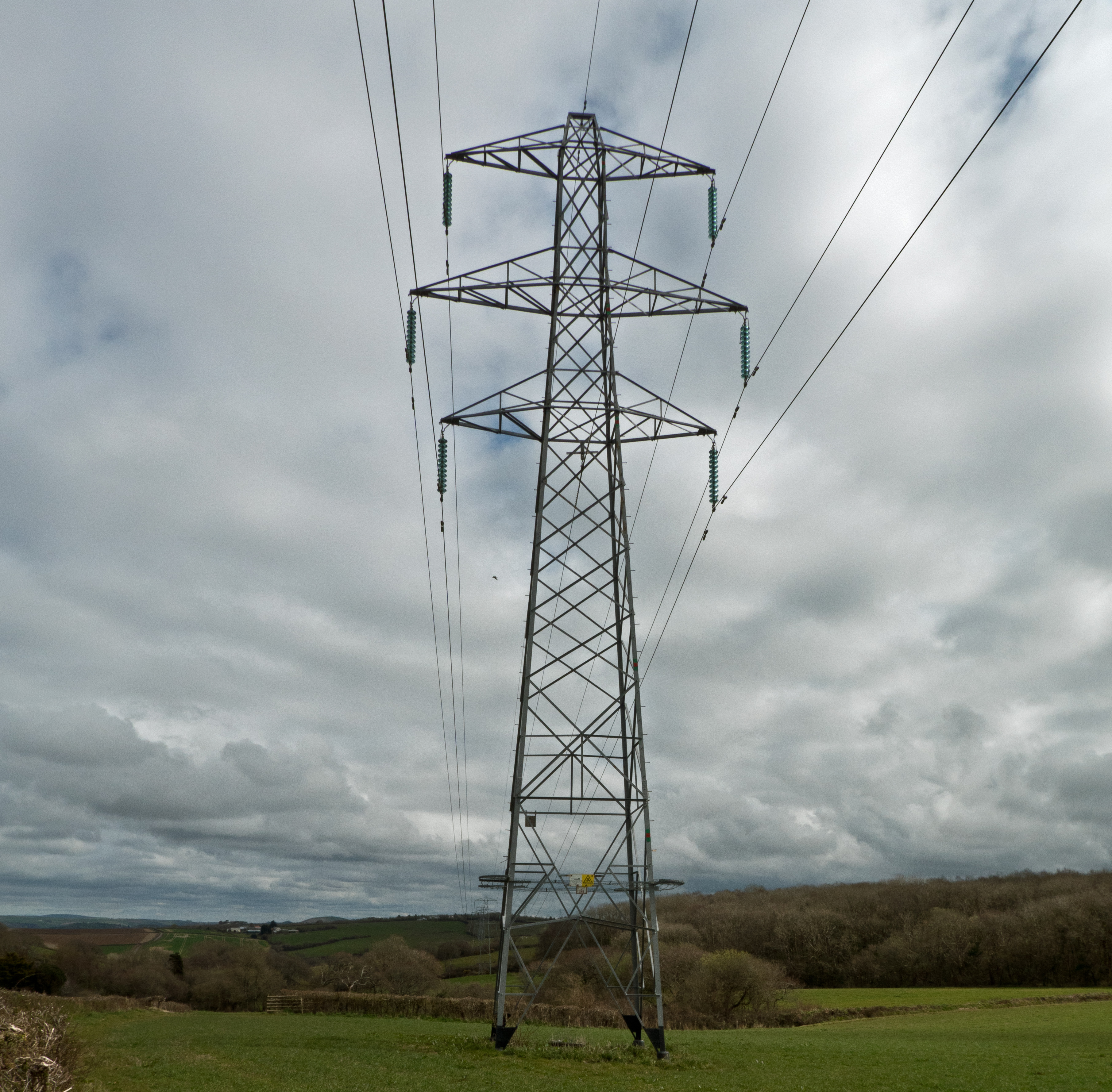
Every other clean energy sector ends at a grid connection. Solar and wind farms need one to sell power, battery storage needs one to charge and discharge, and the heat pumps, chargers, and electric furnaces covered under electrification and efficiency all add load to networks built for a smaller, one-directional system. Meeting national climate goals means adding or refurbishing over 80 million kilometres of grids by 2040, roughly the length of the entire existing global grid, and the IEA says annual grid investment needs to nearly double to over USD 600 billion by 2030.
Money is no longer the only constraint. Prices for cables have nearly doubled since 2019 and power transformer prices have risen by around 75%, and it now takes two to three years to procure cables and up to four years to secure a large power transformer. That delay pushes work back onto planners and engineers, who have to sequence projects around equipment they cannot yet buy.
Europe's version of the problem is old wires. The European Commission's Grids Package of December 2025 puts the EU's grid investment need at EUR 1.2 trillion by 2040, including EUR 730 billion for distribution grids alone, and the Commission notes that 40% of the EU's distribution grids are over 40 years old.
The clearest symptom is the connection queue (the list of projects waiting for permission and capacity to plug in). Great Britain's queue of generation and storage projects had grown to 722 GW, four times the capacity the system needs, before NESO's reform cut it in December 2025 to 283 GW of generation and storage plus 99 GW of demand; before the reform, transmission projects faced an average delay of over five years. In the Netherlands, 14,044 requests from large consumers for 9.1 GW of capacity were waiting at regional network operators in mid-2025. Every request in those queues is a substation, a cable route, or a study that somebody has to design and build.
That somebody is hard to find. Around 60% of energy companies surveyed by the IEA report labour shortages, with electricians and power-line workers among the most constrained occupations. In Europe, 72% of distribution system operators report shortages of qualified staff for connecting solar PV, and 36% of distribution workers are over 50. For a job seeker, the result is a sector where employers train from scratch, recruit from adjacent industries, and rarely make people redundant.
Latest Grid & Utilities jobs



Roles along the grid value chain
The work runs from the top of a pylon to a trading desk, and a single large DSO employs most of the profiles below at the same time.
Lineworkers and cable jointers
Lineworkers (linespeople in the UK, Freileitungsmonteure in Germany) build, inspect, and repair overhead lines, working from poles, towers, and elevated platforms on live or recently isolated circuits. Cable jointers do the equivalent underground, splicing and terminating medium- and high-voltage cables in trenches and substations; in cities, where most distribution runs underground, they are the trade every new connection waits for. Both are apprenticed trades that take several years to qualify, and both sit behind the power line and cable and high-voltage listings that DSOs and their contractors post year-round. The IEA names power-line workers among the hardest occupations to fill anywhere in the energy sector.
Substations, protection, and HVDC
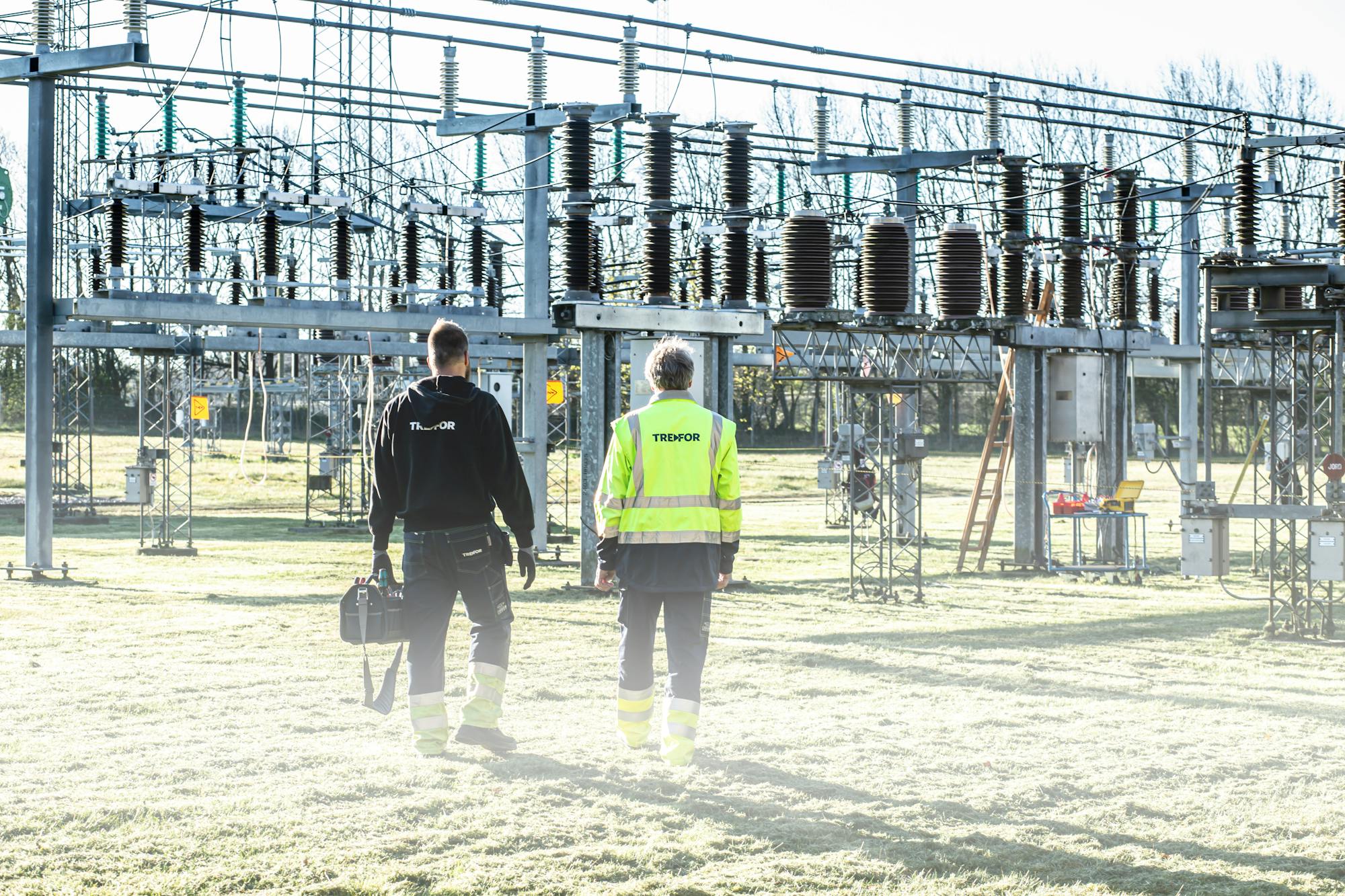
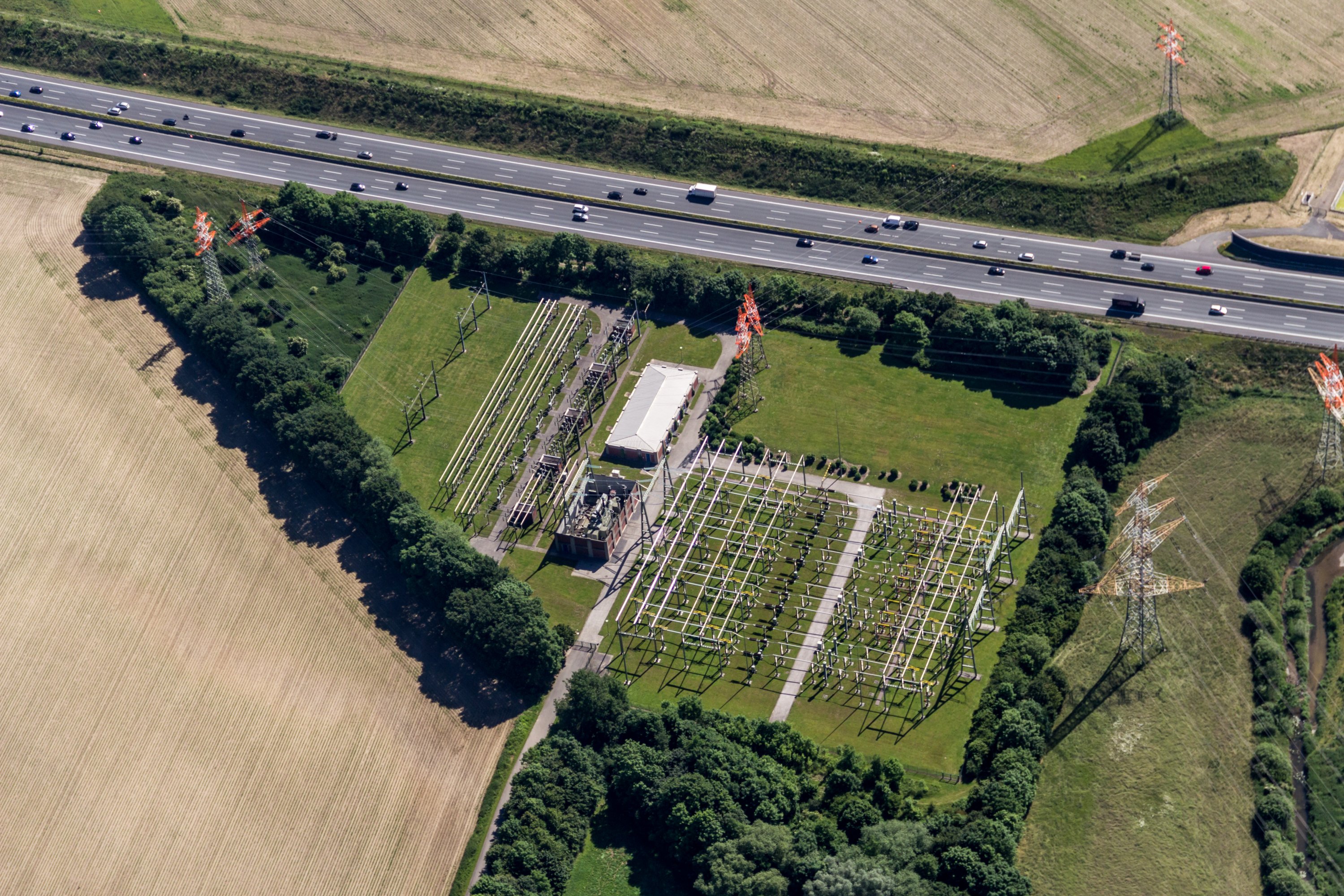
Substation engineers design, build, and maintain the nodes where voltage is stepped between transmission and distribution. Substations are going digital: intelligent electronic devices replace electromechanical relays, fibre-optic process buses replace copper wiring, and E.ON deployed its 10,000th digital substation in July 2025. Engineers who can bridge legacy equipment and IEC 61850 architectures are in acute demand.
Protection and control engineers set and test the relays that detect faults and isolate damaged sections in milliseconds. A misconfigured relay either fails to clear a fault, risking fires and equipment damage, or trips without reason and blacks out customers for nothing. The work combines fault analysis, relay coordination, and site commissioning, and protection and control specialists are among the best-paid engineers at any network operator.
HVDC engineers work on high-voltage direct current links, which carry power over long distances and under the sea: interconnectors such as NordLink between Norway and Germany, and the export cables of offshore wind farms. Converter-station design is concentrated in a few manufacturers, which is why Hitachi Energy plans to hire 2,000 more people in Sweden by 2027, alongside an expansion of its Ludvika factory.
Network planning and grid connection
Planners decide where the network has to grow. They run load-flow and short-circuit studies, model how much new solar, heat-pump, or data-centre load a feeder can take, and write the investment cases that regulators approve. Power systems engineering is the core skill, and the job titles vary: network planner, asset strategist, or grid modernisation engineer. Grid connection engineers sit at the front of the queue described above, turning applications into connection offers with a date, a cost, and often conditions that let the customer connect early on a flexible contract. Across transmission and distribution, this is the role where congestion turns into a daily workload.
Control rooms and system operation
Control engineers and system operators run the network in real time from 24/7 control rooms: switching circuits for maintenance, restoring supply after faults, and balancing the grid second by second as wind and solar output moves. A wrong switching sequence can endanger the crew working on a line, so operators go through long supervised training before they take a desk alone, and recertify regularly afterwards. Behind them, SCADA engineers maintain the supervisory systems that collect telemetry from thousands of field devices, and operational technology security specialists protect control systems that cannot simply be patched and rebooted. The EU's NIS2 directive, which member states had to transpose by October 2024, made that security function a legal obligation for energy operators.
Metering
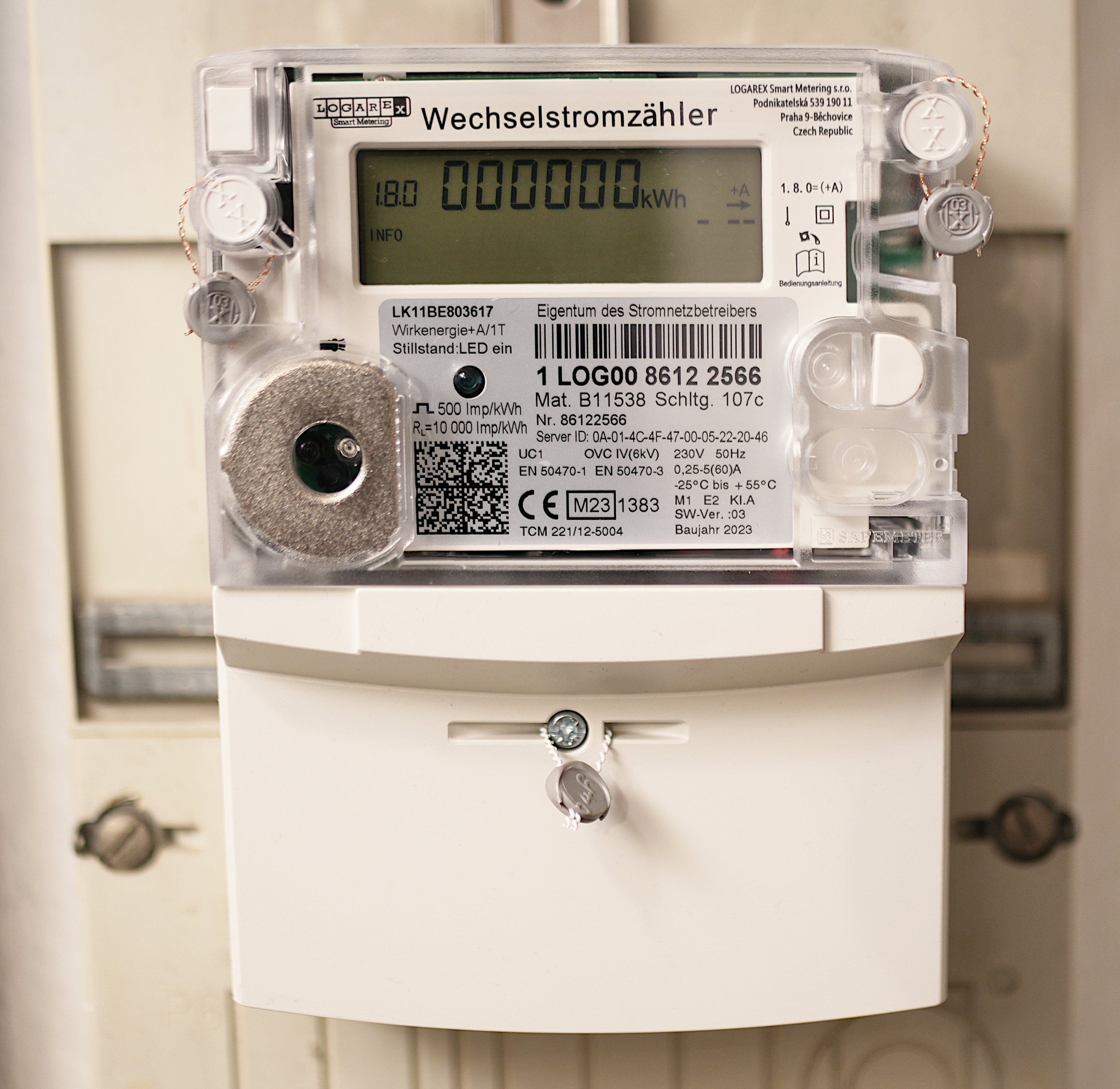
Meters are where the network meets its customers, and the field technicians who install and commission them are one of the most accessible entry points for qualified electricians. Great Britain had about 38.6 million smart and advanced meters in homes and small businesses by the end of March 2025, while Germany, a late starter, had about 3.2 million intelligent metering systems installed by mid-2026, under 6% of its metering points, so German metering operators are still hiring installers at volume. Behind the meter fleet sit data engineers and meter-to-cash analysts who turn readings into settlement and bills.
Flexibility, markets, and trading
Flexibility is the cheaper alternative to building more network: paying customers to shift or reduce consumption when a line is congested or the system is short. Demand response managers recruit industrial sites and design those programmes; virtual power plant operators bundle batteries, generators, and flexible loads into a single tradable asset, and Next Kraftwerke alone networks more than 15 GW across Europe. The same skills cover distributed energy resources, microgrids, and vehicle-to-grid charging, which reached German households when BMW and E.ON put Germany's first bidirectional tariff on sale in September 2025.
At the market end, energy trading desks at utilities, aggregators, and battery owners buy and sell power in day-ahead, intraday, and balancing markets, and short-term traders increasingly work in Python alongside optimisation models. Energy economists and market analysts forecast prices, design tariffs, and build the cases that network operators put to their regulators.
Utility business functions
Network operators and utilities are large employers of people who never touch a cable. Enexis, the Dutch DSO, has about 6,600 employees plus 1,400 external staff serving around 3 million customers, and a large share of them work in finance, human resources, procurement, IT, and customer service. Because a network operator's revenue is set by its regulator for years at a time, regulatory compliance and regulatory finance teams are central rather than peripheral: their submissions decide how much the company may invest and charge.
Europe: where grid hiring is concentrated
Europe's grid labour market is national. Each country has its own TSOs, its own regulator, and its own collective agreements, so a career usually develops inside one system before it crosses a border.
Germany has the largest programme. The four TSOs' draft network development plan of December 2025 puts the cost of the transmission build-out at EUR 360 to 390 billion by 2045, and TenneT alone invested a record EUR 10 billion in Germany in 2025, much of it in offshore connections and the long DC corridors that carry northern wind power south. On the distribution side, E.ON has earmarked roughly EUR 35 billion of its EUR 43 billion 2024-2028 investment plan for its networks.
The UK has reorganised its system around the connection queue. The National Energy System Operator (NESO) moved into public ownership in October 2024, and the queue reform described above has turned years-long waits into a pipeline that transmission owners and DNOs (distribution network operators, the UK term for DSOs) now have to build. Planning, connection, and protection engineers are the profiles that reform needs most.
The Netherlands is the clearest case of congestion. With large customers queuing for capacity, TenneT, Alliander, Enexis, and Stedin are hiring across every grade, and TenneT's combined investment across the Netherlands and Germany reached EUR 14.8 billion in 2025. Pay at Dutch network operators follows the CAO Netwerkbedrijven, which raises salaries by 2% three times between July 2025 and July 2026.
France runs Europe's largest transmission network: RTE manages more than 106,000 km of lines with about 10,000 employees, invested EUR 3.35 billion in 2025 (up 29% on 2024), and has more than doubled its investment in four years. Its largest single task is renewal: 45% of the overhead network was built between the 1920s and the 1970s. At local level, Enedis distributes about 95% of mainland France's electricity and runs the Linky smart meter fleet.
Italy and Spain are dominated by integrated groups. Enel's 2026-2028 plan allocates EUR 26 billion of its EUR 53 billion to grids in Italy, Spain, and Latin America, while the TSOs Terna and Redeia run the high-voltage networks in Italy and Spain.
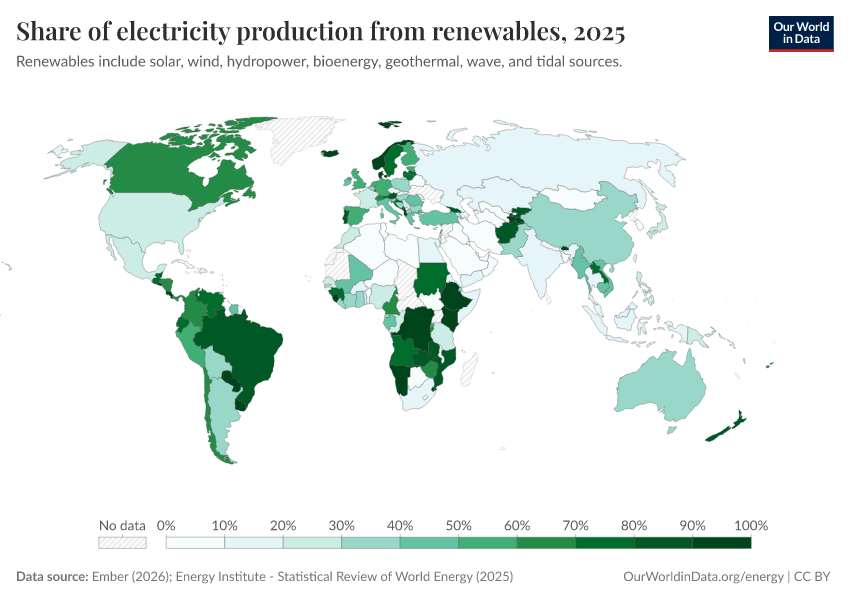
The Nordics have the most renewable-heavy systems: Denmark covered 77.7% of its electricity consumption with renewables in 2025, mostly from wind. The workforces are smaller, but Energinet, Statnett, Svenska kraftnät, and Fingrid hire specialists in system operation, interconnectors, and flexibility markets that larger systems will need later.
China
China runs the world's largest grid operator by a wide margin. State Grid Corporation of China serves over 1.1 billion people across 26 provinces and employed about 1.36 million people in 2023, and China Southern Power Grid employs roughly 270,000 more across five southern provinces. State Grid has announced fixed-asset investment of roughly RMB 4 trillion for 2026-2030, 40% more than in the previous five-year plan.
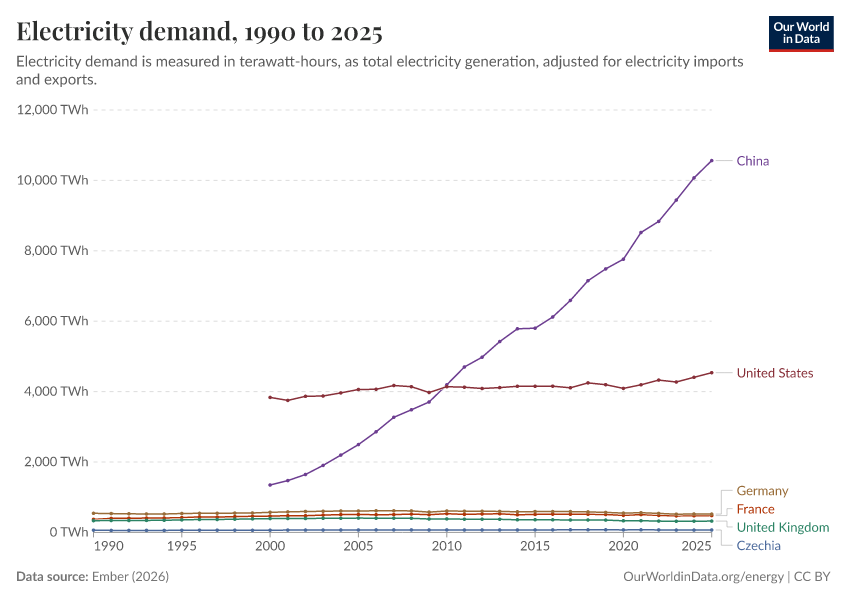
Most of that money moves western and northern wind and solar to the eastern cities. China added more than 430 GW of solar and wind in 2025, and it carries the power on ultra-high-voltage lines such as the ±1,100 kV Changji-Guquan link, which moves 12 GW over more than 3,000 km from Xinjiang to Anhui. For engineers, long-distance HVDC is the specialisation where Chinese practice leads the world. Hiring runs mainly through State Grid's centralised graduate recruitment from Chinese electrical-engineering faculties, and its equipment arm NARI supplies much of the country's protection, control, and HVDC technology. For foreign candidates, the realistic entry points are the overseas project offices of Chinese equipment makers.
United States
US utilities are spending at a record pace: members of the Edison Electric Institute were projected to invest nearly USD 208 billion in 2025. Data-centre load is the newest driver, alongside wildfire hardening in the West and the replacement of ageing lines, and individual capital plans have grown accordingly: Duke Energy plans USD 103 billion for 2026-2030, and Avangrid, Iberdrola's US arm, has a USD 20 billion grid plan through 2030.
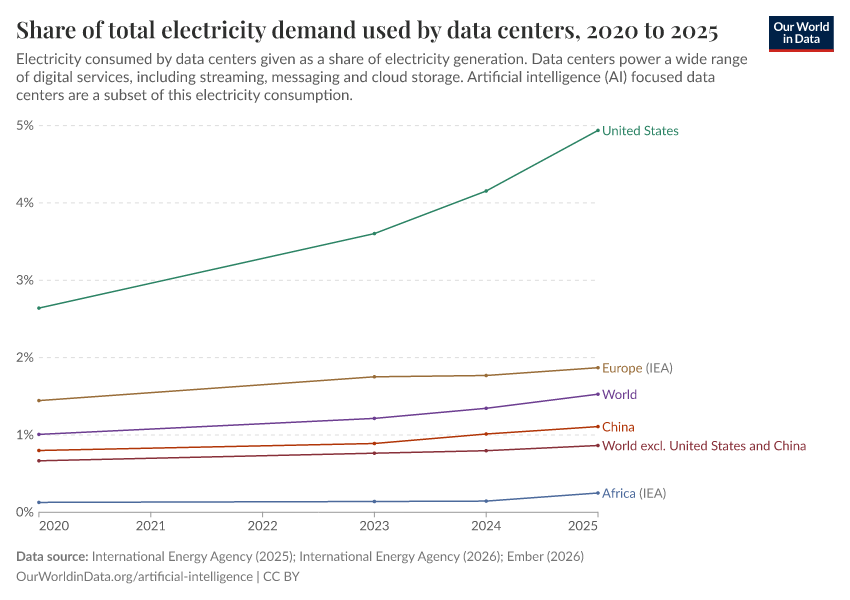
The US grid workforce is fragmented across investor-owned utilities, public power, cooperatives, and regional transmission organisations such as PJM, ERCOT, and CAISO, which run the wholesale markets and dispatch the bulk system. Southern California Edison, which serves about 15 million people, shows the typical utility mix: thousands of line and field staff, wildfire-mitigation engineers, and a large regulatory and customer operation. Many line crews are unionised and trained through multi-year apprenticeships, and system operators need NERC certification before they can work a control desk. Pay is well above European levels, as the table below shows, but most roles are tied to a service territory and cannot be done remotely.
Salaries in Germany, the UK, and the US
| Role | Germany (EUR) | United Kingdom (GBP) | United States (USD) |
|---|---|---|---|
| Overhead lineworker | 33,000-49,000 | 37,000-43,000 | 68,000-128,000 |
| Cable jointer / splicer | 32,000-47,000 | 33,000-48,000 | 44,000-99,000 |
| Protection and control engineer | 52,000-100,000 | 55,000-77,000 | 100,000-140,000 |
| Control engineer / system operator | - | 55,000-65,000 | 90,000-148,000 |
| Energy trader / market analyst | 60,000-85,000 | 38,000-88,000 | 62,000-207,000 |
Annual gross base pay, 2025-2026 data. Germany: StepStone for lineworkers, cable jointers, and electrical engineers, SalaryExpert for senior protection engineers, and thin aggregator data for traders. UK: advertised salaries at UK Power Networks, National Grid, and SSEN, and PayScale for energy-trading analysts. US: PayScale for lineworkers, cable splicers (a category that includes telecom splicers), and traders, ZipRecruiter and engineering-firm postings for protection engineers, and 2026 postings at MISO, NYPA, Oncor, and LS Power for system operators. Line crews in all three countries earn substantial overtime and standby pay on top of base; control-room figures exclude shift allowances; trader pay excludes bonuses. Approximate conversion: 1 GBP ~ 1.17 EUR.
Working conditions
Grid work divides into three workplaces, and the differences matter more than the employer.
Control rooms never close. System operators at TSOs and DSOs work rotating day and night shifts, typically eight or twelve hours long, including weekends and holidays. The work is sedentary but demands sustained concentration, and storms or equipment failures can turn a quiet night into hours of emergency switching. Shift allowances make these roles better paid than their day-shift equivalents.
Field work is physical, outdoors, and often at height. Lineworkers climb poles and towers or work from elevated platforms in all weather, cable jointers spend long days in trenches and confined spaces, and everyone near high-voltage equipment follows strict isolation, earthing, and arc-flash procedures before each task. Storm restoration means long consecutive days, and crews are often sent to other regions after major outages. On-call duty is standard: US substation operators, for example, are on call one week in five, and their training has become a three-year apprenticeship.
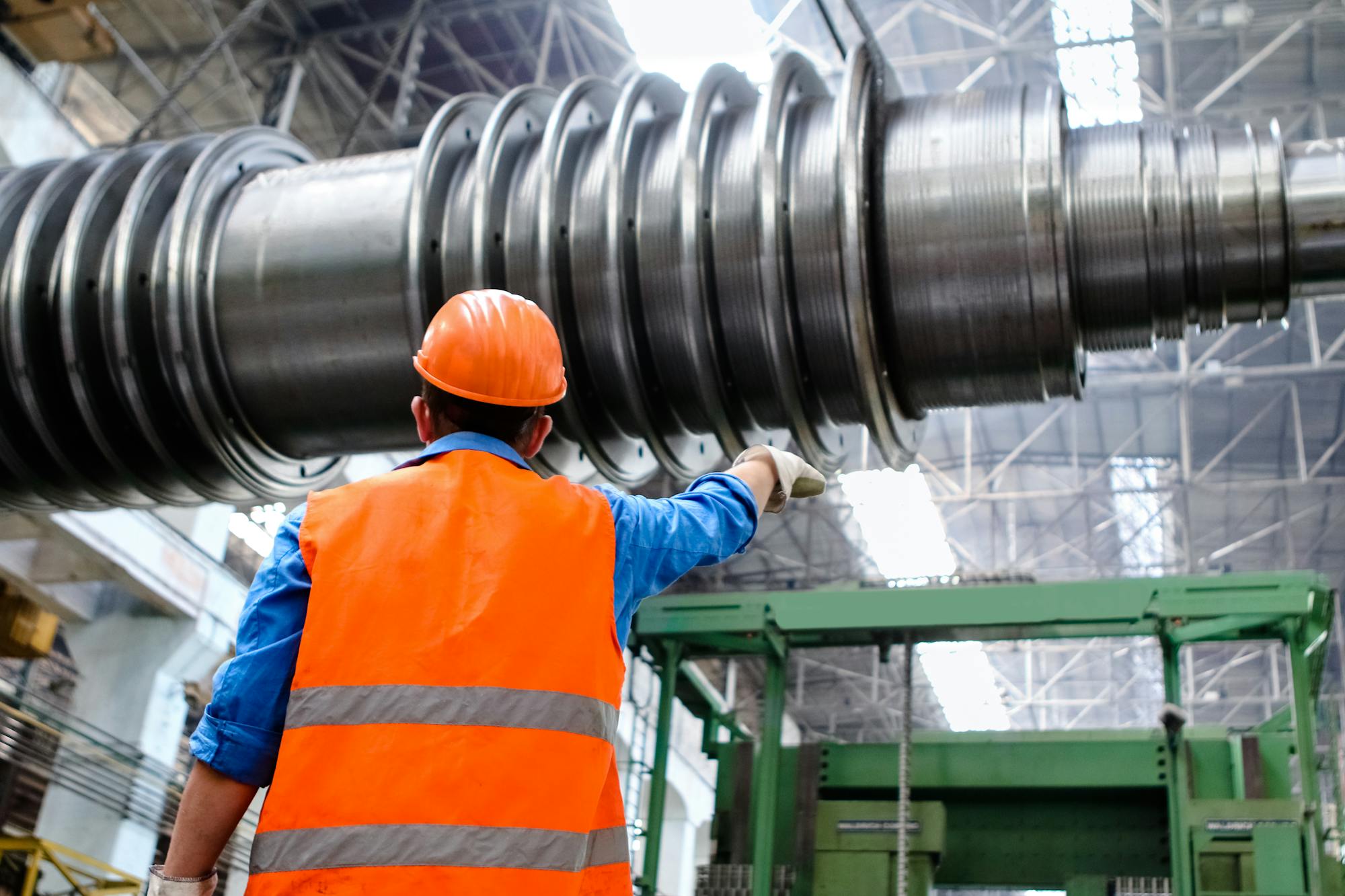
Office and hybrid roles are the majority at most operators. Planners, connection engineers, analysts, traders, and business functions work standard hours, usually with some home working, though engineers still visit sites to understand the assets they plan. Flexibility and software firms are the most likely to offer fully remote work.
The trade-off that sets the sector apart is stability. Network operators earn regulated returns on investment plans approved years ahead, so they rarely cut staff when markets turn, and pay follows collective agreements at most European operators. That stability comes with bureaucracy, slower promotion, and pay ceilings below those of trading firms or equipment makers. Diversity remains weak: women hold just 24% of energy sector jobs in the EU, and far fewer in field and control-room roles.
Transitioning from adjacent industries
The sector recruits widely because it cannot fill its vacancies from graduates alone.
From electrical trades: the most direct route. A qualified electrician can start in metering or substation maintenance and move into high-voltage work through the operator's own authorisation scheme; in the UK the baseline is a Level 3 electrotechnical qualification and the 18th Edition Wiring Regulations.
From oil and gas, rail, and heavy industry: control-room operators, process control engineers, and HSE professionals bring shift experience, permit-to-work discipline, and familiarity with industrial control systems. Electrical engineers from rail traction and industrial power systems move into protection and planning with modest retraining.
From IT and telecoms: network engineers, data engineers, and security specialists move into SCADA, metering data, and OT security. The domain knowledge (power flow, grid codes, market settlement) is learned on the job, and employers accept that trade because software skills are scarcer than grid knowledge.
From finance, consulting, and the public sector: regulatory economists, financial analysts, and procurement specialists move into network operators' business functions, where understanding the regulator's price control is worth more than a power engineering degree.
Useful qualifications include a bachelor's or master's degree in electrical engineering or power systems for engineering roles, IEC 61850 training for digital substation work, the GICSP certification for OT security, NERC system-operator certification in North America, and vendor training on Siemens, Hitachi Energy, or Schneider Electric protection systems.
Key employers
Transmission system operators
- TenneT - Netherlands/Germany, Europe's first cross-border TSO with more than 25,000 km of high-voltage lines; invested EUR 14.8 billion in 2025
- Amprion - Germany, about 11,000 km of lines serving a grid area of 29 million people in western Germany
- Elia Group - Belgium, parent of Elia in Belgium and 50Hertz in northern and eastern Germany
- RTE - France, Europe's largest transmission network with more than 106,000 km of lines and about 10,000 employees
- National Grid - UK/US, owns the high-voltage network in England and Wales and distribution networks in the Midlands, South West, and Wales
- NESO - UK, publicly owned system operator for Great Britain since October 2024; runs the reformed connection queue
- Energinet - Denmark, TSO for electricity and gas
- Statnett - Norway, co-owner of the NordLink and North Sea Link interconnectors
- Redeia - Spain, operator of about 46,000 km of transmission lines through Red Eléctrica
- Terna - Italy, Europe's largest independent TSO with about 76,000 km of lines
Distribution system operators
- Enexis - Netherlands, about 6,600 employees and 117,900 km of electricity network across five provinces
- Alliander - Netherlands, the largest Dutch network operator through Liander, with about 3.4 million connections
- Stedin - Netherlands, third-largest Dutch DSO, covering most of South Holland, Utrecht, and Zeeland
- Enedis - France, distributes about 95% of mainland France's electricity and operates the Linky smart meter fleet
- UK Power Networks - UK, Britain's largest distributor with about 8.5 million customers in London, the South East, and the East
- E.ON - Germany, distribution networks in Germany and several other European countries; EUR 35 billion of network investment planned for 2024-2028
Utilities and retailers
- Enel - Italy, EUR 26 billion of grid investment planned for 2026-2028 across Italy, Spain, and Latin America
- Iberdrola - Spain, networks in Spain, the UK, Brazil, and the US through Avangrid, which plans USD 20 billion of grid investment through 2030
- Octopus Energy - UK, retailer that developed the Kraken billing platform; sells dynamic and vehicle-to-grid tariffs
- Southern California Edison - United States, serves about 15 million people in central, coastal, and southern California
- Duke Energy - United States, USD 103 billion capital plan for 2026-2030
- State Grid Corporation of China - China, the world's largest utility, with about 1.36 million employees
Grid equipment makers
- Siemens Energy - Germany, its Grid Technologies business booked orders above EUR 21 billion in fiscal 2025, from HVDC to transformers and switchgear
- Hitachi Energy - Switzerland, more than 40,000 employees in 90 countries; HVDC and transformer maker expanding factories in Sweden, Canada, and the US
- Schneider Electric - France, distribution management software and medium-voltage equipment; ranked first by ABI Research for energy grid digitalisation
- GE Vernova - United States, Grid Solutions supplies transmission equipment, substations, and grid software
- Landis+Gyr - Switzerland, smart meters and metering software; sold its EMEA metering business to AURELIUS in April 2026 and now concentrates on the Americas and Asia Pacific
- Kamstrup - Denmark, electricity, heat, and water meters with remote-reading systems
- NARI Technology - China, State Grid's equipment arm for protection, control, and HVDC systems
Flexibility, trading, and software
- Kaluza - UK, billing and flexibility platform incubated at OVO, now independent and serving clients including AGL and ENGIE across eight markets
- Rabot Energy - Germany, Hamburg-based supplier of dynamic electricity tariffs priced on the power exchange, adding home batteries and a virtual power plant
- Next Kraftwerke - Germany, one of Europe's largest virtual power plants with more than 15 GW networked; owned by Shell
- Enel X - Italy, more than 10 GW of demand response capacity worldwide
- Voltalis - France, residential demand response across more than 1.5 million connected appliances
- Sympower - Netherlands, manages more than 2.7 GW of flexible assets across Europe
- Flexitricity - UK, runs a 24/7 control room in Edinburgh dispatching about 1.3 GW of flexible capacity
Outlook to 2030
The arithmetic points one way. The IEA expects the world's grid workforce to need 1.5 million more people by 2030, Europe has committed to EUR 1.2 trillion of grid investment by 2040, and in grid roles 1.4 workers approach retirement for every young entrant. The 283 GW left in Great Britain's reformed queue and the 14,044 Dutch requests still waiting for capacity are not a temporary backlog but the order book for a decade of substations, cables, and control-room shifts, and the network operators that hold those order books are hiring for all of it.