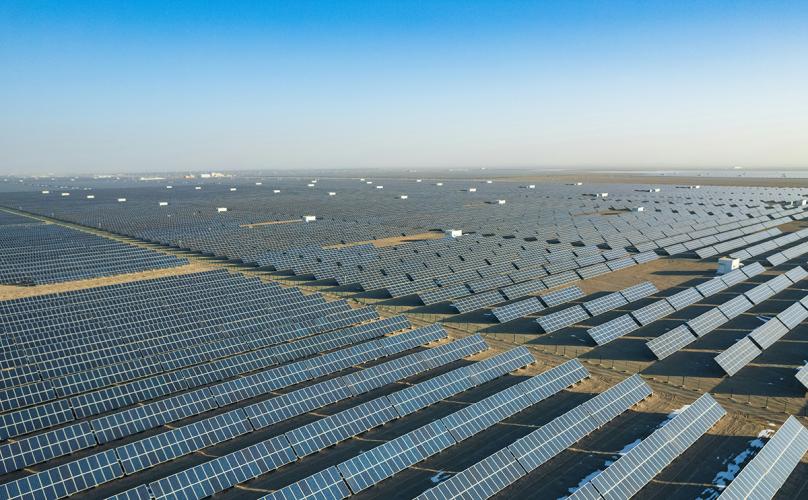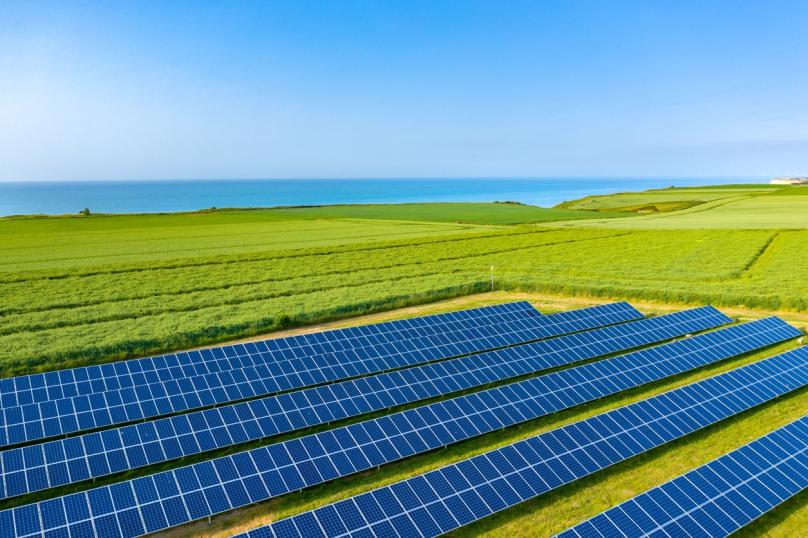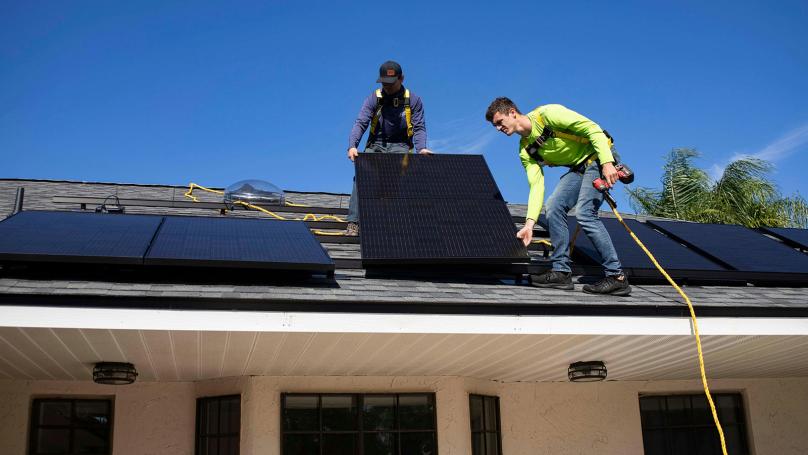

Electrification and efficiency is the demand side of the energy transition: moving cars, heating, and industrial processes onto electricity, and cutting the energy buildings and factories waste. It is not renewable energy, but it decides how much a renewable kilowatt-hour actually cuts. An electric car is two to four times more efficient than a combustion one, and a heat pump draws extra heat from the ambient air where a gas boiler converts fuel at an efficiency below one, yet electricity still covers only about 23% of the world's final energy consumption. Closing that gap is labour-intensive. The IEA counts 14.3 million people in energy efficiency alone in 2024, three quarters of them in buildings, and most of the hiring goes to electricians, heat pump installers, and energy assessors rather than to engineering graduates.
Why electrification and efficiency cut emissions
Wind farms and solar parks replace fuel in power stations. Most of the world's energy, though, is still burned elsewhere: in car engines, gas boilers, and industrial furnaces. Until those machines switch to electricity, extra renewable generation has nothing to displace, which is why the IEA's Electrification 2026 report treats the rise of electricity's share from today's 23% towards 35% by 2035, in one of its scenarios, as a central task of the transition. Electrification also has a catch: electricity demand has grown two to three times faster than overall energy demand since 2019, and in some regions that growth has been met by inefficient fossil plants. The emissions benefit of a heat pump or an electric van grows as the grid behind it gets cleaner.
Efficiency is the other half of the argument. A kilowatt-hour a building no longer needs is one no wind farm has to generate and no grid has to carry. Progress is slow: the IEA expects global energy intensity to improve by 1.8% in 2025, up from around 1% in 2024, well short of the 4% a year that governments signed up to at COP28. That gap is why so much of this sector's hiring is written into law. The EU's recast Energy Efficiency Directive requires an 11.7% cut in final energy consumption by 2030 against earlier projections, and the recast buildings directive (below) sets renovation duties for every member state.
Latest Electrification & Efficiency jobs


How many people work in electrification and efficiency?
The IEA's World Energy Employment 2025 puts global energy efficiency employment at 14.3 million in 2024, up 1.9% on the year. Buildings account for 10.6 million: nearly 6 million in efficient appliances and lighting, about 3.9 million in heat pumps and other efficient heating and cooling equipment, and around 850,000 in retrofitting. Industrial efficiency employs another 3.6 million. The IEA's own Energy Efficiency 2025 report, which draws the boundary more widely, counts nearly 18 million, so treat the totals as a scale rather than a headcount.
The work is concentrated in a few markets. On the IEA's regional tables, China employs around 3.8 million efficiency workers and Europe around 3.3 million. In the United States, nearly 2.4 million people worked in energy efficiency in 2024, up 4.0% on 2023 and the largest single part of an 8.5-million-strong US energy workforce.
EV charging is far smaller but grows from a low base. ChargeUp Europe's 2025 industry report finds the European charging industry directly employs close to 60,000 people and is worth EUR 15.3 billion, projected to reach EUR 94 billion by 2035. For a job seeker the proportions matter more than the totals: this is a trades market first, where certified installers outnumber engineers by a wide margin.
Heat pumps: installation, design, and manufacturing
Heat pumps are the technology Europe's building rules depend on, and the trade most exposed to policy swings. Sales across 14 European markets fell 21% to about 2.2 million units in 2024 as subsidies were cut and gas prices eased, and the European Heat Pump Association counted at least 4,000 jobs lost and more than 6,000 others affected. The market turned in 2025: EHPA data show sales up 13% to 2.88 million across 21 countries, though still below the 3.31 million record of 2022. France remained the largest market at 528,000 units despite a decline.
Germany shows how fast the trade responds to policy. Sales fell 46% to 193,000 in 2024 amid uncertainty over municipal heat planning and subsidies, then heating heat pump sales rose 55% to 299,000 in 2025, and for the first time almost half of all heat generators sold in the country were heat pumps. In the UK, over 60,000 MCS-certified heat pumps were installed in 2025, a record, with the Boiler Upgrade Scheme funding nearly half of them through its GBP 7,500 grant for air-to-water and ground-source units.
The workforce has not kept pace with the targets. The IEA estimates that installing 60 million heat pumps in the EU by 2030 would require 500,000 skilled workers, up from about 165,000 in 2024; Germany and France report needing 60,000 and 30,000 additional installers respectively. Quality is as scarce as headcount. The same report cites a Regulatory Assistance Project estimate that a poorly installed heat pump can run at half its expected efficiency, which is why designers and commissioning technicians are hired alongside fitters.
Outside Europe, China leads the heat pump labour market with around 300,000 workers, against roughly 200,000 each in Europe and North America, according to the IEA. Global heat pump employment grew by less than 4% in 2024, down from 6% a year in 2020-2023, and the IEA projects 4.5% annual growth to 2035 under current policies.
Heat pump roles
Heat pump installers and heating engineers fit outdoor units, run refrigerant or water circuits, size cylinders and radiators, and wire controls. The trade combines plumbing and pipefitting with electrical work, and in the EU anyone handling refrigerants needs a separate, mandatory F-gas certificate. Heat pump design engineers carry out room-by-room heat-loss calculations, choose flow temperatures, and specify emitters, the step that decides whether a system runs efficiently for twenty years. Service and commissioning technicians bring systems online and handle warranty callouts for manufacturers and large installers.
Manufacturing employs product, refrigeration, and controls engineers, alongside factory and test staff. The EU's 2024 F-gas Regulation phases hydrofluorocarbons out by 2050, so refrigerant redesign is now a core engineering task at every European maker. Larger systems for apartment blocks and district heating bring in building services engineers, and ground-source installations overlap with shallow geothermal energy drilling crews.
Building retrofit and energy assessment
Buildings use around 40% of the EU's energy and about half of its gas, and the recast Energy Performance of Buildings Directive turns that into renovation duties. Each member state must cut average primary energy use in homes by 16% by 2030 and by 20-22% by 2035, with at least 55% of the cut coming from the worst-performing buildings; non-residential buildings face minimum standards that require renovating the worst 16% by 2030 and the worst 26% by 2033. Subsidies for stand-alone fossil boilers ended on 1 January 2025, and the directive had to be written into national law by 29 May 2026. Globally the IEA counts only around 850,000 people in energy retrofitting, a small workforce for that brief.
The roles are part survey, part project management. Energy assessors measure a building and produce its energy performance certificate, the rating that minimum standards and grants are pegged to. Retrofit coordinators, a role written into the UK's PAS 2035 standard for publicly funded work, assess a home, design the sequence of measures, and sign off the result. In Germany the Energieberater plays a similar part, and deep renovations funded to federal efficiency-house standards need one on the official expert list. Behind them sit insulation installers, airtightness testers, window fitters, and the asset managers at housing associations who plan building energy performance upgrades across thousands of homes.
Retrofit hiring tracks grant budgets more closely than any other part of the sector. France's MaPrimeRénov' closed to deep renovations in summer 2025 after a flood of applications and fraud attempts, reopened only for very low-income households in September, then stopped entirely in January 2026 for lack of a state budget. It reopened in February with EUR 3.6 billion of state funding, enough for 120,000 deep renovations and 150,000 single-measure jobs. Contractors who had hired for the 2024 volumes spent months without new files.
Energy audits, energy management, and ESCOs
Commercial and industrial efficiency is sold as a service. An energy services company (ESCO) audits a site, finances and installs the measures (lighting, controls, heat recovery, on-site solar), and is paid from the savings under an energy performance contract, usually guaranteeing them for a decade or more. The US-listed specialist Ameresco, reported USD 1.93 billion of revenue for 2025 and a project backlog above USD 5 billion. In Europe the same model runs through the energy services arms of utilities and facility groups, such as Dalkia, Engie, and Equans.
Regulation creates steady demand for the audit side. The recast EU Energy Efficiency Directive extends mandatory energy auditing to every company above a consumption threshold, SMEs included, and requires the largest consumers to run certified energy management systems. Member states had until 11 October 2025 to transpose it, and their energy savings obligation rises to 1.9% of final consumption a year for 2028-2030.
The roles: energy auditors survey sites, log consumption, and model savings; energy managers run ISO 50001 systems inside factories, hospitals, and property portfolios; measurement and verification engineers prove the savings an ESCO contract pays on; and building automation engineers programme the controls that deliver most of them. ESCO project developers do business development with a technical edge: they scope a hospital or a university campus, price the measures, and structure the contract. In the US the federal 179D deduction for efficient commercial buildings ends for projects whose construction begins after 30 June 2026, removing one of the tax incentives behind commercial retrofits.
Industrial electrification
Industry is where electrification is hardest and where efficiency employs most people outside buildings. Industrial efficiency work, the 3.6 million jobs in the IEA's count, levelled off in 2024, largely because of a slowdown in China; the European Union saw a pronounced decline, with firms naming the shortage of skilled labour as a major barrier to investment. The IEA's Electrification 2026 report nonetheless finds electric technologies already competitive for several industrial applications in many countries.
The work mixes process and thermal engineering with electrical design: industrial heat pumps that recover waste heat for food, paper, and chemical plants, electric boilers, induction and electric arc furnaces, and the grid connections that a site switching from gas suddenly needs. Steelmakers rebuilding around electric arc furnaces and hydrogen-based iron hire for green steel projects, which overlap with hydrogen careers. Employers range from equipment makers such as GEA and Johnson Controls to engineering consultancies and the energy teams inside the plants themselves.
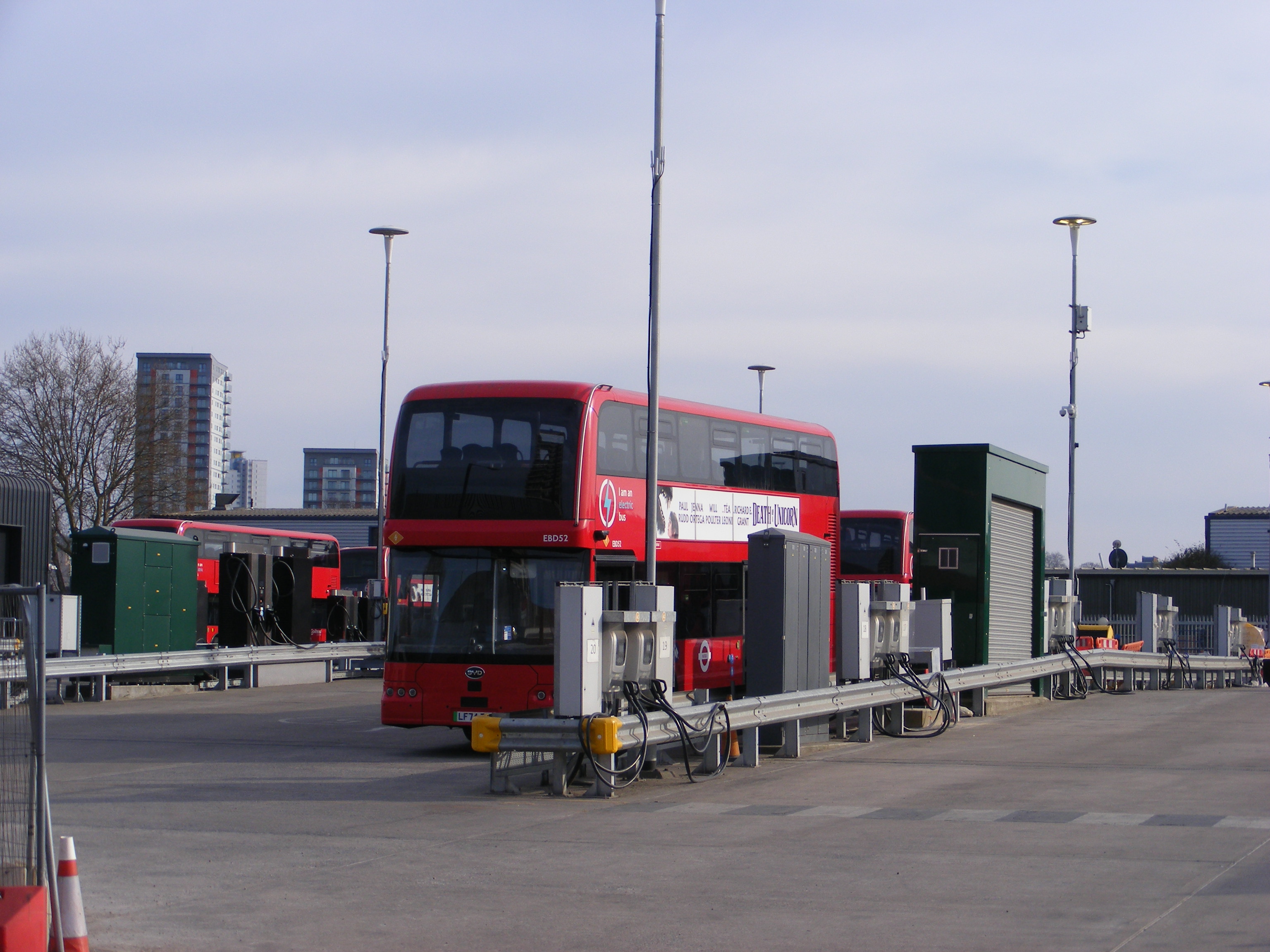
EV charging infrastructure
The EU ended 2025 with about 1.1 million public charge points, five times as many as in 2020, and every member state except Malta now exceeds the fleet-based capacity target of the Alternative Fuels Infrastructure Regulation (AFIR). Demand keeps rising: one in four new cars sold worldwide in 2025 was electric, and Europe sold 4.2 million of them, 28% of its new car market. How much more the network needs is disputed. The European Commission's target of 3.5 million public points by 2030 implies roughly 480,000 new ones a year from here; the carmakers' association ACEA argues for 8.8 million, three times that pace.
Charger types and power classes
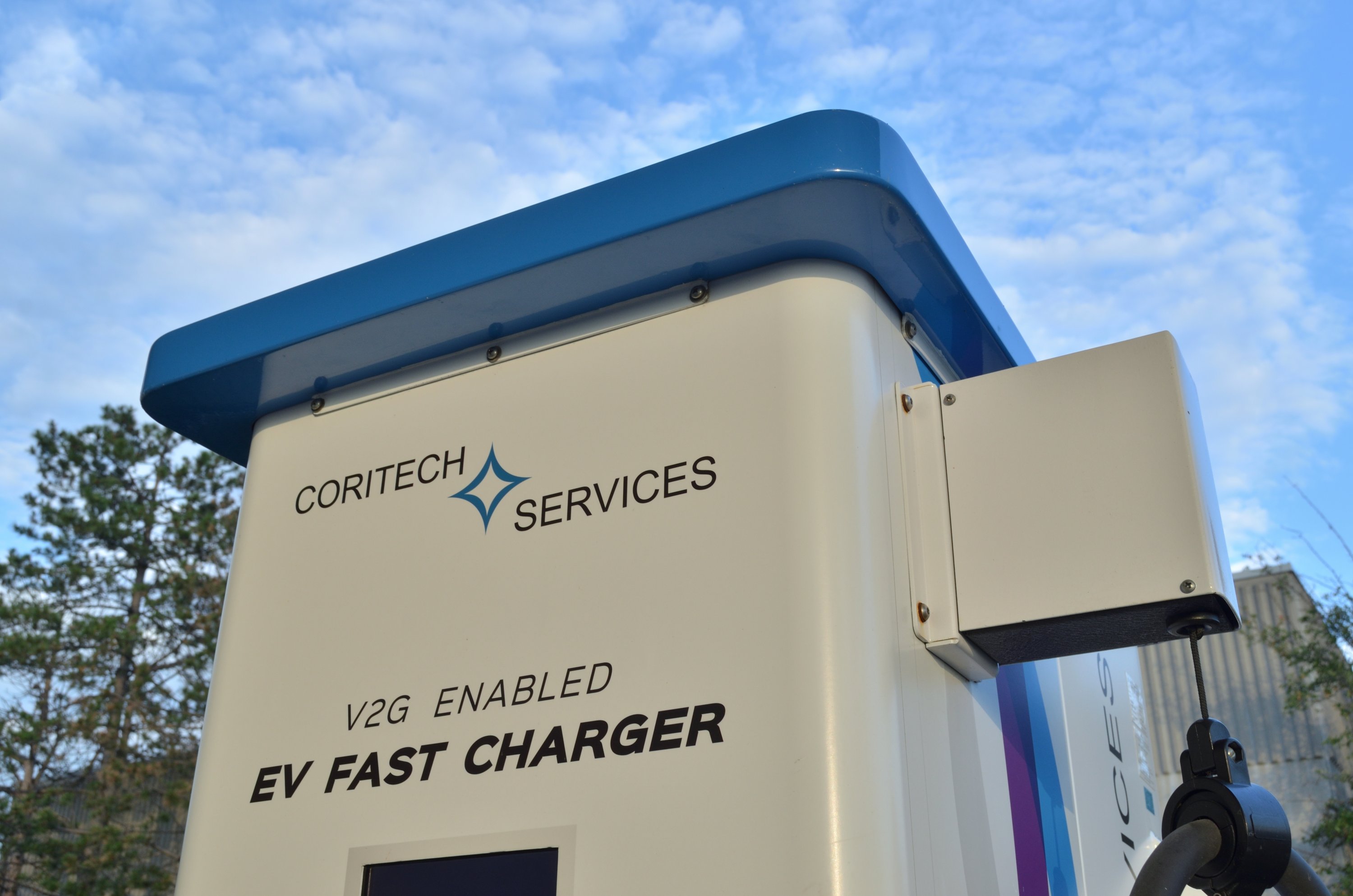
The power class decides the workplace. AC charging up to 22 kW (home wall boxes, workplace car parks, lamppost units) is straightforward electrical work: a qualified electrician with an EV credential fits a domestic unit in a few hours, and this is the most direct entry route into the sector. DC fast charging from 50 to 150 kW brings three-phase supply, often a transformer upgrade, civil works, and a networked device whose firmware and cellular link fail as often as its power stage. Ultra-fast charging above 150 kW and the new Megawatt Charging System (MCS) for trucks is closer to substation work. Germany's first public MCS point, a 1.2 MW ABB unit run by EnBW, opened on the A2 near Bielefeld in September 2025, and E.ON, Voltix, and GreenWay plan about 330 MCS points at 55 sites in nine countries by autumn 2028. These sites combine charging with energy storage and grid engineering.
Charging roles along the value chain
Before a charger exists, site acquisition managers secure the land and grid connection engineers negotiate capacity with the distribution network operator, now the binding constraint on most build programmes. EV charging installation and maintenance technicians survey, mount, cable, and commission chargers, testing earth-fault protection and the link to the operator's back office. Once sites are live, field service engineers cover a territory, fixing failed contactors, damaged cables, and lost connections.

Charging networks are run from control rooms, where charging network operations staff track uptime, diagnose faults remotely, and push firmware updates. Every public charger talks to a management platform over the Open Charge Point Protocol (OCPP), so software developers build billing, roaming, and load-management services, and power electronics engineers at manufacturers design the conversion stages of DC chargers, a specialisation that stays hard to fill as units move towards 1 MW and bidirectional operation.
Smart charging, V2G, and fleet electrification
Smart charging shifts car charging to hours when power is cheap and plentiful, and vehicle-to-grid (V2G) lets the car's battery feed power back. Both are now commercial: Octopus Energy and BYD launched the UK's first V2G bundle in June 2025, combining a leased BYD Dolphin, a bidirectional Zaptec Pro charger, and a smart tariff for just under GBP 300 a month. This work sits at the join between charging and grid and utilities careers, and it hires the same profiles as demand response aggregators: optimisation developers, data scientists, and energy traders.
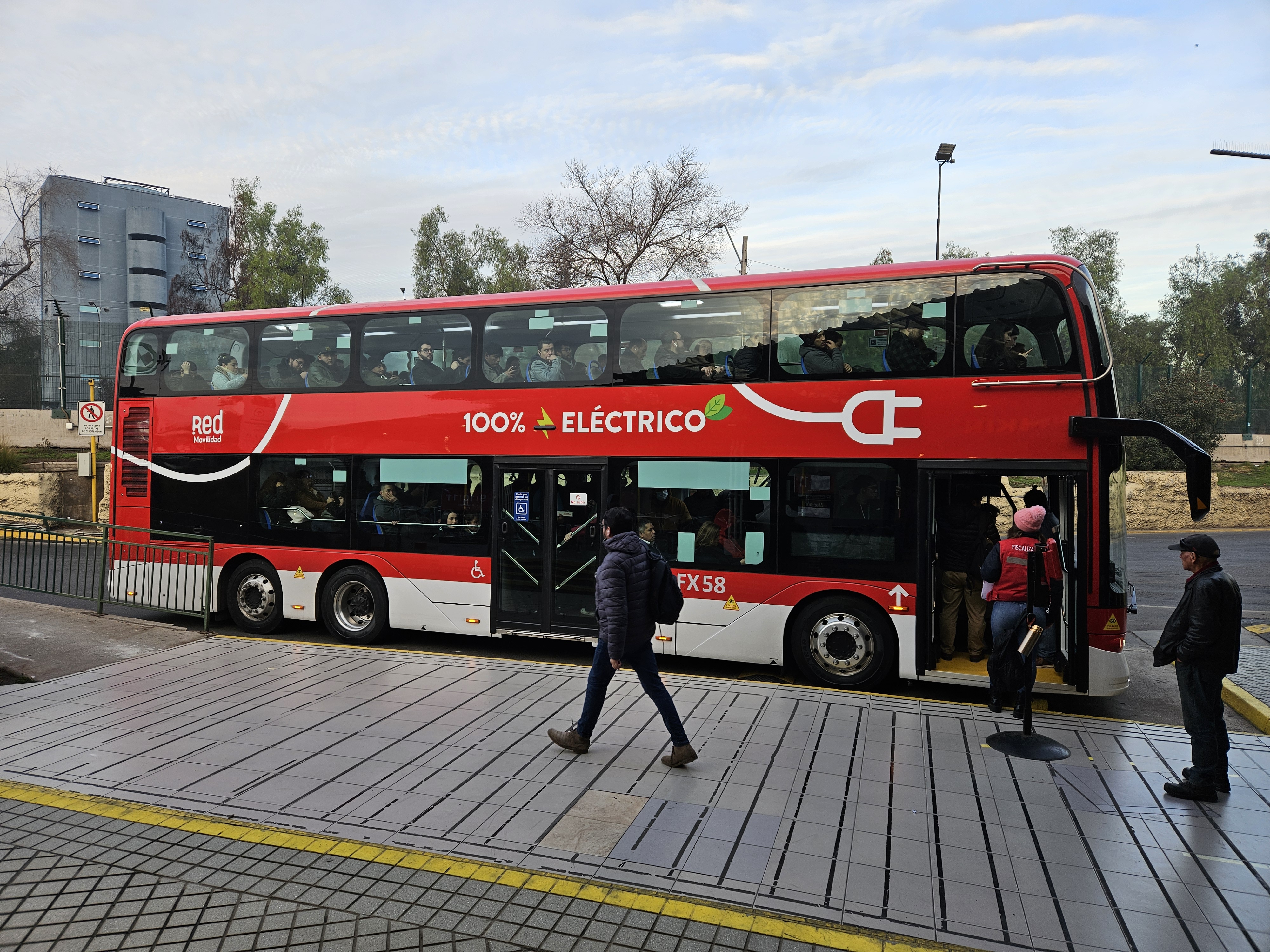
Fleet electrification managers plan the move of bus, van, and truck fleets from diesel, sizing depot connections and modelling energy use, while charge management engineers write the logic that shares limited depot power across dozens of vehicles by departure time and state of charge. Depot projects combine all three strands of this sector: charging hardware, grid connection, and energy management.
China and the United States
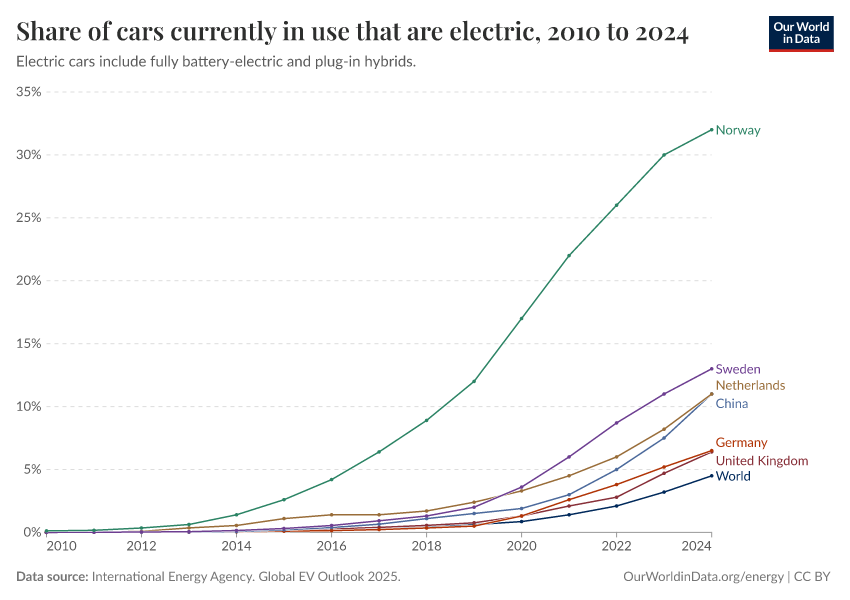
China dominates the electrification half of the sector. It sold more than 13 million electric cars in 2025, about six in ten of the global total, and electric cars reached almost 55% of its new car sales. Its charging network had grown to 21.01 million units by the end of February 2026, up 47.8% in a year, of which 4.83 million were public, and China holds over 65% of the world's public charge points. It is also the largest employer in efficiency and heat pumps on the IEA's figures, and around 70% of the global EV manufacturing workforce works there. For European job seekers the effect is mostly indirect: the hardware, and increasingly the companies selling and servicing it, arrive from China, so product, service, and key-account roles at Chinese makers' European subsidiaries are a growing part of the market.
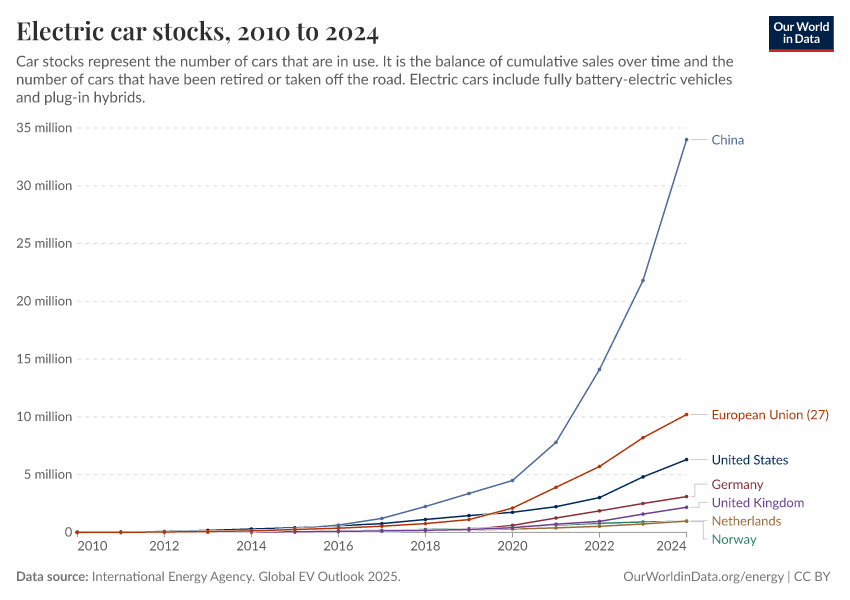
The United States employs nearly 2.4 million efficiency workers and is the market where federal support has retreated fastest. The 2025 budget law ended the home efficiency credit that covered heat pumps for property installed after 31 December 2025, the new EV credit for cars bought after 30 September 2025, and the charger credit for equipment installed after 30 June 2026. The federal NEVI corridor programme was paused for a year, and by April 2026 only about 550 NEVI-funded fast-charging points were operating across 19 states. The network still grows on private and state money: the US passed 250,406 public charging ports in June 2026, 73,951 of them DC fast. ESCO work on schools, hospitals, and federal sites is the steadiest US niche, because it is paid from savings rather than tax credits.
Salaries in Germany and the UK
| Role | Germany | UK |
|---|---|---|
| Heat pump installer / heating engineer | €31,800 - €45,800 | £24,000 - £46,000 |
| Electrician / EV charger installer | €33,000 - €47,100 | £37,000 - £45,000 |
| Energy assessor / Energieberater | €39,200 - €56,200 | £24,000 - £35,000 |
| Retrofit coordinator | no direct equivalent | £35,000 - £55,000 |
| Energy manager | €47,500 - €66,100 | £31,000 - £56,000 |
Annual gross salaries, 2025-2026 data. German figures are StepStone ranges for the base trades (Anlagenmechaniker, Elektroniker, Energieberater, Energiemanager); adverts for heat pump specialists often pay above the Anlagenmechaniker band. UK heat pump engineer and energy assessor ranges are from the National Careers Service (heat pump engineer, domestic energy assessor); the energy manager range is PayScale's 25th-75th percentile; EV installer and retrofit coordinator ranges reflect 2025-2026 adverts on the UK government's Find a Job service. Self-employed installers in both countries can earn considerably more. Approximate conversion: 1 GBP ≈ 1.17 EUR.
The pattern is consistent across both countries: base trade pay is modest, and the premium goes to people who hold several tickets at once, such as an electrician who is also F-gas certified, or an energy assessor who can coordinate a retrofit. Energy management and ESCO roles pay more but usually ask for an engineering degree or years of building services experience.
Working conditions
Most of the work happens inside other people's buildings. Heat pump and retrofit crews spend their days in lofts, cellars, and plant rooms, lifting outdoor units and cylinders, drilling through walls, and working with refrigerants, while charger installers dig trenches in car parks and kerbsides. Field roles mean driving between jobs and dealing directly with householders, who are often anxious about the cost and the disruption. DC chargers run at several hundred volts, so high-voltage safety procedures apply, and industrial electrification projects add the hazards of live process plant.
The bigger risk is the stop-and-go of subsidy cycles. Germany's heat pump market fell by 46% in 2024, then recovered by 55% in 2025; UK heat pump volumes track the Boiler Upgrade Scheme; French renovation firms lost months of work in 2025-2026 while MaPrimeRénov' was frozen; and US installers lost their main federal credits within a year. Firms with a mix of private, commercial, and public-sector customers ride these cycles better than those built on a single grant. Seasonality is milder than in construction generally, though demand for heating work spikes in autumn and winter.
Office roles in energy management software, charging platforms, and ESCO engineering offer hybrid working, and charging network operations run 24/7 on shifts. The trades remain male-dominated: the IEA finds women make up under 5% of technical and vocational workers in energy, against around 20% of the energy workforce overall.
Education and qualifications
Entry is through trade certificates, layered on top of a core electrical or heating qualification.
- UK: EV charger installers need a Level 3 electrotechnical qualification, the 18th Edition Wiring Regulations, and an EV-specific course such as City & Guilds 2921. Heat pump engineers usually come through plumbing, gas, or the Low Carbon Heating Technician apprenticeship, followed by a three-to-five-day heat pump course; installers need MCS certification for their customers to claim the Boiler Upgrade Scheme grant. Domestic energy assessors take a Level 3 certificate; retrofit coordinators a Level 5 qualification.
- France: installing charge points above 3.7 kW requires the IRVE qualification, issued by Qualifelec, AFNOR, or Qualit'EnR. Heat pump and renovation contractors need the RGE label before their clients can claim MaPrimeRénov'.
- Germany: the main routes are the Anlagenmechaniker SHK (plumbing, heating, and air conditioning) and Elektroniker apprenticeships; energy advisers who sign off federally funded renovations must be listed as Energieeffizienz-Experten.
- EU-wide: refrigerant handling requires the F-gas certificate, and EHPA's EUCERT programme offers a common heat pump installer qualification in 14 countries, according to the IEA.
For engineering and management roles, building services, electrical, and mechanical engineering degrees are the usual base, with ISO 50001 lead auditor training and certified measurement and verification credentials valued at ESCOs.
Transitioning from adjacent industries
Gas heating engineers have the shortest route: they already know hydraulic circuits, controls, and customers' homes, and the IEA names heating technicians retraining for heat pumps as a typical move into energy work. Electricians step into electrical installation of chargers, solar, and home batteries with a few short courses, and the same customer increasingly buys all three, which links this sector to solar energy installers. Building surveyors and estate agents' assessors move into retrofit coordination, and facilities managers with an interest in data become energy managers.
Telecoms and network engineers transfer well into charging network operations, since charger fleets are managed like distributed network equipment. Software developers find work in charging platforms, tariff and flexibility software, and building analytics without needing energy experience on day one. Automotive mechanics look closer than they are: a 12 V background does not cover 400 V systems, and targeted high-voltage training is the bridge.
Key employers
Charging networks
- Ionity - Germany, high-power charging along European motorways, founded by carmakers including BMW, Ford, Hyundai, Mercedes-Benz, and the VW Group; founding member of the Spark Alliance with Fastned, Electra, and Atlante
- Fastned - Netherlands, fast-charging stations under solar canopies; listed on Euronext
- EnBW mobility+ - Germany, large high-power charging network; operates Germany's first public megawatt charging point on the A2
- Allego - Netherlands, public charging across Europe, owned by Meridiam
- Electra - France, urban and roadside fast-charging hubs
- bp pulse - UK, charging arm of bp with a joint venture with Iberdrola in Spain and Portugal
- Tesla Supercharger - United States, global fast-charging network with many European sites open to other brands
Charger makers
- ABB E-mobility - Switzerland, AC and DC chargers; built the 1.2 MW unit at Germany's first public megawatt charging site
- Alpitronic - Italy, Bolzano-based maker of the Hypercharger high-power charger
- Kempower - Finland, modular DC systems with satellite dispensers; listed on Nasdaq Helsinki
- Zaptec - Norway, AC chargers including the bidirectional Zaptec Pro used in the Octopus and BYD V2G bundle
- Wallbox - Spain, home and business chargers, including the bidirectional Quasar line
- Delta Electronics - Taiwan, ultra-fast DC chargers alongside inverters and storage
Heat pump makers and installers
- NIBE - Sweden, heat pumps, water heaters, and ventilation; SEK 40.8 billion of net sales in 2025
- Viessmann Climate Solutions - Germany, part of Carrier since January 2024 after a deal of about EUR 12 billion; around 12,000 staff at the time of the acquisition
- Vaillant Group - Germany, family-owned heating maker based in Remscheid
- Bosch Home Comfort - Germany, heat pumps and boilers under the Bosch, Buderus, and Worcester brands
- Daikin Europe - Belgium (Japanese parent), air-to-water and air-to-air heat pumps
- Stiebel Eltron - Germany, heat pumps and hot water systems
- Aira - Sweden, sells and installs heat pumps directly to households and trains its own installers at academies in Sheffield and London
- Octopus Energy - UK, energy supplier that installs heat pumps and runs its own installer training
ESCOs and energy services
- Ameresco - United States, NYSE-listed ESCO working largely for public-sector clients; USD 1.93 billion of revenue in 2025 and a backlog above USD 5 billion
- Dalkia - France, EDF's energy services subsidiary, running heating networks and efficiency contracts
- Engie - France, energy services and performance contracts for public and industrial clients
- Equans - France, building services and energy efficiency group owned by Bouygues
- Johnson Controls - Ireland/United States, building automation, industrial refrigeration, and energy performance contracting
- Siemens Smart Infrastructure - Germany, building automation and energy performance services
Energy management and charging software
- Schneider Electric - France, building and industrial energy management software and EV chargers
- Kraken - UK, the Octopus-built platform for tariffs, smart charging, and device flexibility
- Monta - Denmark, charge point management and payment software for operators and fleets
- Hubject - Germany, eRoaming platform connecting charging networks across Europe and beyond
- The Mobility House - Germany, fleet charging management and V2G, with a home V2G partnership with Mercedes-Benz
- ev.energy - UK, smart charging software that schedules home charging for cost and carbon
Outlook to 2030
The IEA expects the global efficiency workforce to reach 16.3 million by 2035 under stated policies, or 22.4 million on a net-zero path, against 13.3 million if current policies stall. The European numbers are sharper: the EU's heat pump ambitions alone call for roughly three times the 165,000 skilled installers of 2024 by 2030, while renovation duties under the buildings directive start to bite in the same years. Whether that demand becomes steady hiring depends less on technology than on whether governments keep grant schemes open long enough for installers to train apprentices against them.