
Renewable energy jobs at Vicinity Energy
-
 On-site Full time 2 days ago
 -
-
-
-
-
Expired
Oklahoma City, Oklahoma, United StatesOn-site Full time 19 days ago
-
Expired
Boston, Massachusetts, United StatesOn-site Full time 14 days agoUSD 45 per hour
-
Expired
Trenton, New Jersey, United StatesOn-site Full time 21 days agoUSD 120k–140k yearly
-
Expired
Tulsa, Oklahoma, United StatesOn-site Full time 28 days ago
-
Expired
Boston, Massachusetts, United StatesOn-site Full time 37 days agoUSD 110k–130k yearly
-
Expired
Boston, Massachusetts, United StatesOn-site Full time 35 days agoUSD 57 per hour
-
Expired
Baltimore, Maryland, United StatesOn-site Full time 8 days agoUSD 32 per hour
-
Expired
Baltimore, Maryland, United StatesOn-site Full time 6 days agoUSD 49 per hour
-
Expired
Philadelphia, Pennsylvania, United StatesOn-site Full time 11 days ago
-
Expired
Baltimore, Maryland, United StatesOn-site Full time 41 days agoUSD 48 per hour
Vicinity Energy
Company Overview
Vicinity Energy, privately owned by Antin Infrastructure Partners
HeadquartersBoston, Massachusetts, United States
Founded2020
SizeApproximately 520 employees (source: zoominfo.com)
What They Do
Vicinity Energy is a leading U.S. district energy company specializing in the production and distribution of steam, hot water, chilled water, and carbon-free steam through underground networks to buildings and campuses (source: vicinityenergy.us). Established in 2020 following Antin Infrastructure Partners' acquisition of Veolia’s U.S. district energy assets, Vicinity operates 19 district energy systems across 12 cities nationwide, serving roughly 1,000 customers through long-term contracts (source: antin-ip.com). The company focuses on central thermal infrastructure technologies including steam plants, chilled-water systems, electric boilers, industrial-scale heat pumps, and thermal storage rather than renewable generation like solar or wind (source: wikipedia.org). Vicinity is recognized as the first U.S. provider to introduce carbon-free eSteam™, an innovative solution aimed at rapidly decarbonizing customers’ thermal loads, with initial deployments in Boston and Cambridge (source: vicinityenergy.us). Their customer base primarily includes large commercial properties and campuses located in dense urban cores, where centralized energy production improves efficiency, reliability, and reduces carbon footprints (source: zoominfo.com).
Projects & Track Record
Vicinity Energy operates several notable district energy assets across the United States. Among these is the 163 MW Grays Ferry cogeneration plant in Philadelphia, which serves over 70 million square feet of building space (source: wikipedia.org). In Cambridge, the company runs the 200 MW Kendall Cogeneration Station, also serving 70 million square feet (source: wikipedia.org). Other significant systems include the Tulsa district energy plant serving 7 million square feet, Oklahoma City’s system serving 9.9 million square feet, and Kansas City’s facility serving 11 million square feet (source: wikipedia.org). The Kent County waste-to-energy and district energy system in Grand Rapids serves 10 million square feet, while Baltimore’s system covers over 30 million square feet including major institutions like the Walters Art Museum and Mercy Medical Center (source: wikipedia.org). The Atlantic Station chilled water system in Atlanta serves 4.7 million square feet, and the Trenton district energy system serves 12 million square feet (source: wikipedia.org). Vicinity’s portfolio expanded in 2020 with acquisitions such as the Watergate Energy Collaborative Utility in Washington, D.C., and West Virginia University’s district steam system in Morgantown (source: wikipedia.org).
Recent Developments
Recent initiatives at Vicinity Energy have focused on electrification and decarbonization of thermal energy systems. In April 2022, the company launched eSteam™, marking the first U.S. innovation to electrify district energy operations using renewable thermal energy, initially deployed in Boston and Cambridge (source: wikipedia.org). In April 2023, Vicinity partnered with MAN Energy Solutions, based in Augsburg, Germany, to develop low-temperature source heat pump systems for steam generation, aiming to enhance sustainability (source: wikipedia.org). The company plans to install an industrial-scale heat pump complex at its Cambridge facility powered by renewable electricity, designed to harvest heat from the Charles River while protecting the river environment by returning water at a lower temperature (source: wikipedia.org). In November 2023, Vicinity announced the arrival of a 42 MW industrial-scale electric boiler at the Kendall Square facility in Cambridge, further advancing its electrification goals (source: wikipedia.org). The company is committed to achieving net-zero carbon emissions across its operations by 2050 or sooner (source: wikipedia.org).
Working There
Vicinity Energy offers a range of roles spanning plant operations, maintenance, engineering, distribution, commercial functions, and technical trades, reflecting its operations-heavy business model (source: indeed.com). Job postings include positions such as Plant Engineer, Technician, Maintenance Mechanic, Account Manager, Operations Manager, Test Manager, and Skilled Laborer, with responsibilities covering site engineering support, project management, troubleshooting, and thermal performance monitoring (source: indeed.com). The company’s Boston headquarters and additional operating sites make the area a key hiring location, with roles requiring skills in carpentry, concrete, excavation, piping insulation, and masonry, often within unionized environments such as IUOE Local 877 (source: indeed.com). Compensation packages include competitive salaries, bonuses, personal and parental leave, paid holidays, and 401(k) plans with matching contributions, reflecting a structured benefits program (source: indeed.com). Vicinity’s culture emphasizes solving complex clean energy challenges within a niche sector that bridges utilities, industrial engineering, and building services, offering employees the opportunity to contribute to large-scale thermal utility operations and rapid decarbonization efforts (source: vicinityenergy.us).
Last updated on May 19, 2026 | Report an issue
Get job alerts
Get renewable energy jobs delivered weekly to your inbox
Join Talent Pool
Let clean energy employers find you
Featured jobs




Renewable energy blog posts
-

Renewable Energy Forecast for 2030
By 2030, renewables are poised to supply nearly half of global electricity, with solar and wind leading this explosive expansion. In this data-driven piece, we explore job creation forecasts, supply chain bottlenecks, and policy hurdles. -

Fastest Growing Renewable Energy Sector: Data and Trends
In 2023, solar photovoltaics surged by 32.59%, officially making it the fastest-growing renewable energy source worldwide. Yet offshore wind, which soared by 57.87% in 2021, remains a formidable competitor in total electricity output due to its high capacity factor. This concise overview highlights how policy incentives, cost reductions, and manufacturing advances are propelling solar to the forefront of the global energy transition. -
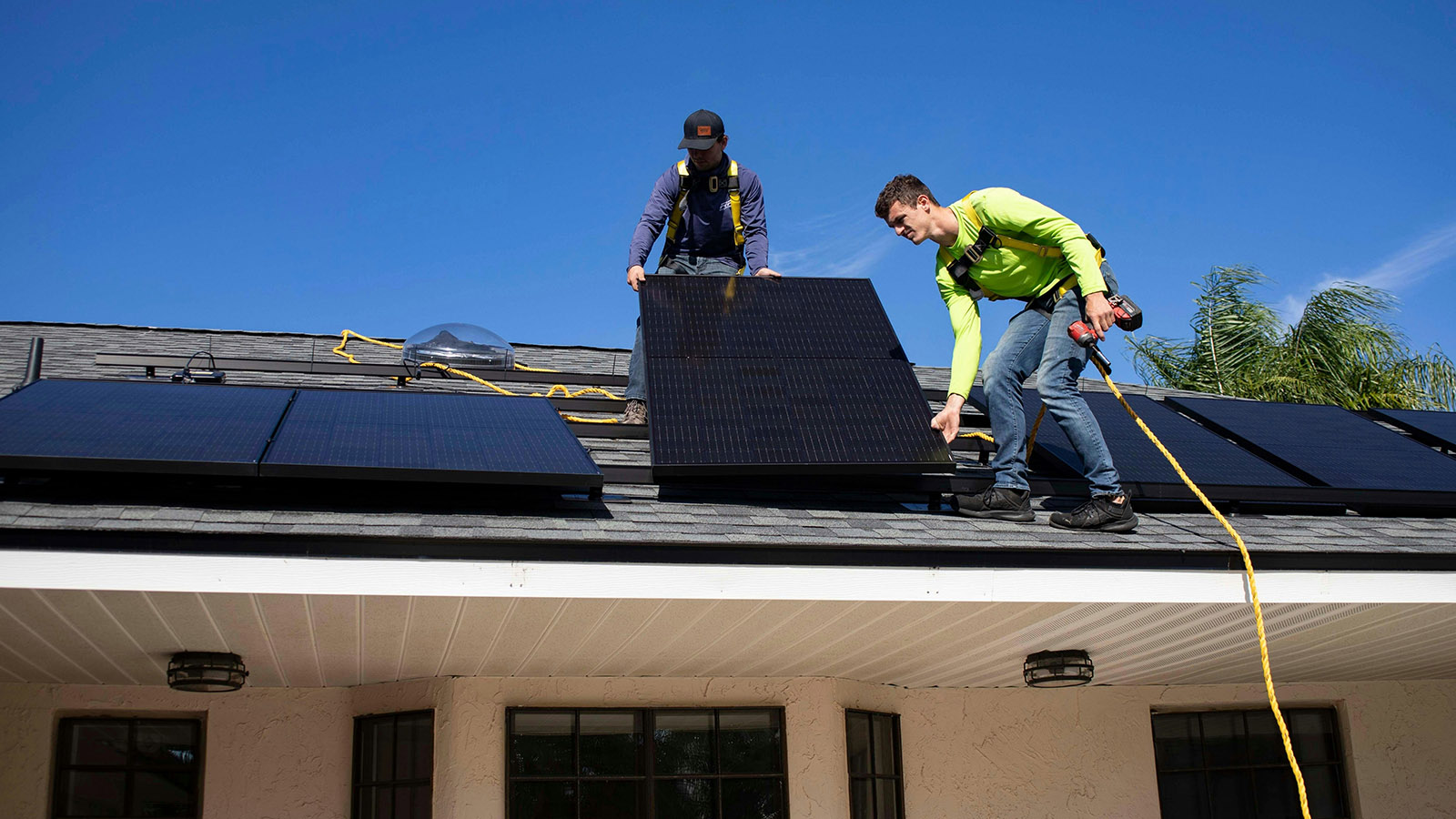
Career Opportunities in Solar Energy
The solar energy sector is experiencing unprecedented growth, with over 7.1 million jobs in solar PV alone as of 2023. For professionals considering a career shift into renewable energy, solar offers pathways across R&D, manufacturing, project development, and operations.
