
Renewable energy jobs · System Analysis
-
 On-site Full time Today
 -
 On-site Full time Today
 -

-

-

-

-
 Flexible Full time Today
 -
 On-site Full time Today
 -
Expired
 SingaporeOn-site Full time More than 3 months ago
 -
Expired
 SingaporeFlexible Internship More than 3 months ago
 -
Expired
 Swindon, United Kingdom + 2 locationsFlexible Full time More than 3 months ago
 -
Expired
 Pomona, California, United StatesHybrid Full time More than 3 months ago
 -
Expired
 Leipzig, GermanyHybrid Full time More than 3 months ago
 -
Expired
 Tracy, United StatesOn-site Full time More than 3 months agoUS$92,000–138,000 annually

System Analysis Jobs in Renewable Energy
System analysis in renewable energy involves modelling, diagnosing, and optimising the technical and operational performance of energy assets - from individual solar arrays to interconnected grid networks. With the global renewable energy workforce reaching 16.6 million in 2024, according to IRENA's latest annual review, system analysts sit at the intersection of engineering and data, translating raw operational signals into decisions that keep generation assets running and grid operators confident.
What system analysts actually do
The title covers a broad range of work. Some system analysts focus on SCADA data - monitoring turbine vibration signatures, inverter fault codes, or battery state-of-charge patterns to flag problems before they cause downtime. Others build power flow models in tools like PSS/E, PowerWorld, or PLEXOS, simulating how proposed solar farms or wind clusters will affect grid stability. A third group works on the IT side: maintaining the enterprise systems (ERP, asset management platforms, fleet tracking) that keep renewable energy operations running at scale.
What unites these roles is a common requirement: the ability to move between technical depth and operational context. A system analyst who spots an anomaly in a wind farm's pitch control data needs to understand both the signal processing and the maintenance implications.
Who hires system analysts
The employers recruiting for these roles span utilities, grid operators, manufacturers, and energy technology firms. Southern California Edison and OVO Energy hire analysts for grid-side and retail energy operations. Dutch grid operator Enexis regularly needs analysts for its distribution network modernisation. On the manufacturing side, Bloom Energy and Verkor employ system analysts to monitor fuel cell and battery production lines, while Landis+Gyr brings them in for smart metering and grid-edge analytics.
Geographically, roles cluster in Germany (Berlin, Hamburg), the Netherlands (Zwolle, Rotterdam), London, and across the United States - with California and the US East Coast particularly active.
In-demand role variations
Job titles in this space vary considerably. Reliability engineers overlap with system analysts when the work involves root-cause analysis of equipment failures. Data engineers build the pipelines that feed analytical dashboards. Diagnosticians - a title common at fuel cell and battery manufacturers - combine system analysis with hands-on troubleshooting. Business analysts translate technical findings into commercial decisions, particularly in energy trading and asset management.
The Bureau of Labor Statistics projects 9% growth in energy-related analytical occupations over the next decade, outpacing the average across all professions. SCADA and data analytics was identified as the most in-demand skill set by 26% of renewable energy employers surveyed through 2028.
Skills that command a premium
Python, MATLAB, and R form the analytical backbone. But what differentiates senior system analysts is domain knowledge: understanding how a grid constraint manifests in nodal pricing, or why a specific inverter topology produces particular harmonic signatures. Employers consistently cite the combination of power systems knowledge with data science fluency as the hardest skill set to find.
Cybersecurity awareness is increasingly non-negotiable. As renewable energy assets become more connected - through IoT sensors, cloud-based monitoring, and remote control interfaces - system analysts are expected to understand threat surfaces alongside performance metrics. Professionals who can bridge energy analytics with SCADA security command the strongest positions.
Where the field is heading
The integration of AI into energy system analysis is reshaping what these roles look like. Predictive maintenance models that flag turbine bearing failures weeks in advance, automated grid balancing algorithms, and digital twins of entire wind farms are moving from pilot projects to production. For system analysts, this means less time building spreadsheets and more time validating model outputs and interpreting edge cases that algorithms miss.
The growth of distributed energy resources - rooftop solar, behind-the-meter batteries, vehicle-to-grid systems - adds complexity that only increases demand for analytical roles. Every new grid-connected asset generates data that someone needs to make sense of.
Last updated on Sep 8, 2026 | Report an issue
Get job alerts
Get alerts for System Analysis jobs
Join Talent Pool
Let clean energy employers find you
Featured jobs




Renewable energy blog posts
-

Renewable Energy Forecast for 2030
By 2030, renewables are poised to supply nearly half of global electricity, with solar and wind leading this explosive expansion. In this data-driven piece, we explore job creation forecasts, supply chain bottlenecks, and policy hurdles. -

Fastest Growing Renewable Energy Sector: Data and Trends
In 2023, solar photovoltaics surged by 32.59%, officially making it the fastest-growing renewable energy source worldwide. Yet offshore wind, which soared by 57.87% in 2021, remains a formidable competitor in total electricity output due to its high capacity factor. This concise overview highlights how policy incentives, cost reductions, and manufacturing advances are propelling solar to the forefront of the global energy transition. -
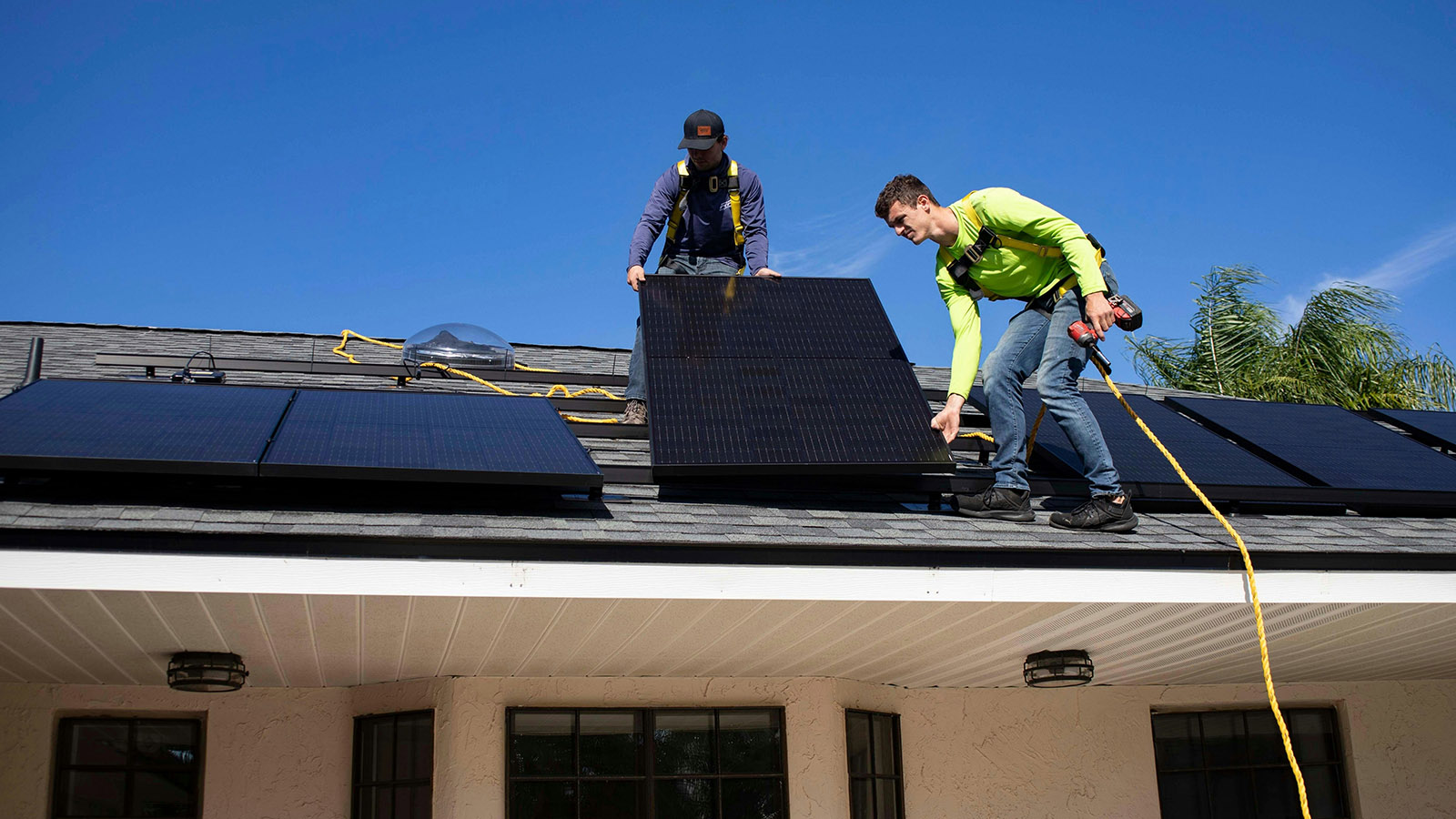
Career Opportunities in Solar Energy
The solar energy sector is experiencing unprecedented growth, with over 7.1 million jobs in solar PV alone as of 2023. For professionals considering a career shift into renewable energy, solar offers pathways across R&D, manufacturing, project development, and operations.
