

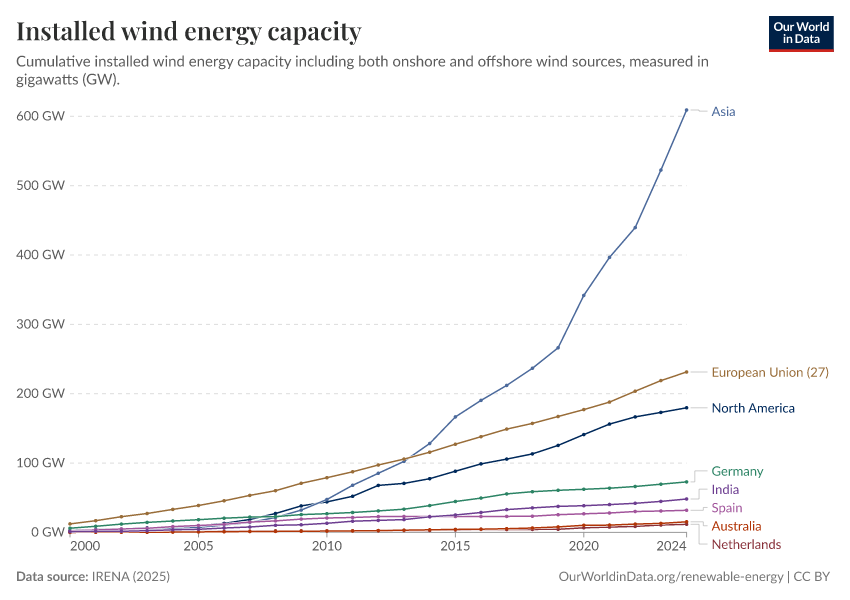
Tidal, wave and ocean energy employed roughly 1,000 people worldwide in 2023, only about 415 of them in the EU's specialised device developers - a modest figure that reflects a hard truth: after six decades of research, tidal and wave energy remains a pre-commercial industry. The installed capacity worldwide sits at roughly 508 MW operational, less than a single large offshore wind farm. For context, solar PV added 597 GW in 2024 alone - over a thousand times more.
Yet this small sector is at an inflection point. The UK awarded 28 MW of tidal stream projects through its 2024 Contract for Difference auction, France committed €126 million to two major tidal arrays, and CorPower Ocean - the Swedish wave energy leader - raised €49.5 million in 2024-2025 to commercialise its technology. China launched a nationwide coastal marine energy survey targeting 400 MW of installed capacity by 2030. The US Department of Energy allocated $112.5 million for wave energy open-water testing in September 2024.
If these projects deliver, projections suggest the sector could support 680,000 direct jobs globally by 2050. Industry body Ocean Energy Europe projects 400,000 jobs in Europe by 2050 at 100 GW deployed. But those are projections, not job adverts. For anyone considering this field, the question is whether you want to be part of building an industry from the ground up - or whether you need job security today.
Two technologies, two levels of maturity
Tidal and wave energy sits somewhere between advanced R&D and early commercialisation. The technology works - turbines are spinning, grids are receiving power - but the economics remain challenging. The levelised cost of energy (LCOE, what a project's power costs over its whole lifetime) for ocean energy ranges from $0.20 to $0.85 per kWh, compared to $0.03-$0.12 for solar and wind energy. That gap explains why installed capacity remains minimal and why employment numbers are measured in hundreds rather than hundreds of thousands.
The sector has split into two technology paths, and they are not at the same stage. One is building small commercial arrays; the other is still arguing about what its machines should look like.
Tidal stream energy
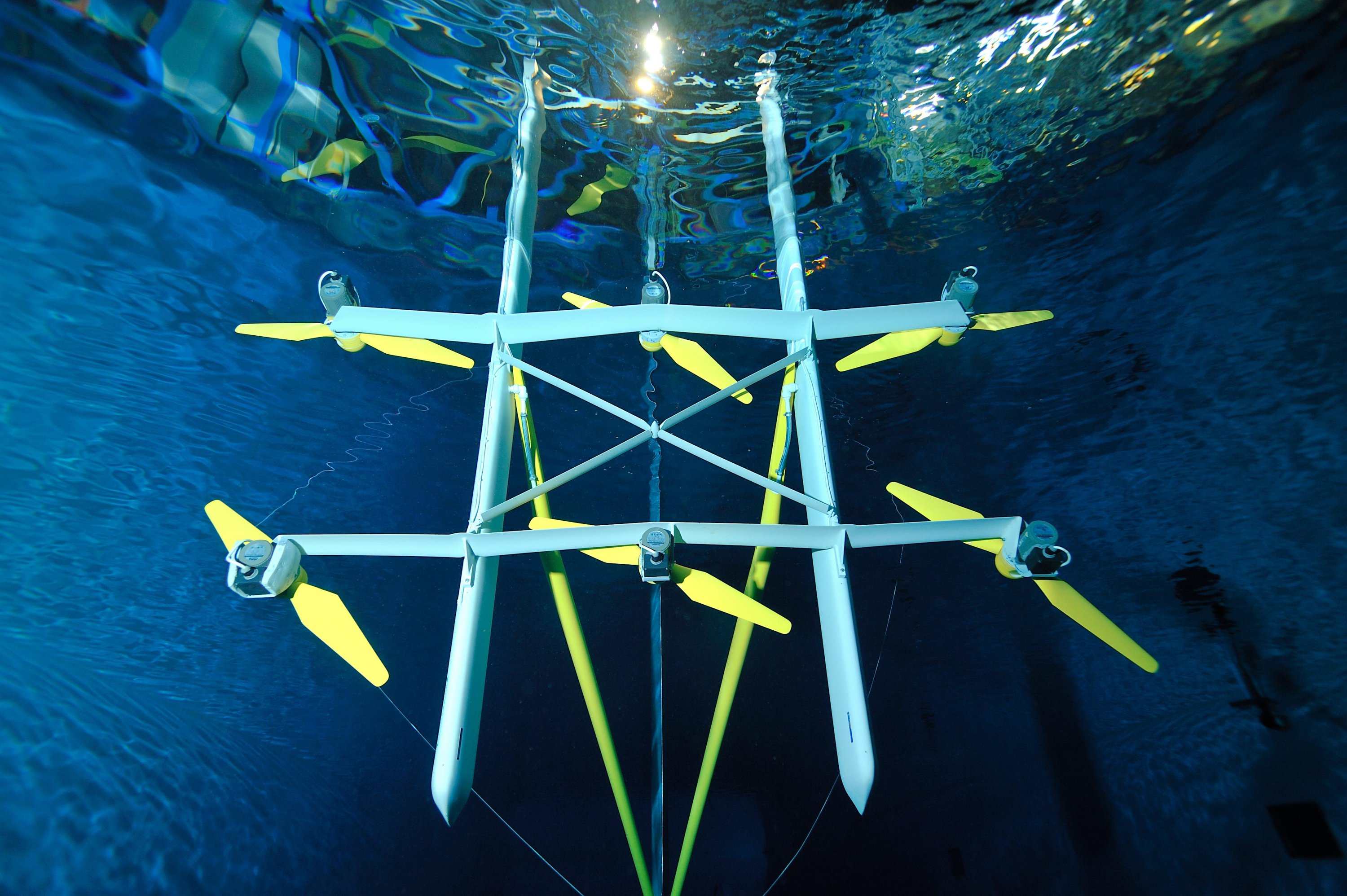
This is where the commercial momentum lives. Tidal energy converters - underwater turbines that capture kinetic energy from tidal currents - are the ocean energy equivalent of offshore wind. The technology is proven, installations are growing, and several manufacturers have moved beyond prototypes to small commercial arrays.
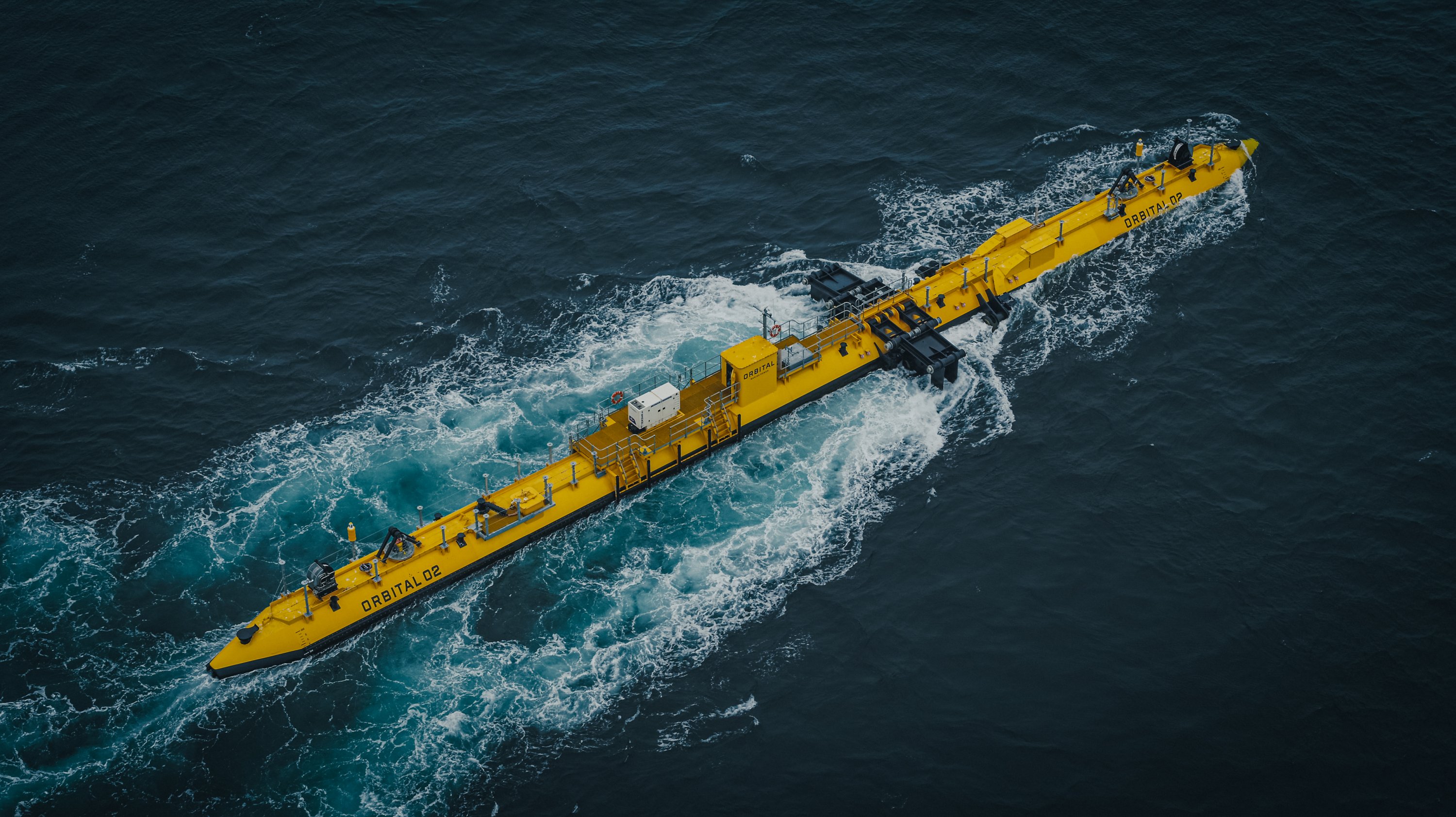
Scotland's MeyGen project is the flagship: 6 MW operational since 2018, with a 59 MW expansion phased through 2027-2029. Nova Innovation delivered the world's first offshore tidal array in Shetland in 2016 and secured 6 MW in the UK's 2024 Contract for Difference auction. Orbital Marine Power's O2 turbine - the world's most powerful at 2 MW - has been feeding electricity to Orkney's grid, with six next-generation O2-X turbines planned from 2027. France's FloWatt project (17 MW) and NH1 (12 MW) both secured funding and feed-in tariffs in 2024-2025.
The work mirrors offshore wind engineering: subsea installation, marine engineering, high-voltage grid connection, remote monitoring, and vessel-based O&M. Skills are directly transferable, and several tidal developers explicitly recruit from the offshore wind and oil & gas sectors.
Wave energy
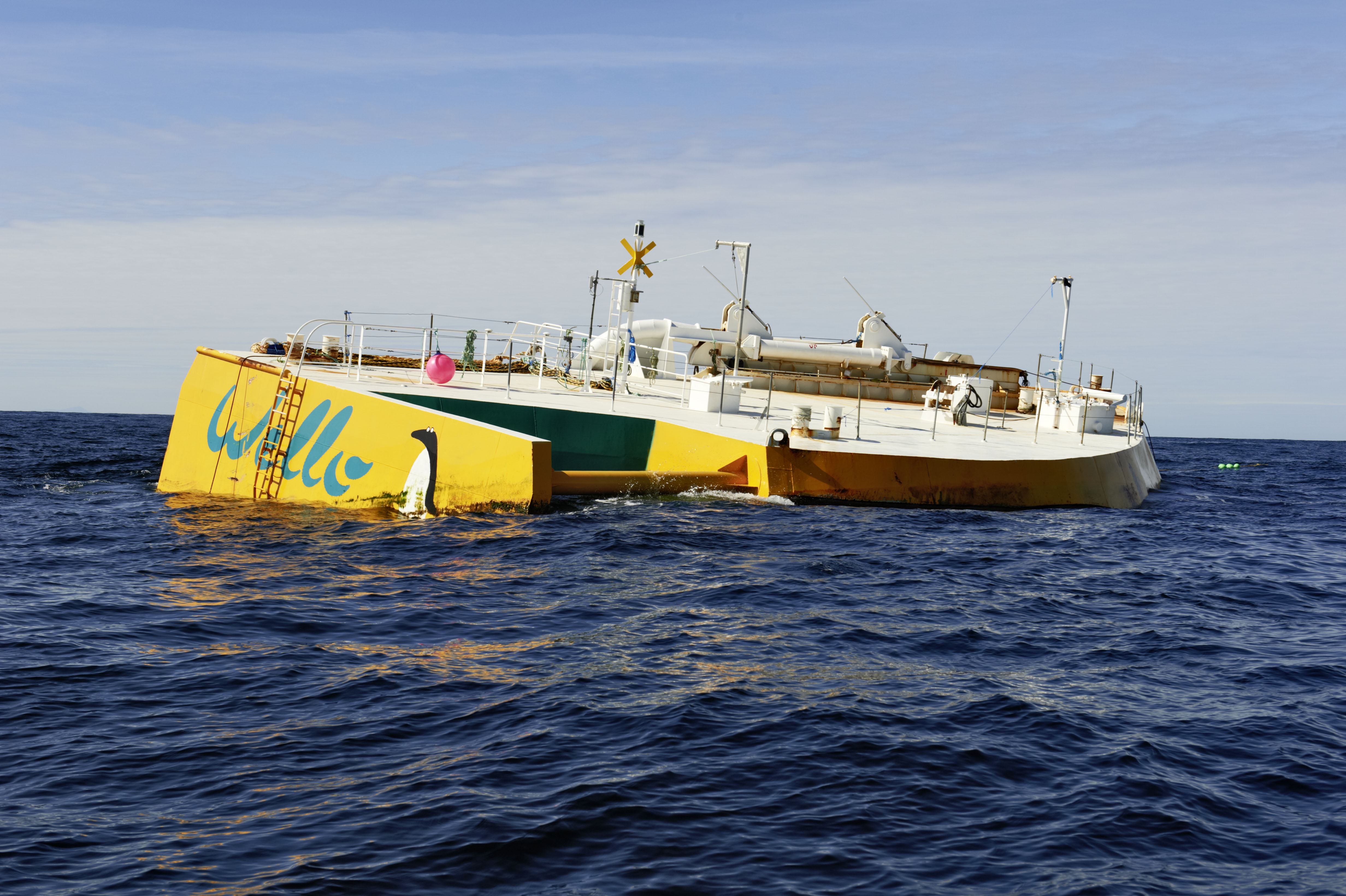
Wave energy converters remain technologically diverse and commercially nascent. Dozens of competing designs - oscillating water columns, point absorbers, overtopping devices, onshore floaters - are vying for dominance, and no clear winner has emerged. This is both a problem (fragmentation delays commercialisation) and an opportunity (engineering creativity still matters).
CorPower Ocean has become the sector's breakout company. Its C4 device survived 18.5-metre storm waves while maintaining optimised power capture in late 2023, validating its phase-control technology. The company leads two major projects: a 10 MW array in Portugal (€40 million EU Innovation Fund grant, operations 2029) and a 5 MW installation at EMEC in Scotland (€19 million, operations 2029). In October 2024, CorPower raised €32 million and added another €17.5 million in February 2025, signalling investor confidence that commercialisation is within reach.
Other players are smaller but active. Eco Wave Power brought its onshore wave system online at Jaffa Port, Israel, in December 2024, operating 24/7 with peak output of 56.7 kW. Ocean Power Technologies has shifted focus to autonomous offshore platforms for monitoring and communications, with wave energy a secondary function. Both companies are expanding internationally - Eco Wave to Los Angeles, Taiwan, and Portugal, OPT to Chile and the Adriatic.
Wave energy jobs span a wider technical range than tidal: composite materials specialists, mooring systems engineers, power take-off designers, hydrodynamic modellers, and data analysts interpreting performance in variable sea states. The sector needs people comfortable with uncertainty and iteration.
Key markets
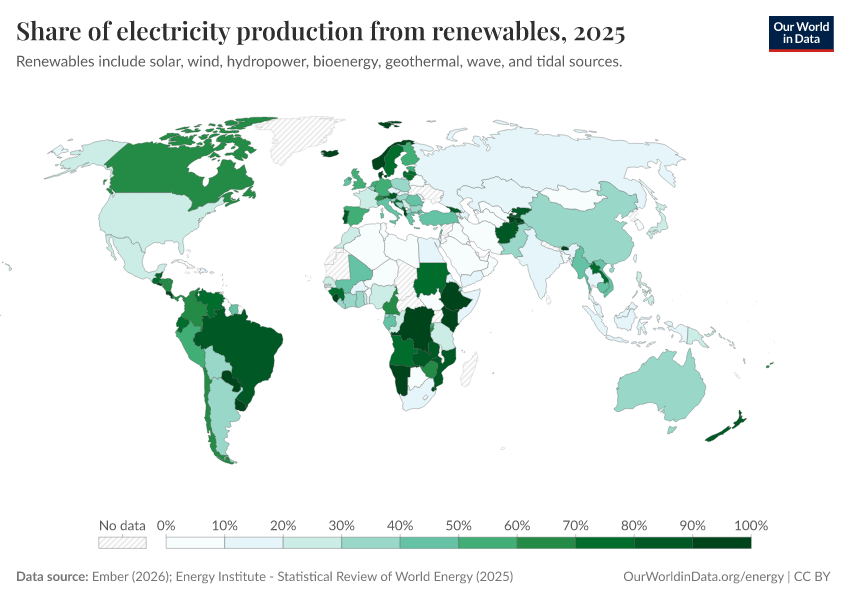
Ocean energy employment is concentrated in a small number of countries with strong policy support, suitable coastlines, and existing offshore industries. That combination is rarer than it sounds. Fast tidal races and heavy Atlantic swell sit where geography put them, and only a few of those places also have the ports, vessels, and engineering base to work them.
United Kingdom - the undisputed leader
Scotland is the global centre of tidal stream development. The Pentland Firth between mainland Scotland and Orkney has some of the world's fastest tidal currents, making it ideal for testing and deployment. The UK government ringfenced tidal stream in its 2024 Contracts for Difference auction, awarding 28 MW across six projects at strike prices of £172/MWh, the fixed rate a project is guaranteed for its power. That puts the UK on track for over 130 MW deployed by 2029.
Key sites include MeyGen (Caithness), the European Marine Energy Centre EMEC (Orkney), and Nova Innovation's Shetland array. Orbital Marine's 170 MW Westray Array, if it proceeds, would be the world's largest tidal stream array. The sector could deliver £8 billion to Scotland's economy and 15,000 direct jobs by 2050, alongside 46,000 export-related positions.
For job seekers, this means Edinburgh, Orkney, Inverness, and Shetland host most tidal stream employers. Coastal engineering specialists, subsea technicians, and project developers will find the UK's pipeline the most active globally.
France - state-backed ambition
France committed €126 million across two major tidal projects in 2024-2025, both backed by 20-year feed-in tariffs. FloWatt (17 MW) and NH1 (12 MW) are expected to commission by 2028, anchoring a French tidal sector projected to reach 6,000 jobs by 2030. Developers include HydroQuest (a 30-person team, 80% engineers, five PhDs) and partnerships with utilities like Qair and Guinard Énergies Nouvelles.
France also hosts wave energy testing, though the region's flagship wave farm is Portuguese: VianaWave is being developed there by Sweden's CorPower. France's own claim rests on its Atlantic coastline and R&D funding, which could make it a long-term wave energy hub.
China - industrial-scale ambition, opaque employment data
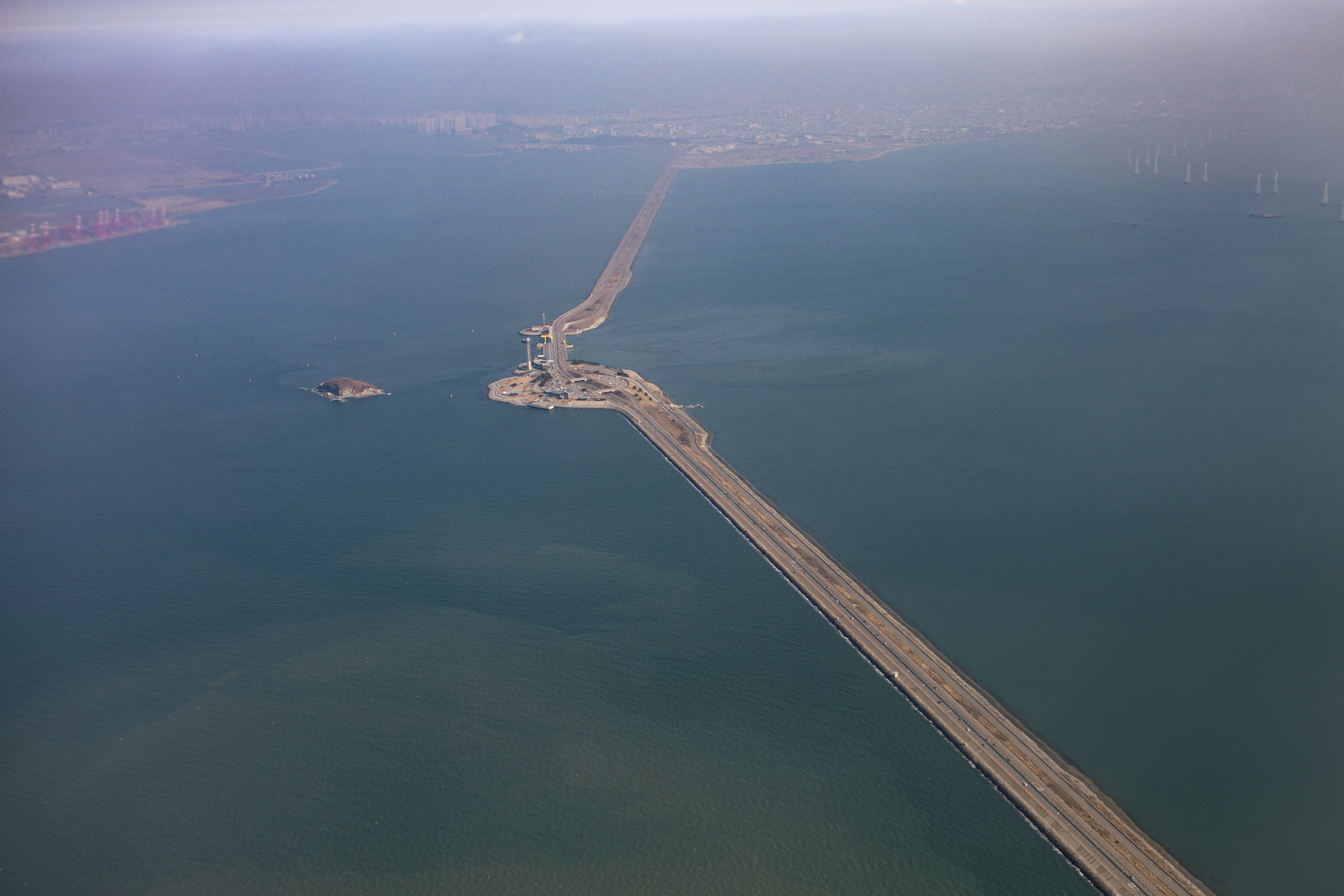
China's LHD tidal stream station in Zhejiang province added a fourth-generation unit in 2022, and the Nankun floating wave platform entered trials off Zhuhai in 2023. The government's 15th Five-Year Plan (2026-2030) prioritises marine energy utilisation, targeting 400 MW of installed capacity by 2030. South Korea's Sihwa Lake Tidal Power Station remains the world's largest tidal installation at 254 MW, though it uses tidal range (barrage) technology rather than tidal stream.
Employment data from China is not publicly available at the project level, but the scale of deployment suggests hundreds of construction and manufacturing jobs are being created. For Western job seekers, these projects are largely inaccessible, but they indicate where the technology is heading.
Portugal, Faroe Islands, and the United States - emerging hubs
Portugal's coast hosts CorPower's HiWave-5 demonstrator and VianaWave farm and has a national target of 200 MW wave energy by 2030. The Faroe Islands brought Minesto's Dragon 12 (1.2 MW) online in February 2024 and has a pipeline of 200 MW across seven sites using the company's unique "tidal kite" design. The US is investing heavily in testing infrastructure - PacWave South in Oregon is now fully operational, providing grid-connected wave energy berths for developers.
Roles along the value chain
Ocean energy roles fall into three categories: research and development, project development and installation, and operations and maintenance. The balance between them is lopsided. With so little capacity in the water, most people in this sector work on machines that have not been built yet rather than on ones already turning.
Engineering and R&D
Most current employment sits in engineering. Naval architects design turbine blades, mooring systems, and subsea platforms. Hydrodynamic engineers model tidal flows and wave spectra to optimise energy capture. Electrical engineers handle power electronics, grid connection, and subsea control systems. Materials scientists work on composites that can withstand decades of saltwater exposure and fatigue loading.
CorPower Ocean employs structural engineers, software developers, and test engineers at its Stockholm headquarters and Aguçadoura facility in Portugal. Orbital Marine Power operates from Orkney with a team spanning mechanical, electrical, and offshore disciplines. HydroQuest's 30-person team is 80% engineers, reflecting the R&D intensity of the sector.
The work is iterative - designing components, testing in wave tanks and at sea, analysing failure modes, redesigning. Many professionals enter via postdoctoral positions, national lab internships, or Master's programmes in marine renewable energy.
Project development and installation
As projects scale from single demonstration units to multi-turbine arrays, demand grows for project managers, environmental management specialists, consenting experts who steer projects through planning permission, and offshore construction managers. These roles overlap heavily with offshore wind, and recruiters explicitly target candidates with offshore wind or oil & gas experience.
Installation requires marine vessel operators, cable-laying specialists, ROV (remotely operated vehicle) pilots, and dive teams for subsea work. MeyGen's expansion from 6 MW to 59 MW will employ construction crews over several years. FloWatt and NH1 will each require civil works, subsea cabling, and turbine deployment between now and 2028.
Operations and maintenance
Once commissioned, tidal and wave arrays need ongoing monitoring, inspection, and repair. Technicians visit sites by crew transfer vessels or service boats, often working two-week offshore rotations. The work combines mechanical and electrical troubleshooting with offshore survival skills (BOSIET and HUET certifications are standard). Remote monitoring centres - similar to wind farm control rooms - track real-time performance and dispatch maintenance teams when faults occur.
The O&M workforce is still tiny because the installed base is small, but growth is coming. MeyGen alone will require a permanent O&M team as its 59 MW expansion completes. CorPower's two projects will need service crews by 2029.
Key employers
Employment in tidal and wave energy concentrates in a handful of companies and research institutions, most of them small enough that one project win or one failed funding round moves their headcount.
Tidal stream developers
Ampeak Energy (UK, formerly SIMEC Atlantis) operates MeyGen and secured 9 MW in the 2024 CfD auction. The company employs project managers and offshore engineers, and partners with GE Power Conversion on tidal turbine electrical systems. Orbital Marine Power (Orkney) generated approximately $7.6 million revenue in 2024 and is advancing its O2-X turbine design for a planned 170 MW Westray Array. Nova Innovation (Edinburgh) operates the Shetland array and is expanding to Canada's Bay of Fundy with five turbines planned by 2027-2028. The company emphasises "high-quality green jobs" in its project communications.
Minesto (Sweden) brought its 1.2 MW Dragon 12 tidal kite online in the Faroe Islands and has a 200 MW pipeline. HydroQuest (France) employs 30 people and leads the FloWatt consortium. All these companies recruit marine engineers, electrical engineers, project developers, and offshore technicians.
Wave energy developers
CorPower Ocean (Sweden/Portugal) is the most active employer in wave energy as of 2026. The company raised €49.5 million between October 2024 and February 2025 and leads the €40 million EU Innovation Fund-backed VianaWave farm in Portugal. Roles span R&D, testing, project management, and commercial development. Eco Wave Power (Israel) focuses on onshore wave systems and is expanding to the US, Taiwan, and Portugal. Ocean Power Technologies (USA) employs engineers working on its PB3 PowerBuoy platform, though its revenue model now focuses on offshore monitoring rather than pure power generation.
Engineering consultancies and research centres
Major offshore engineering firms - including DNV, Ramboll, and Wood - undertake feasibility studies, consenting work, and grid integration analysis for ocean energy projects. University research centres such as the European Marine Energy Centre (EMEC) in Orkney, Bangor University's Marine Energy Research Group, and the National Renewable Energy Laboratory (NREL) in the US employ research engineers, oceanographers, and environmental scientists. These roles often serve as entry points into the sector.
Entry routes
Ocean energy recruits heavily from adjacent industries, particularly offshore wind, oil & gas, and naval engineering. The skills overlap is around 80% - subsea installation, high-voltage systems, marine operations, and remote offshore work are near-identical. In a survey of North Sea oil and gas workers, 53% expressed interest in moving to offshore wind, and that interest extends to ocean energy. Half of workers in fossil fuel sectors have skills applicable to clean energy with minimal retraining - often as little as four weeks.
Key transferable roles include:
- Subsea engineers from oil & gas platforms to tidal turbine installation
- Offshore wind technicians to ocean energy O&M roles
- Naval architects from shipbuilding to turbine and platform design
- ROV pilots and commercial divers for underwater inspection and repair
- Electrical engineers from offshore substations to tidal/wave grid integration
- Project managers from marine construction to ocean energy development
Formal qualifications vary by role. Engineering positions typically require degrees in mechanical, electrical, marine, or renewable energy engineering. Master's programmes in marine renewable energy - offered by institutions including Bangor University, University of Strathclyde, and TU Delft - provide direct pathways. For offshore roles, BOSIET (Basic Offshore Safety Induction and Emergency Training) and HUET (Helicopter Underwater Escape Training) certifications are mandatory.
The sector also recruits environmental scientists (for environmental impact assessments), geomaticians (for GIS and satellite data analysis), data scientists (for performance modelling), and policy specialists (for grid integration and consenting). Many enter via internships or postdoctoral research positions at national labs or university centres.
Salaries, and why the data is thin
Salary data specific to ocean energy is scarce because the workforce is small. Most figures reflect broader "marine engineering" or "renewable energy engineering" roles.
In the United Kingdom, marine engineers earn between £40,000 and £48,000 on average, with offshore assignments commanding premium pay. Specialised ocean energy roles - particularly those requiring offshore survival training and vessel-based work - sit at the higher end of that range or above. Contractors with niche expertise (e.g., subsea cable installation, turbine commissioning) can command more still, often on day-rate contracts.
In Germany, renewable energy project managers earn around €85,000 with a range extending to €130,000 for senior roles. In Spain, renewable energy engineers average €28,000 (range €25,000-€55,000). France does not publish detailed ocean energy salary data, but comparable roles in offshore engineering and hydropower suggest similar ranges to the UK adjusted for local markets.
The United States pays higher base salaries, though ocean energy employment there remains concentrated in R&D rather than deployment. Marine engineers at NREL or Pacific Northwest National Laboratory (PNNL) typically earn $70,000-$110,000 depending on experience.
Overall, salaries in ocean energy align with offshore wind and are competitive with oil & gas for equivalent roles, though total compensation in oil & gas remains approximately 15% higher. As the sector scales, salaries are expected to rise - particularly for scarce specialists in turbine commissioning, subsea cabling, and wave energy power take-off systems.
Working conditions
Ocean energy work shares the physical and logistical demands of offshore wind. Tidal turbine installation happens from vessels in strong tidal currents, often in remote locations like the Pentland Firth or Bay of Fundy. Weather windows are narrow - high seas, fog, or excessive current velocity can delay operations for days. Offshore technicians work two-week rotations, live on service vessels or crew accommodation, and require certifications in sea survival and emergency response.
Onshore roles - engineering design, project development, data analysis, business development - offer standard office environments with increasing remote work options. CorPower, Orbital, and Nova Innovation all operate distributed teams across multiple countries.
The experimental nature of the sector means iteration and occasional failure are part of the job. Prototypes break, moorings fail, and unexpected sea conditions reveal design weaknesses. Engineers spend much of their time analysing performance data, refining models, and redesigning components - work that requires patience and resilience alongside technical skill.
Safety standards are high. The offshore environment poses risks from weather, vessel operations, working at height (on turbine platforms), confined spaces (inside nacelles), and electrical hazards (high-voltage subsea cables). Rigorous training, PPE compliance, and risk assessment protocols are mandatory.
Diversity in the ocean energy workforce remains limited, mirroring offshore wind's challenges. Women represent approximately 32% of the renewables workforce globally according to IRENA, with lower representation in offshore technical roles. Several companies and research centres are working to improve inclusion, but progress is uneven.
Risks of a pre-commercial sector
The case for entering ocean energy is not about job security or immediate opportunities - it is about being part of an industry's founding generation.
If commercialisation succeeds over the next decade, early entrants will hold institutional knowledge, technical expertise, and professional networks that latecomers cannot easily replicate. The people designing turbines, refining algorithms, and solving installation challenges in 2025-2030 will be the sector's senior leaders in 2040-2050. Several wave and tidal engineers who joined the sector in the 2000s now hold CTO, chief engineer, and director-level positions at companies like CorPower, Orbital, and Minesto.
The work itself is intellectually demanding. Ocean energy sits at the intersection of fluid dynamics, mechanical engineering, electrical systems, materials science, and marine operations - a breadth that appeals to generalists. The sector tolerates experimentation and iteration in ways that mature industries do not. For engineers bored by incremental optimisation, ocean energy offers the chance to solve unsolved problems.
The risks are real. Northvolt's collapse in energy storage and the wave energy sector's long history of failed startups (Pelamis Wave Power, Aquamarine Power, and dozens of others) show that clean tech funding does not guarantee commercial success. Job security is minimal, contractor roles are common, and the path from prototype to profitable deployment remains uncertain.
For candidates weighing the decision, it comes down to this: if you need stable employment, go to offshore wind. If you want to help build the next offshore wind - and accept the possibility of failure - ocean energy is hiring.


.jpg)