
Renewable energy jobs · Green Hydrogen
-
Expired
 Speyer, GermanyOn-site Full time More than 3 months ago
 -
Expired
 Oslo, Norway + 2 locationsFlexible Full time More than 3 months ago
 -
Expired
 Pune, IndiaOn-site Contract position More than 3 months ago
 -
Expired
 BelgiumFlexible Full time 16 days ago
 -
Expired
Oslo, Norway + 1 locationFlexible Full time More than 3 months ago
-
Expired
 SingaporeOn-site Full time 2 months ago
 -
Expired
 Spain + 3 locationsRemote Full time 33 days ago
 -
Expired
 Boston, Massachusetts, United StatesOn-site Full time More than 3 months ago
 -
Expired
 Madrid, SpainHybrid Full time 47 days ago
 -
Expired
 Genoa, ItalyOn-site Full time More than 3 months ago
 -
Expired
Belecke, GermanyOn-site Full time 2 months ago
-
Expired
SingaporeOn-site Full time More than 3 months ago
-
Expired
 San Jose, California, United StatesOn-site Full time More than 3 months agoUS$178,800–257,200 annually
 -
Expired
 Glasgow, Scotland, United Kingdom + 1 locationOn-site Full time More than 3 months ago
 -
Expired
 Edinburgh, Scotland, United Kingdom + 1 locationFlexible Full time More than 3 months ago
Green Hydrogen Jobs in Renewable Energy
Green hydrogen roles cover the engineers, technicians, and project managers who design, build, and operate electrolysers that split water using renewable electricity to produce hydrogen with zero direct emissions. The work spans three layers - manufacturing the electrolyser stacks, building the plants that house them, and operating them once they come online - and the labour market for each layer behaves differently. As a specialisation within the broader hydrogen sector, green hydrogen jobs are growing fastest where confirmed offtake exists, and stalling where it does not.
The European Hydrogen Observatory projects 249,000 hydrogen jobs across Europe by 2030, with industry sources putting around 50,000 of those in specialist roles requiring deep electrochemistry or hydrogen-process expertise. Final investment decisions on European electrolyser projects quadrupled in the last year to over 2 GW of capacity. The picture is not uniformly bullish: close to 60 announced projects were cancelled or shelved in 2025, including ArcelorMittal's green-DRI plant in Germany, and hiring is now concentrated in the smaller set of projects with firm buyers.
Who is hiring
The European market is led by electrolyser manufacturers and project developers. Nel Hydrogen (Norway) and thyssenkrupp nucera supply alkaline systems at gigawatt scale; Sunfire (Germany) and Topsoe (Denmark) lead on solid oxide electrolysis; McPhy (France) and Bloom Energy cover PEM and SOEC respectively. On the project side, ELYSE ENERGY develops large-scale plants for industrial offtakers in France, and Gen2 Energy builds Norwegian production hubs for export. AEG Power Solutions and Plug Power anchor the power-electronics and US sides of the talent pool.
What the roles look like
Stack R&D engineers - chemical engineers, electrochemists, materials scientists - work on membrane assemblies, catalysts, and cell design, typically in corporate labs in Heide, Erlangen, Oslo, or Pau. Process and application engineers integrate the electrolyser with renewables, water treatment, and downstream conversion to ammonia, methanol, or refining feedstock. Field service technicians handle commissioning and maintenance once a plant comes online; these cluster around manufacturing hubs like Belecke (Germany) and Horten (Norway). An electrolysis engineer in Germany averages around €90,000 according to ERI SalaryExpert, with senior stack-design roles above €110,000. Combined skills - process engineering plus Electrolysis & Electrolyzers experience, or chemical engineering with Fuel Cell Technology familiarity - command the highest premiums.
Where the policy is going
The third European Hydrogen Bank auction awarded €1 billion to nine projects across seven EEA countries in early 2026, supporting 1.1 GW of new electrolyser capacity. Bid prices ranged from €0.57 to €3.49 per kg. Spain and Germany have committed a further €1.7 billion in national co-funding under the Auctions-as-a-Service mechanism. The RFNBO additionality rules - mandating new renewable PPAs commissioned within 36 months of the electrolyser - take full effect after the 2028 transitional cutoff, which is already shaping which projects move to FID now and which wait.
Hiring is bifurcating as a result. Subsidised projects with confirmed offtake (refinery decarbonisation, ammonia, green steel) are recruiting actively. Speculative export projects without firm buyers are pausing. The growth that remains is real but narrower than the 2023 forecasts suggested.
Last updated on Jun 5, 2026 | Report an issue
Get job alerts
Get alerts for Green Hydrogen jobs
Join Talent Pool
Let clean energy employers find you
Featured jobs



Renewable energy blog posts
-

Renewable Energy Forecast for 2030
By 2030, renewables are poised to supply nearly half of global electricity, with solar and wind leading this explosive expansion. In this data-driven piece, we explore job creation forecasts, supply chain bottlenecks, and policy hurdles. -

Fastest Growing Renewable Energy Sector: Data and Trends
In 2023, solar photovoltaics surged by 32.59%, officially making it the fastest-growing renewable energy source worldwide. Yet offshore wind, which soared by 57.87% in 2021, remains a formidable competitor in total electricity output due to its high capacity factor. This concise overview highlights how policy incentives, cost reductions, and manufacturing advances are propelling solar to the forefront of the global energy transition. -
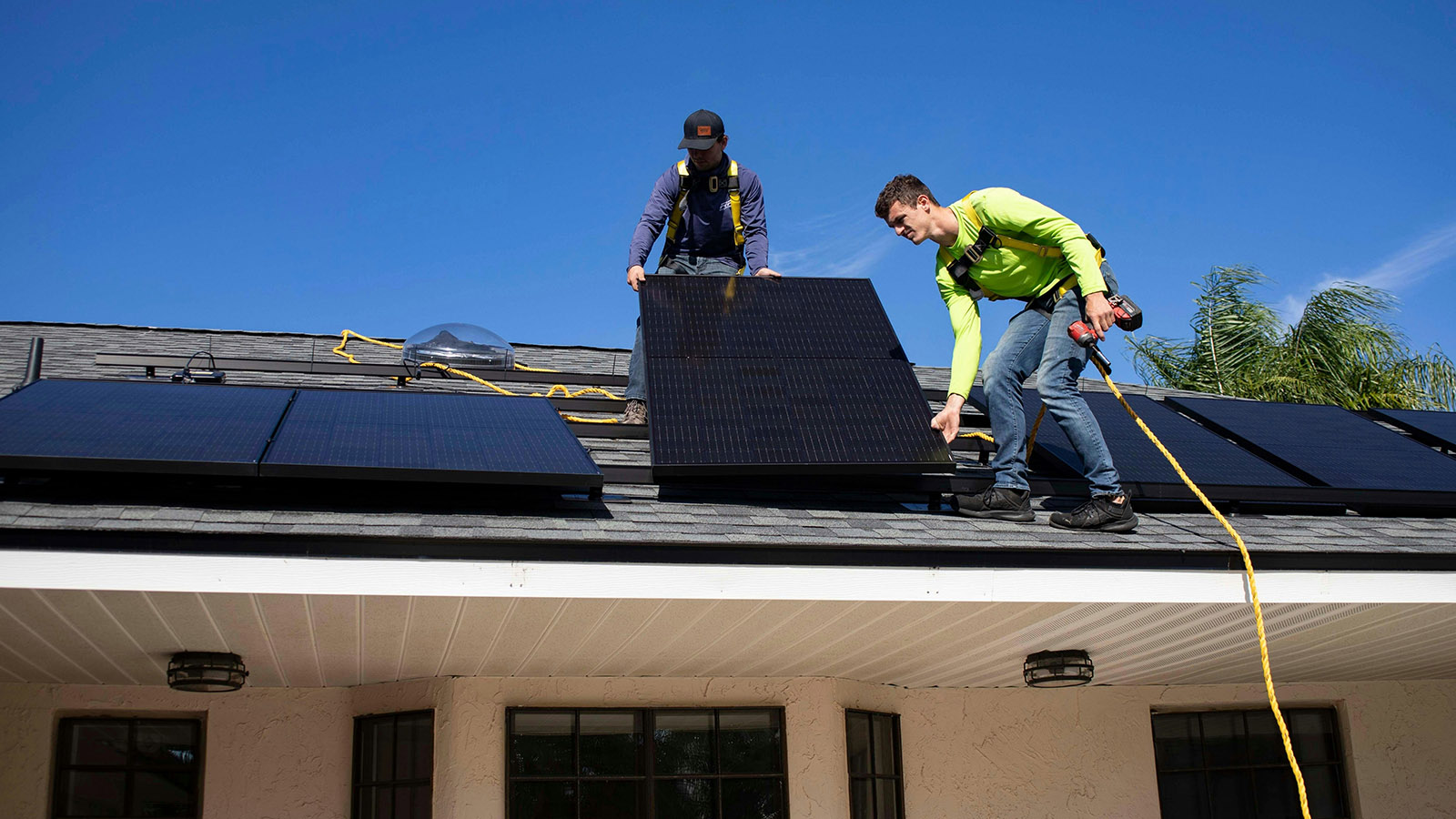
Career Opportunities in Solar Energy
The solar energy sector is experiencing unprecedented growth, with over 7.1 million jobs in solar PV alone as of 2023. For professionals considering a career shift into renewable energy, solar offers pathways across R&D, manufacturing, project development, and operations.
