
Renewable energy jobs · Materials Engineering
-
Expired
 Devens, Massachusetts, United StatesOn-site Full time More than 3 months ago
 -
Expired
 San Jose, California, United StatesOn-site Internship More than 3 months agoUS$34–37 hourly
 -
Expired
San Jose, California, United StatesOn-site Full time More than 3 months agoUS$130,400–187,600 annually
-
Expired
 New York, NY, United States + 4 locationsFlexible Full time More than 3 months ago
 -
Expired
 Alameda, California, United StatesOn-site Full time More than 3 months agoUS$133,900–157,500 annually
 -
Expired
San Jose, California, United StatesOn-site Internship More than 3 months agoUS$34–37 hourly
-
Expired
Mumbai, IndiaOn-site Full time More than 3 months ago
Materials Engineering Jobs in Renewable Energy
Materials engineers in renewable energy design and qualify the substances that decide whether a clean-power technology actually works at scale: silicon wafer purity for solar cells, electrode formulations for batteries, glass-fibre composites for 100-metre wind blades, and plasma-facing tiles for fusion reactors. It is one of the few disciplines where a single composition tweak can move the levelised cost of energy by double-digit percentages, which is why every serious clean-tech build-out hires materials specialists before it hires anyone else.
The U.S. Bureau of Labor Statistics projects 7% employment growth for materials engineers through the early 2030s, with renewable energy and electric mobility cited among the strongest demand drivers. Listings on Rejobs cluster around fusion start-ups, solar module makers, battery gigafactories, and wind-blade manufacturers, mirroring where capital is currently flowing into hard materials problems.
Where the openings concentrate
Fusion is the loudest hiring signal right now. Commonwealth Fusion Systems is staffing its SPARC tokamak in Devens, Massachusetts with computational materials scientists, nuclear materials engineers, and cable-magnet specialists; Helion Energy hires across its Everett, Washington campus for similar profiles; Kairos Power runs a parallel pipeline in Alameda for molten-salt and ceramic work tied to its KP-FHR reactor. Solar manufacturers stay busy too: Silfab Solar for crystalline-silicon process engineering, Epishine for roll-to-roll organic PV, and the Tyndall National Institute in Cork for next-generation perovskite solar cells. On the storage side, Verkor and Antora Energy are hiring electrode and thermal-battery materials engineers, while Nordex keeps blade-materials roles open across its wind portfolio.
What employers actually need in 2026
Three shifts are reshaping the brief. First, perovskite photovoltaics moved from lab curiosity to commercial reality in 2025: single-junction cells hit 27% efficiency and silicon-tandem devices passed 34.5%, and the first gigawatt-scale perovskite lines were announced. Companies now need engineers who can crack the stability and encapsulation problems that still cap field lifetime. Second, recyclable wind blades are leaving pilot scale: thermoplastic resins like Arkema's Elium and the ZEBRA project's full-blade prototypes are pushing manufacturers to hire composites specialists who can rework an entire materials supply chain, an opening for anyone with a foothold in battery recycling or other circular-economy work. Third, fusion's commercial timeline collapsed: developers building demonstrator devices need people who understand 14 MeV neutron damage, high-field superconducting magnets, and tritium-handling chemistries, skills that two years ago lived only in national labs. Most of those roles now sit on nuclear fusion job boards rather than government sites.
What the work looks like day-to-day
The role splits roughly into three modes. R&D positions, common at fusion start-ups, university institutes like Tyndall, and corporate labs, involve characterisation work, sample synthesis, and writing IP. Manufacturing-process roles dominate at solar and battery employers and revolve around yield, defect analysis, and cost-down on the bill of materials. Field and lifecycle roles, growing fast on the wind side, focus on blade inspection, failure forensics, and end-of-life recovery. Combining a materials background with computational skills (DFT, finite-element modelling, ML-driven discovery) or with regulatory expertise (RoHS, REACH, conflict-mineral sourcing) commands the strongest premium: both are scarce, both are increasingly mandatory.
Last updated on Jun 12, 2026 | Report an issue
Get job alerts
Get alerts for Materials Engineering jobs
Join Talent Pool
Let clean energy employers find you
Featured jobs





Renewable energy blog posts
-

Renewable Energy Forecast for 2030
By 2030, renewables are poised to supply nearly half of global electricity, with solar and wind leading this explosive expansion. In this data-driven piece, we explore job creation forecasts, supply chain bottlenecks, and policy hurdles. -

Fastest Growing Renewable Energy Sector: Data and Trends
In 2023, solar photovoltaics surged by 32.59%, officially making it the fastest-growing renewable energy source worldwide. Yet offshore wind, which soared by 57.87% in 2021, remains a formidable competitor in total electricity output due to its high capacity factor. This concise overview highlights how policy incentives, cost reductions, and manufacturing advances are propelling solar to the forefront of the global energy transition. -
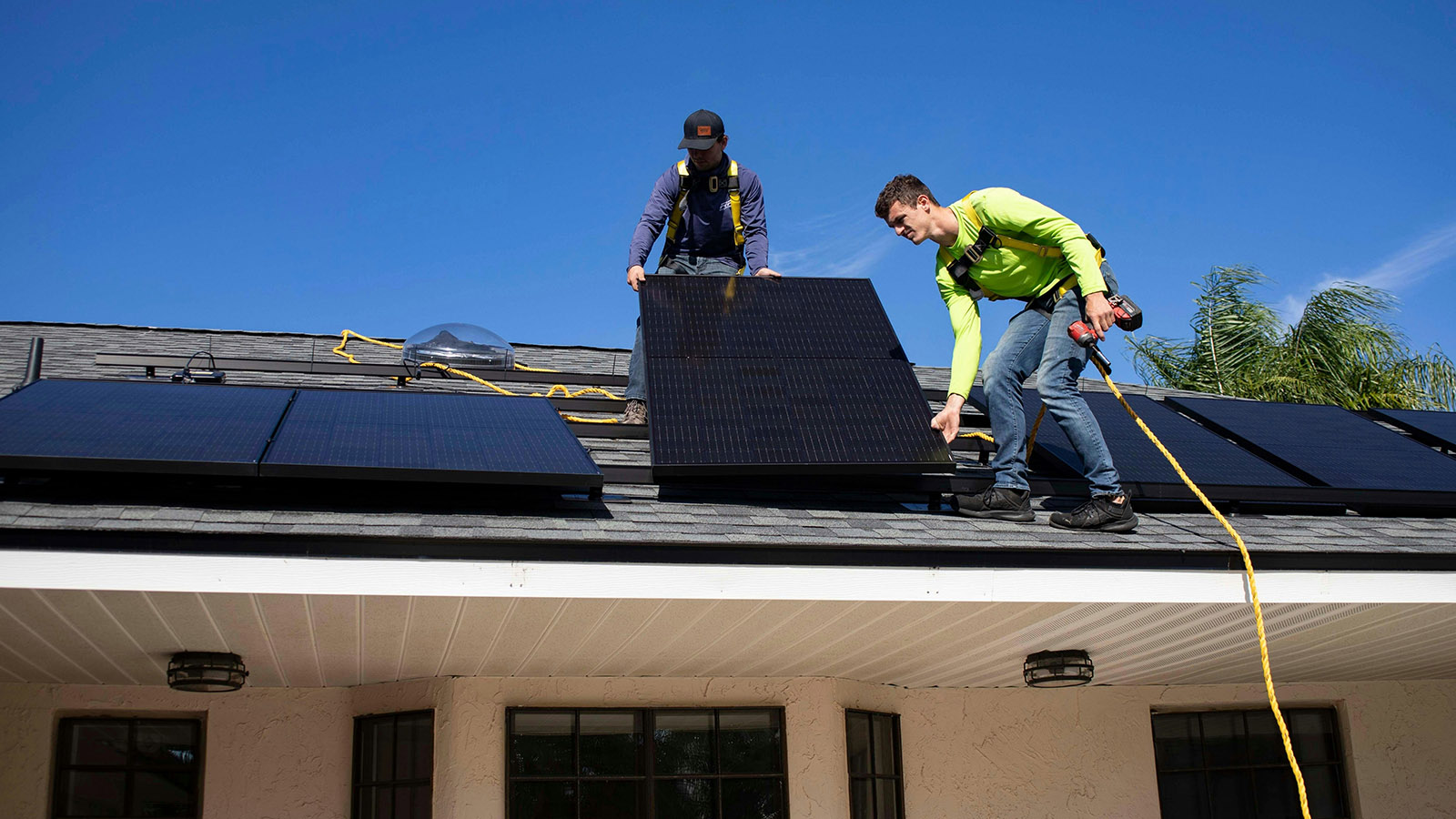
Career Opportunities in Solar Energy
The solar energy sector is experiencing unprecedented growth, with over 7.1 million jobs in solar PV alone as of 2023. For professionals considering a career shift into renewable energy, solar offers pathways across R&D, manufacturing, project development, and operations.
