
Renewable energy jobs · Wind O&M
-

-
 On-site Full time 3 days ago
 -
On-site Full time 3 days ago
-
On-site Full time 3 days ago
-
Windsor, Nova Scotia, Canada + 1 locationOn-site Full time 3 days ago
-
-
 Hybrid Full time 3 days ago
 -
 Hybrid Full time 3 days ago
 -
 London, United Kingdom + 1 locationOn-site Full time 3 days ago
 -
 Flexible Full time 3 days ago
 -
 On-site Full time 3 days ago
 -
On-site Full time 3 days ago
-
 On-site Full time 3 days ago
 -

-

Wind O&M Jobs in Renewable Energy
Wind operations and maintenance (O&M) covers the inspection, repair, and performance management of wind turbines throughout their 25-30 year operational life - from scheduled component replacements to emergency fault diagnosis at hub height. The global wind O&M market reached $28.6 billion in 2025, and with the wind energy fleet approaching 2.1 TW of installed capacity worldwide, the workforce needed to keep these machines running is growing faster than the workforce needed to build new ones.
What wind O&M work actually involves
The split between planned and unplanned work defines the rhythm of O&M roles. Scheduled maintenance - lubrication, bolt torquing, filter changes, electrical testing - happens one to three times per year per turbine, depending on manufacturer protocols and operating hours. Unplanned work is where the skill premium lies: diagnosing a pitch system fault from SCADA alarm data, replacing a main bearing at 80 metres, or troubleshooting converter failures that cost thousands per hour of downtime.
What distinguishes wind O&M from maintenance in other industries is the combination of height, weather dependence, and remote location. A technician servicing onshore turbines in Schleswig-Holstein and one working from a service vessel in the North Sea share the same fundamental knowledge, but their working conditions, safety protocols, and logistics chains are different enough to constitute separate career tracks. Offshore roles typically pay 20-40% more, reflecting the physical demands and multi-week rotation schedules.
Who hires and how the market is structured
The O&M market splits between OEM service (manufacturer-led) and independent service providers (ISPs). OEMs like Vestas, Nordex, and ENERCON typically maintain turbines during the initial warranty period and offer full-service contracts beyond it. ISPs like Deutsche Windtechnik and Global Wind Service compete on price and flexibility, often servicing mixed-fleet portfolios where asset owners want a single contractor across multiple turbine platforms. OEM technicians specialise deeply in one platform; ISP technicians build breadth across manufacturers.
Bremen and Hamburg remain the densest European hubs for wind O&M positions, reflecting Northern Germany's concentration of both manufacturers and operational fleets. The UK - particularly Scotland - is a growing centre for offshore O&M, while North America's job market is strongest in the central plains states.
In-demand roles and specialisations
The most frequently advertised positions are wind turbine technicians at various seniority levels, from entry-level technicians handling routine inspections to lead technicians managing site teams. Blade maintenance has emerged as a distinct specialisation, with dedicated teams using rope access or drone technology to inspect and repair composite structures. Beyond hands-on work, the sector needs site managers, performance engineers, and coordinators who turn operational data into decisions.
The Global Wind Workforce Outlook 2025-2030 projects a need for 628,000 wind technicians globally by 2030, up from roughly 475,000 in 2025. The industry faces a projected 6-8% shortage of skilled technicians by 2028, partly because workforce scaling takes up to a decade - training programmes cannot compress years of field experience.
Technology reshaping the work
Remote condition monitoring is now standard in over half of new wind farms, and drone deployment for blade inspections has grown by 60% in recent years. Predictive maintenance - using vibration analysis, oil particle counts, and thermal imaging to catch failures before they happen - is steadily replacing the older run-to-failure model. For technicians, this means growing expectations of data literacy alongside traditional mechanical and electrical skills.
Repowering is creating a parallel demand stream. Europe's early-2000s fleet is reaching end of design life - Germany alone has over 8,000 onshore turbines older than 20 years - and each requires either life extension engineering or full replacement. Both paths need experienced O&M professionals who understand the specific failure modes and structural limits of ageing hardware.
Last updated on Apr 3, 2026 | Report an issue
Get job alerts
Get alerts for Wind O&M jobs
Join Talent Pool
Let clean energy employers find you
Featured jobs





Renewable energy blog posts
-

Renewable Energy Forecast for 2030
By 2030, renewables are poised to supply nearly half of global electricity, with solar and wind leading this explosive expansion. In this data-driven piece, we explore job creation forecasts, supply chain bottlenecks, and policy hurdles. -

Fastest Growing Renewable Energy Sector: Data and Trends
In 2023, solar photovoltaics surged by 32.59%, officially making it the fastest-growing renewable energy source worldwide. Yet offshore wind, which soared by 57.87% in 2021, remains a formidable competitor in total electricity output due to its high capacity factor. This concise overview highlights how policy incentives, cost reductions, and manufacturing advances are propelling solar to the forefront of the global energy transition. -
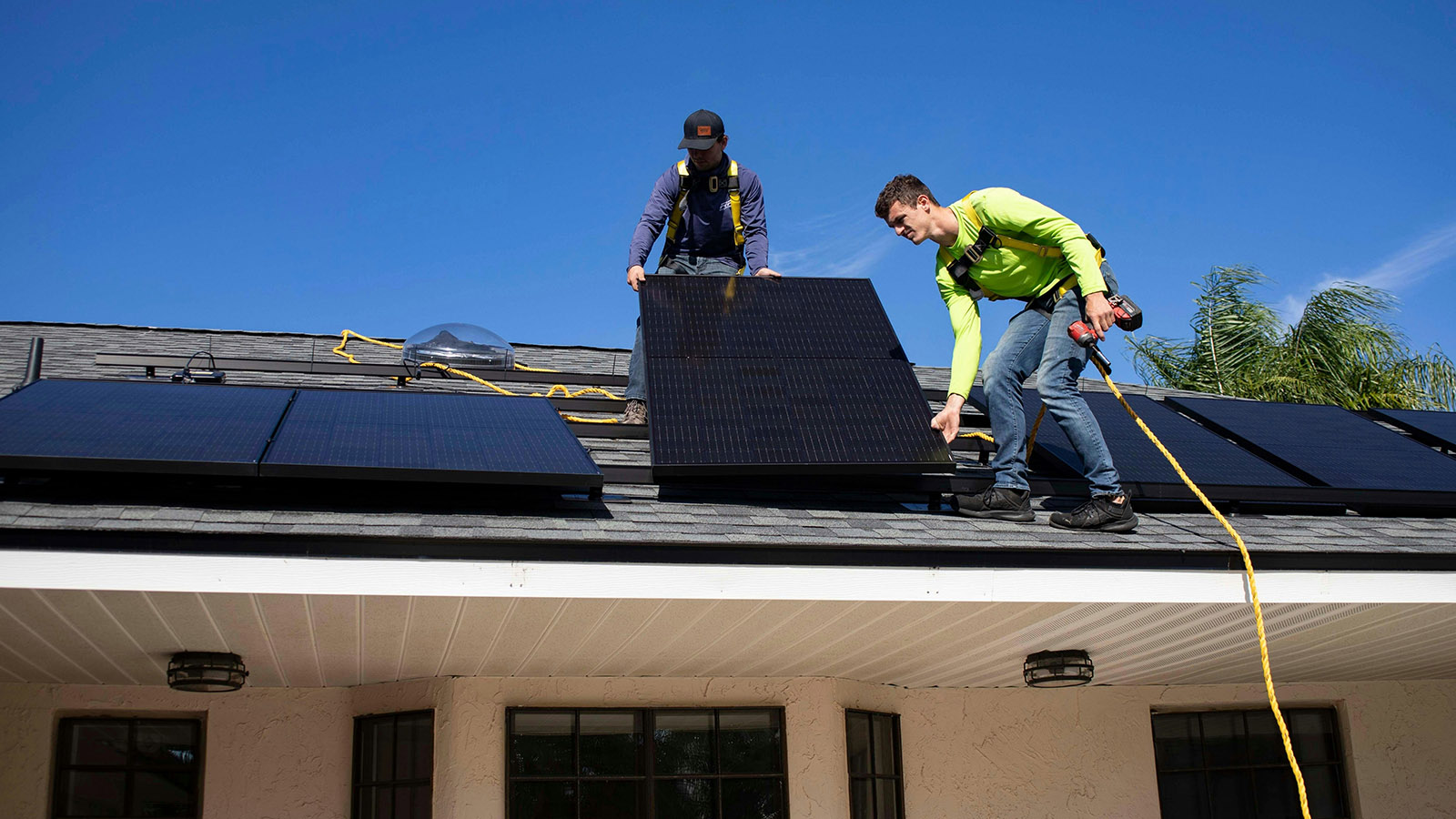
Career Opportunities in Solar Energy
The solar energy sector is experiencing unprecedented growth, with over 7.1 million jobs in solar PV alone as of 2023. For professionals considering a career shift into renewable energy, solar offers pathways across R&D, manufacturing, project development, and operations.
