
Renewable energy jobs · Energy Asset Valuation
-
 On-site Full time A day ago
 -

-
 Flexible Full time A day ago
 -

-
-

-
-
 New York, NY, United States + 1 locationHybrid Full time A day ago
 -
 On-site Full time A day ago
 -
-

-
 On-site Full time A day ago
 -
 On-site Full time A day ago
 -
Expired
 Calgary, CanadaOn-site Full time 6 days ago

Energy Asset Valuation Jobs in Renewable Energy
Energy asset valuation is the work of pricing operating and pipeline renewables - solar farms, wind portfolios, battery projects, hydropower assets - so they can be acquired, refinanced, sold, or impaired on a balance sheet. The job sits where project finance meets engineering: a valuation analyst builds a model that has to reconcile generation forecasts (P50/P90 yields from a resource assessment), PPA structures, merchant tail assumptions, curtailment risk, O&M cost curves, refinancing scenarios, and a cost of capital that has moved meaningfully in the last three years.
The work has been at the centre of a record M&A cycle. Europe cleared roughly US$36.9 billion of renewables transactions in 2025, with battery storage and ready-to-build solar dominating the deal book and traded battery capacity alone surpassing 11 GW (M&A Community). Sector valuation multiples climbed to 9.7x EBITDA, up from 8.5x in 2024, even as transaction volumes fell - fewer deals, larger tickets, tougher diligence. Lazard's 2025 LCOE+ still benchmarks utility-scale renewables at a 7.7% after-tax WACC (60% debt at 8%, 40% equity at 12%); models that price below that benchmark are scrutinised line by line.
Who hires
Three segments dominate. The largest is the developer-IPP segment - companies like Invenergy, Clearway Energy Group, BayWa r.e., and Matrix Renewables - where analysts support project finance, portfolio rotation, and acquisition pipelines. Hub locations skew toward Berlin, Madrid, London, Scottsdale, San Francisco, and Sydney: cities with developer headquarters next to operating fleets. The second is utilities and energy retailers running valuation in-house for refinancing and asset rotation, including Octopus Energy, Snowy Hydro, and Hydro Tasmania. The third is advisory - engineering consultancies, Big Four transaction services, and boutique energy due diligence firms working both sides of the table.
What sits behind the job title
Postings come in under a wide spread of titles: Sr Financial Analyst, Senior Analyst Business Development & M&A, Investment Analyst Renewables, Valuation Analyst, Working Student Financial Modelling. The common requirements: a project-finance modelling background, comfort with three-statement build-outs that flex against scenario inputs (merchant power curves, basis risk, capacity payments), and increasingly some fluency with battery revenue stacks: tolling, ancillary services like FCAS or aFRR, capacity contracts, and arbitrage. The structural premium attaches to candidates who can model both project finance and battery revenue stacks; that combination is still scarce three years into the storage build-out.
Where compensation sits
Junior valuation analysts at European renewables developers run roughly €40-65k base, with London adding a 15-25% premium and developer-side bonuses tracking deal closings rather than calendar performance. Senior modellers with five-plus years sit at €85-130k base before carry or LTI on the deal side. Buy-side investment funds and infrastructure platforms pay a step above developers, but the workload concentrates around closings and quarterly NAV cycles. Pay benchmarks across UK and EU renewables roles are tracked in the Astute 2025 salary guide.
Last updated on Sep 9, 2026 | Report an issue
Get job alerts
Get alerts for Energy Asset Valuation jobs
Join Talent Pool
Let clean energy employers find you
Featured jobs




Renewable energy blog posts
-

Renewable Energy Forecast for 2030
By 2030, renewables are poised to supply nearly half of global electricity, with solar and wind leading this explosive expansion. In this data-driven piece, we explore job creation forecasts, supply chain bottlenecks, and policy hurdles. -

Fastest Growing Renewable Energy Sector: Data and Trends
In 2023, solar photovoltaics surged by 32.59%, officially making it the fastest-growing renewable energy source worldwide. Yet offshore wind, which soared by 57.87% in 2021, remains a formidable competitor in total electricity output due to its high capacity factor. This concise overview highlights how policy incentives, cost reductions, and manufacturing advances are propelling solar to the forefront of the global energy transition. -
Career Opportunities in Solar Energy
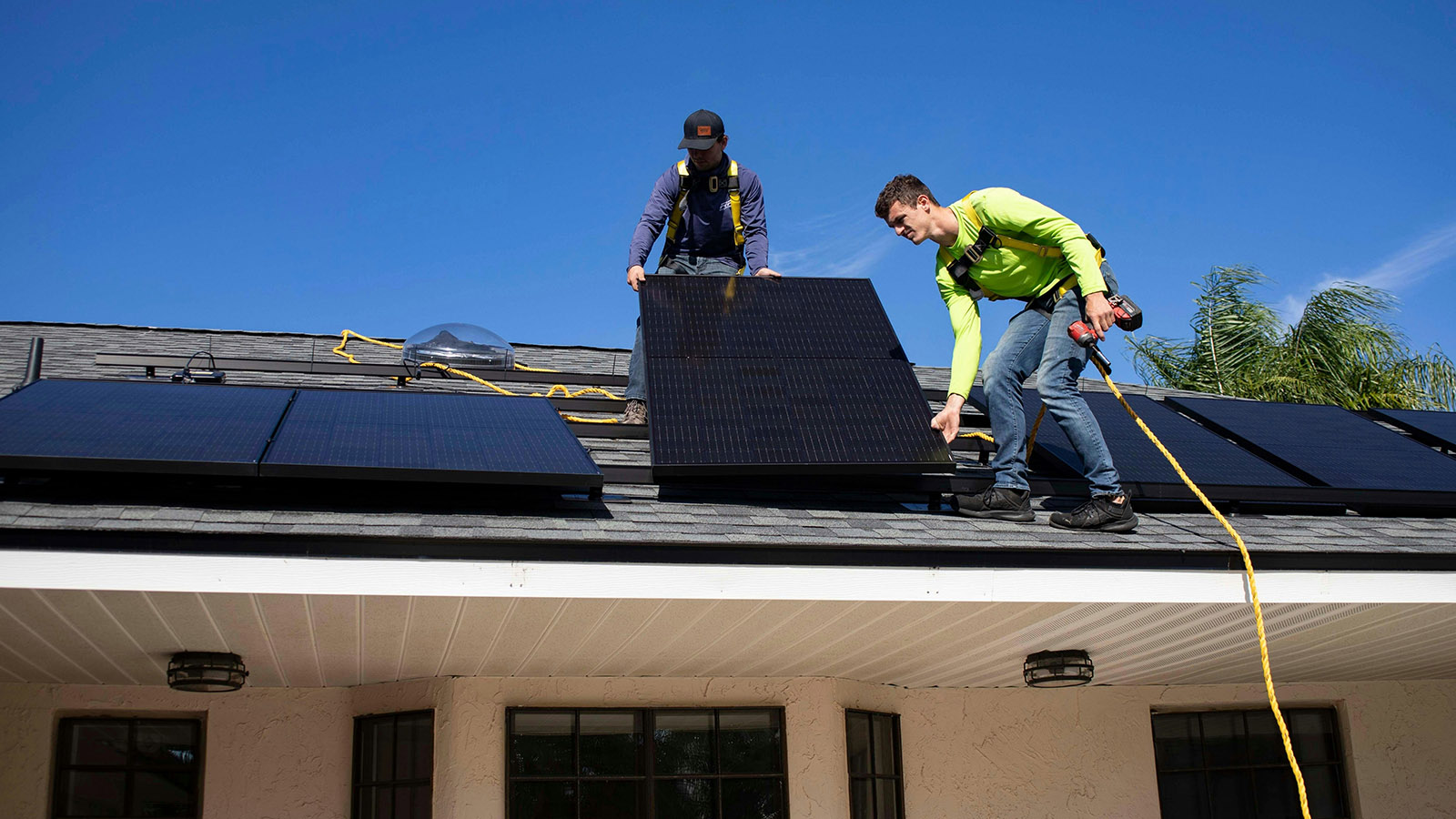
The solar energy sector is experiencing unprecedented growth, with over 7.1 million jobs in solar PV alone as of 2023. For professionals considering a career shift into renewable energy, solar offers pathways across R&D, manufacturing, project development, and operations.
