
Renewable energy jobs · Service Management
-
 Chennai, Tamil Nadu, India + 2 locationsOn-site Full time 2 days ago
 -
 On-site Full time 2 days ago
 -

-
Hybrid Full time 2 days ago
-
 On-site Full time 2 days ago
 -
 On-site Full time 2 days ago
 -
 On-site Full time 2 days ago
 -
 On-site Full time 2 days ago
 -
 Houston, Texas, United States + 2 locationsFlexible Full time 2 days ago
 -
Hybrid Full time 2 days ago
-
 On-site Full time 2 days ago
 -

-
On-site Internship 2 days ago
-

-
Service Management Jobs in Renewable Energy
Service Management roles install, commission, troubleshoot, and maintain operating renewable energy assets - from wind turbine gearboxes and solar inverters to battery systems and heat pumps - keeping installed capacity producing electricity rather than sitting idle. This is the operations side of the energy transition, where the workforce has shifted from building new plants to keeping the existing 2.1 TW global wind fleet running.
Why service is the structural growth story
Installation jobs follow the boom-bust cycle of policy and pricing. Service work compounds. Every gigawatt that comes online generates decades of maintenance contracts, and that is now the dominant driver of hiring. The Global Wind Energy Council projects the wind technician workforce must expand from roughly 475,000 in 2025 to 628,000 by 2030, a 50% increase driven less by new construction than by the existing fleet ageing out of OEM warranties. WindEurope estimates Europe alone needs 7,000 additional blade technicians, 6,500 field engineers, and 5,000 pre-assembly technicians before 2030.
Solar tells a quieter but parallel story. The EU solar workforce contracted from 865,000 in 2024 to a projected 825,000 in 2025 - the first decline in a decade. The drop is entirely on the installation side. Solar O&M employment has held flat or grown, because solar plants installed in 2018-2022 now generate predictable service demand regardless of how many new arrays go up this year.
Who hires service technicians
Wind OEMs remain the largest employers. Vestas runs the world's largest dedicated wind-service operation - over 13,000 technicians across 72 countries - and Nordex maintains a comparable field-service network across Europe. The more interesting hiring is happening outside the OEMs. Roughly a third of the global wind fleet has shifted, or is considering shifting, from OEM service contracts to Independent Service Providers, where component repair runs 40-70% cheaper than OEM replacement.
Diversification matters too. Plug Power hires service engineers for electrolysers and forklift refuelling fleets. Wärtsilä and Semco Maritime staff offshore service vessels. Freedom Solar Power, 1KOMMA5°, and Canadian Solar carry the highest service-technician headcount in rooftop solar and heat pumps.
What the roles pay
In Germany - where service jobs cluster around Hamburg, Berlin, Dresden, and Nuremberg - a wind turbine service technician earns around €59,000 annually, with experienced field engineers above €70,000. UK turbine technicians average £35,000 onshore (£30,000 to £42,000 typical), while offshore North Sea roles routinely clear £45,000 once GWO certification and helicopter underwater escape training are stacked. GWO credentials, held by more than 190,000 technicians with 122,008 trained in 2024 alone, are now baseline entry rather than a differentiator.
The German heat pump bottleneck
Germany's Heat Pump rollout is the most acute service workforce shortage in Europe. Installations fell from 356,000 in 2023 to roughly 260,000 in 2024, and the six-million-units-by-2030 target now looks unreachable without a 50% expansion of the qualified installer base. The European Labour Authority lists refrigeration, AC, and heat pump mechanics as deficit occupations in 11 EU member states, with Germany the focal point. Roles for SHK and Wärmepumpen specialists dominate the German listings.
Adjacent specialisations
Service Management overlaps closely with Wind O&M postings, and most service organisations recruit from each interchangeably.
Last updated on Sep 14, 2026 | Report an issue
Get job alerts
Get alerts for Service Management jobs
Join Talent Pool
Let clean energy employers find you
Featured jobs




Renewable energy blog posts
-

Renewable Energy Forecast for 2030
By 2030, renewables are poised to supply nearly half of global electricity, with solar and wind leading this explosive expansion. In this data-driven piece, we explore job creation forecasts, supply chain bottlenecks, and policy hurdles. -

Fastest Growing Renewable Energy Sector: Data and Trends
In 2023, solar photovoltaics surged by 32.59%, officially making it the fastest-growing renewable energy source worldwide. Yet offshore wind, which soared by 57.87% in 2021, remains a formidable competitor in total electricity output due to its high capacity factor. This concise overview highlights how policy incentives, cost reductions, and manufacturing advances are propelling solar to the forefront of the global energy transition. -
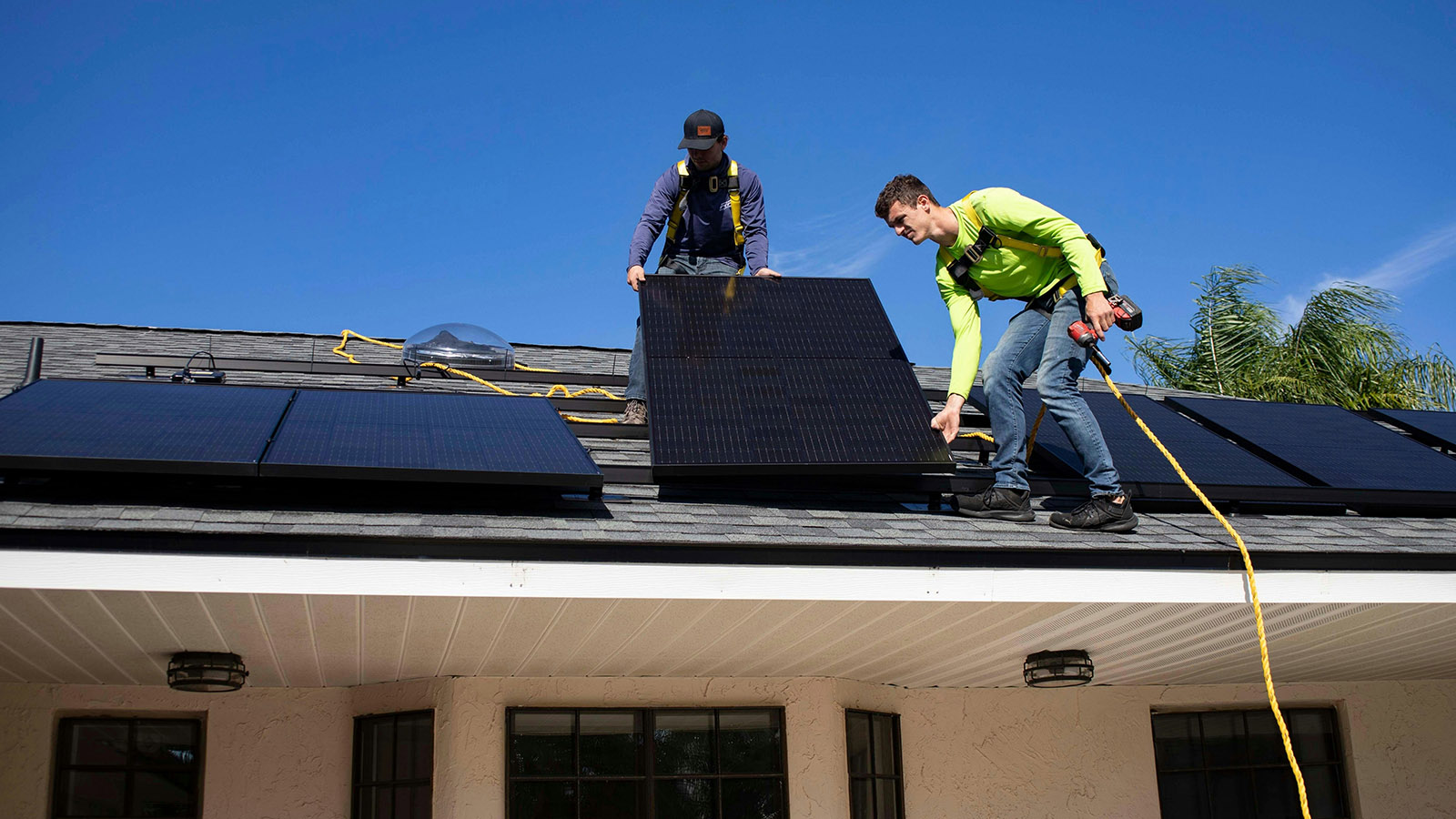
Career Opportunities in Solar Energy
The solar energy sector is experiencing unprecedented growth, with over 7.1 million jobs in solar PV alone as of 2023. For professionals considering a career shift into renewable energy, solar offers pathways across R&D, manufacturing, project development, and operations.
