
Renewable energy jobs · AI for Energy
-
 Helsinki, Finland + 2 locationsHybrid Full time Today
 -
 Madrid, Spain + 1 locationFlexible Full time Today
 -
 Hybrid Full time Today
 -
 Flexible Full time Today
 -
 Flexible Full time Today
 -
 On-site Full time Today
 -
-
 Hybrid Full time Today
 -
 Hybrid Full time Today
 -
-
-
Hybrid Full time Today
-

-
-
 Hybrid Full time Today
AI for Energy Jobs in Renewable Energy
AI for energy roles apply machine learning, optimisation algorithms, and large data pipelines to the specific problems of generating, moving, and selling clean electricity: weather-driven generation forecasting, grid balancing, asset failure prediction, electricity market bidding, and customer-side flexibility. The European market for AI in energy reached around EUR 1 billion in 2025, with renewable energy management already accounting for roughly 35% of that spend, and forecasts pointing to near ten-fold growth by 2034.
These are not generic data-science jobs ported into utility wrappers. The problems differ. A weather model that misses by 5% on retail demand forecasting is a rounding error; the same miss on wind generation, fed into a day-ahead bid, can move a balance responsible party into imbalance penalties. The skills overlap with artificial intelligence and machine learning more broadly, but useful work in the sector requires domain literacy: how a TSO clears its balancing market, what a digital twin of a wind farm actually models, why an electrolyser stack behaves differently from a battery.
Where the hiring is
Three clusters dominate listings on Rejobs. Software-native energy retailers and aggregators are the most active: Hamburg-based Rabot Energy, a dynamic-tariff supplier, is among the most aggressive AI hirers in the German renewables market, with roles spanning agentic automation, applied AI engineering, and data platform work. Equipment OEMs and grid players form the second cluster - Siemens Energy hires AI program managers and AI information-security specialists for turbine fleet analytics and grid software. The third is independent power producers and asset-performance vendors, with Lithuanian utility Ignitis Group and US-based Power Factors hiring data scientists and platform engineers for renewable portfolio analytics.
Listings cluster around Hamburg, Berlin, Vilnius, London, and the Bay Area. The mid-sized employer (101 to 1,000 staff) is the bulk of the market - this is not a sector dominated by hyperscalers.
Roles and skill premiums
The recurring job titles tell the story: Applied AI Engineer, AI Solutions Engineer, AI Automation Engineer, AI Program Manager, and Senior Data Engineer for grid-telemetry pipelines. Domain-specific titles - forecasting, electricity-trading algorithm developer, energy analytics specialist - command a premium over generic ML roles, because the supply of candidates who can read both a Python notebook and a single-line diagram is thin.
Where the field is going
The IEA's Energy and AI report estimates that AI-enabled grid management could unlock up to 175 GW of additional transmission capacity from existing lines, and save USD 110 billion annually in power-plant operations by 2035. Two policy anchors shape European demand from here: the European Commission's Strategic Roadmap for Digitalisation and AI in the Energy Sector, published 3 June 2026, which prioritises sovereign EU AI solutions for grid operators; and the staged rollout of national capacity markets that pay for virtual power plant participation, the natural customer for AI-optimised flexible-load portfolios. Adjacent specialisms worth tracking include digital twin engineering for wind and battery assets.
Last updated on Sep 10, 2026 | Report an issue
Get job alerts
Get alerts for AI for Energy jobs
Join Talent Pool
Let clean energy employers find you
Featured jobs



Renewable energy blog posts
-

Renewable Energy Forecast for 2030
By 2030, renewables are poised to supply nearly half of global electricity, with solar and wind leading this explosive expansion. In this data-driven piece, we explore job creation forecasts, supply chain bottlenecks, and policy hurdles. -

Fastest Growing Renewable Energy Sector: Data and Trends
In 2023, solar photovoltaics surged by 32.59%, officially making it the fastest-growing renewable energy source worldwide. Yet offshore wind, which soared by 57.87% in 2021, remains a formidable competitor in total electricity output due to its high capacity factor. This concise overview highlights how policy incentives, cost reductions, and manufacturing advances are propelling solar to the forefront of the global energy transition. -
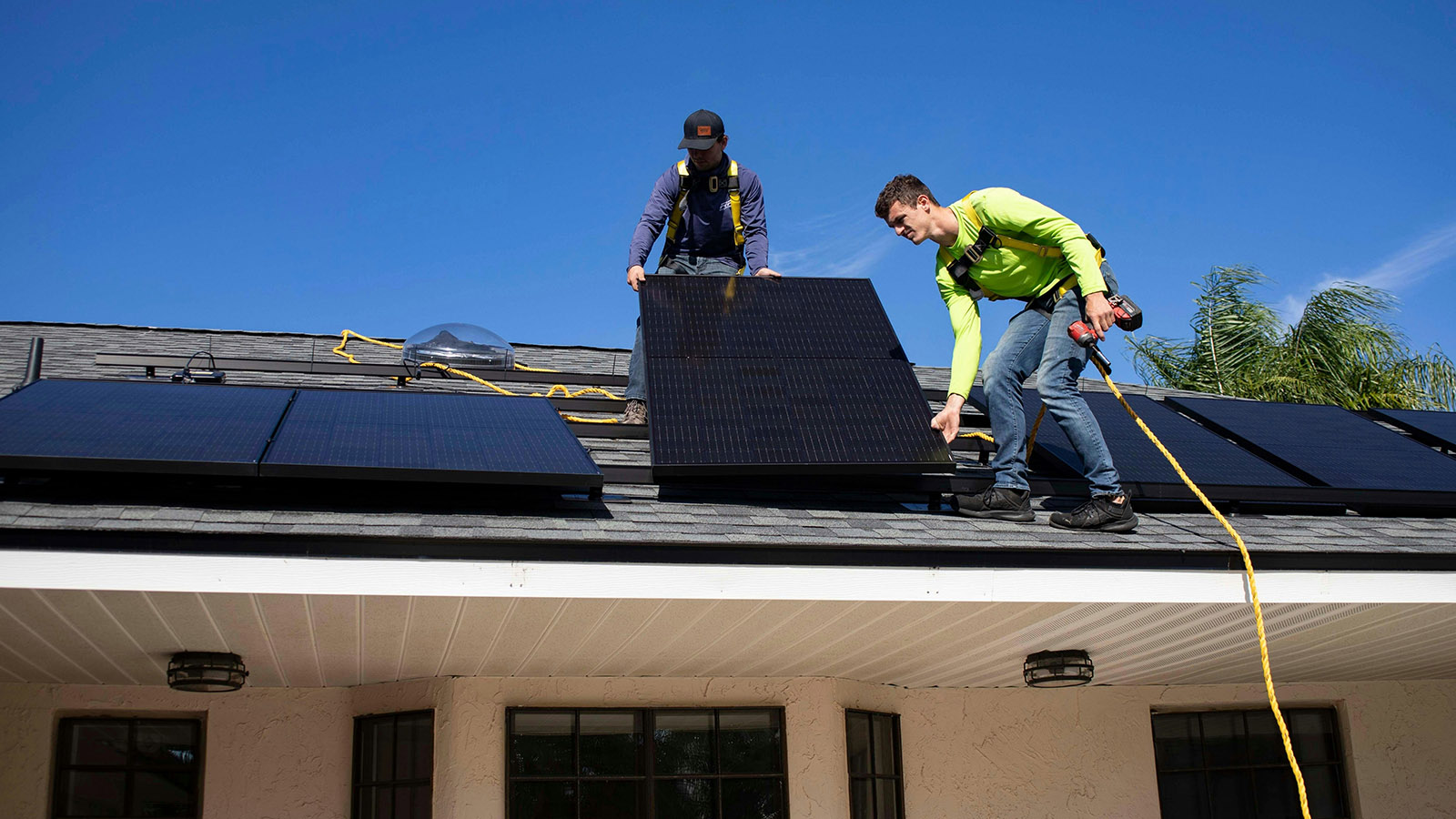
Career Opportunities in Solar Energy
The solar energy sector is experiencing unprecedented growth, with over 7.1 million jobs in solar PV alone as of 2023. For professionals considering a career shift into renewable energy, solar offers pathways across R&D, manufacturing, project development, and operations.
