
Renewable energy jobs · Digital Twin
-
 Krakow, Poland + 2 locationsHybrid Full time A day ago
 -
 Zagreb, Croatia + 1 locationFlexible Full time A day ago
 -

-

-
 On-site Full time A day ago
 -
 Hybrid Full time Today
 -
 Flexible Full time Today
 -
On-site Full time A day ago
-
-
 Hybrid Full time Today
 -
Zagreb, Croatia + 1 locationFlexible Full time Today
Digital Twin Jobs in Renewable Energy
Digital twin engineers build sensor-fed virtual replicas of physical energy assets - wind turbines, PV plants, batteries, substations, district heat networks - that operators use to simulate failures, optimise output, and rehearse maintenance before crews go into the field. The wind-turbine segment alone reached $1.18 billion in 2024 and is forecast to expand at 24.7% annually through 2033; the broader digital twin in energy market is projected to grow from $8.6 billion in 2025 to $38.4 billion by 2034. That growth tracks the moment digital twins stopped being a research curiosity and became part of how grid operators, utilities, and OEMs run their assets day to day.
What the work actually involves
The job is not to build a 3D model. It is to fuse SCADA streams, weather feeds, geospatial data, and physics-based simulation into one continuously updated representation of an asset, then expose that representation to operators and asset managers through dashboards or APIs. On wind farms the twin compares each turbine's measured power curve against the simulated optimum, flagging drift in blade pitch or yaw alignment - corrections that lift output by 5-10% per turbine. On distribution grids the twin is the layer that lets planners test connection requests against thousands of load scenarios. E.ON's network-wide digital twin, completed in 2025, maps over 700,000 km of cable, 55 million components, and 180,000 measurement points across roughly a third of Germany's distribution grid; it processed more than 410,000 connection requests for wind, solar, heat pumps and EV chargers in 2024 alone.
Who hires for digital twin work
Job titles cluster around three profiles. The first is the asset-modelling specialist - SCADA Modeller, BIM Specialist, Senior Control Systems Engineer - the person who knows the physical asset deeply enough to make the virtual one trustworthy. The second is the data-and-platform engineer - software engineer, backend engineer, AI engineer, Power Platform developer - who handles ingestion, storage, and the API layer. The third is the delivery lead - Digital Delivery Manager, Technical Product Owner, AI Solution Lead - who connects modelling work to commercial operations.
European utilities and OEMs dominate the active vacancies. Siemens Energy runs the largest twin-platform programme on the board, with engineering split between Berlin, Erlangen, Lisbon and Bengaluru. EnBW and Vattenfall hire into German wind and grid operations; ScottishPower anchors UK demand from Glasgow; Ignitis is the Baltic hub from Vilnius. HanseWerk runs a quieter but steady pipeline of monitoring and SCADA-modelling roles out of Quickborn for the Schleswig-Holstein onshore-wind fleet, and Berlin's district-heating operator BEW posts the most concentrated cluster of network-digitalisation vacancies. Engineering consultancies such as Ulteig embed twin specialists into multi-client utility advisory teams.
Skills that move the needle
Strong applicants combine domain knowledge - how a turbine actually fails, how a substation behaves under fault - with data-engineering fluency. Python and SQL are baseline; familiarity with the platforms operators actually use (Siemens PSS, GE Digital, ANSYS Twin Builder, Bentley iTwin, or Microsoft Power Platform for the lighter operational variants) separates a generalist data engineer from a candidate ready for an operational role. The fastest-growing sub-discipline is AI for energy integration: feeding twin outputs into machine-learning models that produce failure warnings hours ahead of breakdown - one 2025 study demonstrated reliable warnings 18 hours and 33 minutes before the actual component failure.
Where it is heading
Solar O&M is the next frontier. PV operators have been slower than wind operators to invest in plant-level twins, but 2025 is the inflection point: most large European utility-scale developers are now running pilots, and "PV twin engineer" is on track to appear as a distinct title in postings within the next 18 months, particularly at IPPs managing 500 MW+ portfolios. The roles that resist automation longest will be those that touch the asset model itself, not the dashboards built on top.
Last updated on Jun 4, 2026 | Report an issue

Get job alerts
Get alerts for Digital Twin jobs
Join Talent Pool
Let clean energy employers find you
Featured jobs



Renewable energy blog posts
-

Renewable Energy Forecast for 2030
By 2030, renewables are poised to supply nearly half of global electricity, with solar and wind leading this explosive expansion. In this data-driven piece, we explore job creation forecasts, supply chain bottlenecks, and policy hurdles. -

Fastest Growing Renewable Energy Sector: Data and Trends
In 2023, solar photovoltaics surged by 32.59%, officially making it the fastest-growing renewable energy source worldwide. Yet offshore wind, which soared by 57.87% in 2021, remains a formidable competitor in total electricity output due to its high capacity factor. This concise overview highlights how policy incentives, cost reductions, and manufacturing advances are propelling solar to the forefront of the global energy transition. -
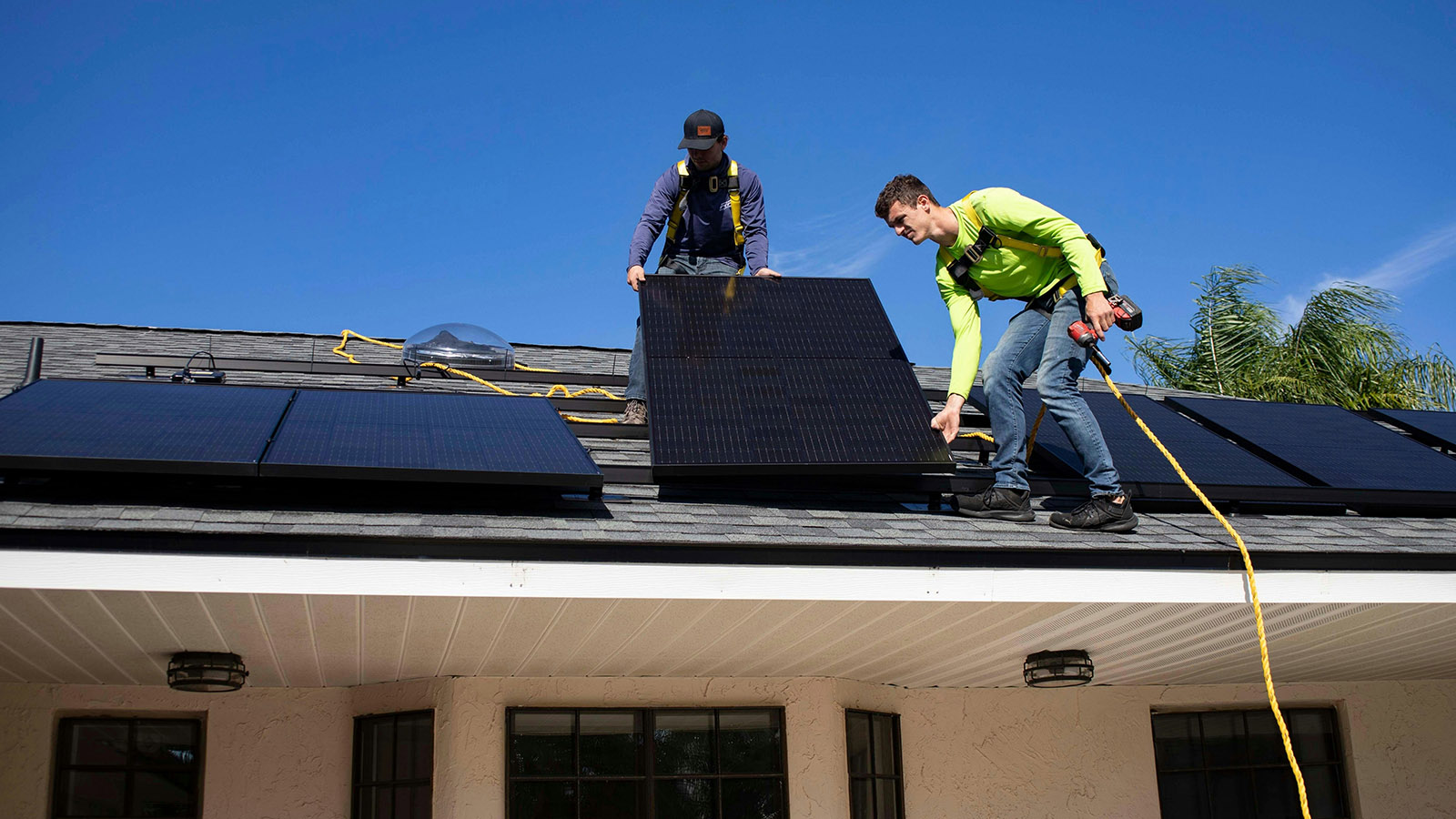
Career Opportunities in Solar Energy
The solar energy sector is experiencing unprecedented growth, with over 7.1 million jobs in solar PV alone as of 2023. For professionals considering a career shift into renewable energy, solar offers pathways across R&D, manufacturing, project development, and operations.
