
Renewable energy jobs · Talent Acquisition & Management
-
Expired
 Munich, GermanyFlexible Contract position More than 3 months ago
 -
Expired
 Brisbane, AustraliaOn-site Full time More than 3 months ago
 -
Expired
 Dallas, Texas, United StatesOn-site Internship More than 3 months ago
 -
Expired
 Washington, D.C., United StatesHybrid Full time More than 3 months agoUS$65,000–70,000 annually
 -
Expired
 UgandaOn-site Full time More than 3 months ago
 -
Expired
 Arlington, Virginia, United StatesOn-site Full time More than 3 months ago
 -
Expired
Munich, GermanyFlexible Internship More than 3 months ago
Talent Acquisition & Management Jobs in Renewable Energy
Talent acquisition and management roles in renewable energy involve sourcing, hiring, onboarding, and developing the engineers, technicians, project managers, and commercial staff who build and operate solar farms, wind turbines, grid-storage assets, and electrolyser plants. These professionals - recruiters, HR business partners, heads of people, learning and development specialists - sit at the bottleneck of the energy transition: in 2024, global renewable employment reached 16.6 million, but growth slowed to just 2.3% year-on-year, the first material slowdown IRENA has recorded.
That gap between project pipelines and people pipelines defines the work. LinkedIn's 2025 Global Green Skills Report found green hiring is growing at 7.7% annually while the share of workers with green skills grows at only 4.3% - a near-2x deficit. Workers with green skills are hired at rates 46.6% higher than the global workforce average. The implication for renewable recruiters is uncomfortable: they aren't just competing against other renewable companies, they're competing against finance, logistics, and tech firms increasingly embedding energy and ESG capabilities into mainstream roles.
Where the hardest hiring happens
The most acute shortages are in skilled trades, not desks. GWEC projects the wind industry needs 628,000 technicians in construction and O&M by 2030 versus roughly 475,000 today - a 153,000 shortfall. Only ~190,000 technicians have been GWO-certified since 2012, and scaling a fully trained wind workforce takes up to a decade. This pushes Workforce Development and Training & Development to the centre of renewable HR strategy in ways that don't show up in software or finance hiring.
Solar is no easier: in 2024, 86% of US solar employers reported difficulty filling roles, with 26% calling it "very difficult". European solar employment grew 27% in a single year to ~826,000 by end-2023. The talent moving fastest tends to come from adjacent industries - particularly oil & gas, where GWEC estimates ~60% skills overlap with floating offshore wind, yet O&G still outpays renewables for the same competencies. The GWO/ECITB Cross-Skill Pilot was launched specifically to formalise that bridge.
Employers and team shapes
Companies recruiting heavily for talent acquisition roles span manufacturer-developers like Siemens Energy and Nordex, service firms like Global Wind Service, retail-energy disruptors like Octopus Energy, and emerging fusion players like Helion Energy. Common titles include Talent Acquisition Partner, HR Business Partner, Global Recruiter, and Head of People; in Germany the standard format is Recruiter (m/w/d), reflecting gender-neutral job advertising law. Germany dominates listing volume - Berlin, Hamburg, Munich, and Essen consistently lead Europe - followed by London, Madrid, Sydney, and Houston.
What's changing
Two structural shifts matter. First, the market is bifurcating. While most renewable employers expand, Ørsted announced cuts from ~8,000 to ~6,000 by 2027, creating a pool of experienced offshore-wind talent that competitors are actively recruiting. Second, the EU is institutionalising the talent pipeline: the Net-Zero Industry Act's skills academies (Battery, Solar, Raw Materials, with Wind and Hydrogen forthcoming) mean European Recruitment and Human Resources teams will increasingly hire from Brussels-coordinated pipelines rather than fragmented national vocational schools. For renewable talent acquisition professionals, the next five years will be less about volume and more about poaching strategy, certification orchestration, and learning curriculum design.
Last updated on May 21, 2026 | Report an issue
Get job alerts
Get alerts for Talent Acquisition & Management jobs
Join Talent Pool
Let clean energy employers find you
Featured jobs




Renewable energy blog posts
-

Renewable Energy Forecast for 2030
By 2030, renewables are poised to supply nearly half of global electricity, with solar and wind leading this explosive expansion. In this data-driven piece, we explore job creation forecasts, supply chain bottlenecks, and policy hurdles. -

Fastest Growing Renewable Energy Sector: Data and Trends
In 2023, solar photovoltaics surged by 32.59%, officially making it the fastest-growing renewable energy source worldwide. Yet offshore wind, which soared by 57.87% in 2021, remains a formidable competitor in total electricity output due to its high capacity factor. This concise overview highlights how policy incentives, cost reductions, and manufacturing advances are propelling solar to the forefront of the global energy transition. -
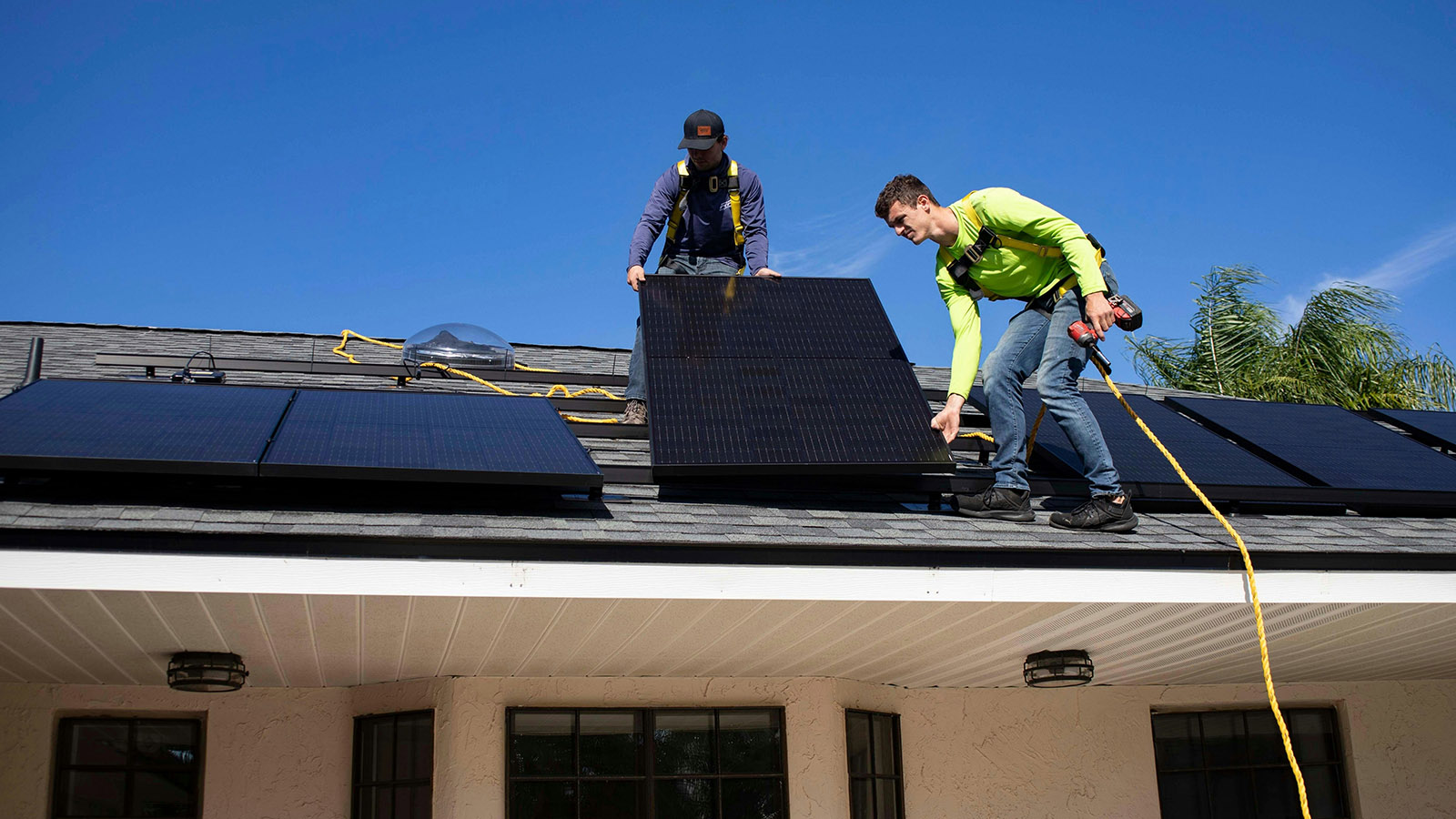
Career Opportunities in Solar Energy
The solar energy sector is experiencing unprecedented growth, with over 7.1 million jobs in solar PV alone as of 2023. For professionals considering a career shift into renewable energy, solar offers pathways across R&D, manufacturing, project development, and operations.
