
Renewable energy jobs · Leadership
-
Expired
 Helsinki, Finland + 1 locationFlexible Full time More than 3 months ago
 -
Expired
 Sydney, AustraliaFlexible Full time More than 3 months ago
 -
Expired
 Edenbridge, Kent, United KingdomHybrid Full time More than 3 months ago
 -
Expired
 Chennai, Tamil Nadu, IndiaOn-site Full time More than 3 months ago
 -
Expired
 Stirling, Scotland, United KingdomFlexible Full time 9 days ago
 -
Expired
 Stroud, United KingdomHybrid Full time More than 3 months ago
 -
Expired
 Glasgow, Scotland, United KingdomHybrid Full time More than 3 months agoFrom £65,600 annually
 -
Expired
 Copenhagen, Denmark + 1 locationOn-site Full time More than 3 months ago
 -
Expired
Stroud, United KingdomHybrid Full time More than 3 months ago£33,000–35,000 annually
-
Expired
 Matola, MozambiqueOn-site Full time More than 3 months ago
 -
Expired
Stroud, United KingdomHybrid Full time More than 3 months ago
-
Expired
 Glasgow, Scotland, United Kingdom + 2 locationsHybrid Full time More than 3 months ago£60,000–80,000 annually
 -
Expired
 Alpharetta, United StatesOn-site Full time More than 3 months agoUS$164,801–227,317 annually
 -
Expired
Glasgow, Scotland, United Kingdom + 1 locationHybrid Full time More than 3 months ago£28,380–29,980 annually
-
Expired
Sydney, AustraliaFlexible Full time More than 3 months ago
Leadership Jobs in Renewable Energy
Leadership in renewable energy means directing teams, programmes, and entire organisations through the technical and commercial decisions that determine whether clean energy projects actually get built, financed, and operated. The global energy sector employed 76 million people in 2024, growing at 2.2% annually - nearly double the economy-wide rate - and every layer of that expansion requires people who can lead it.
What makes renewable energy leadership distinct from management in other industries is the pace of concurrent change. A project director overseeing a 500 MW wind farm is navigating grid connection timelines, supply chain bottlenecks, permitting across multiple jurisdictions, and community opposition - simultaneously. A VP of operations at a solar developer must balance fleet performance across hundreds of sites while integrating battery storage into existing portfolios. The decisions are technical, but the job is fundamentally about people: assembling the right teams, holding them accountable, and making calls under uncertainty.
The leadership gap the sector cannot ignore
A study of 11,200 energy industry leaders found that "leading employees" ranked as the single most important competency - yet placed dead last in effectiveness out of 16 measured skills. That gap is not abstract. It shows up in project delays, high turnover among mid-career engineers, and organisations that promote strong technical performers into management roles without equipping them to lead. The pattern repeats across utilities, developers, and equipment manufacturers alike.
The demographic pressure compounds the problem. Between now and 2035, two out of every three new energy hires will be needed just to replace retiring workers. In renewables specifically, companies are scaling faster than the pipeline of experienced leaders can keep up with - a dynamic that makes leadership development not a nice-to-have but an operational bottleneck.
Who hires leaders in clean energy
Leadership roles span the full spectrum of renewable energy organisations. Transmission operators like TransGrid recruit programme directors and department heads to manage Australia's grid infrastructure buildout. Wind OEMs such as Vestas and component suppliers like KK Wind Solutions need regional managers, production supervisors, and heads of sales across multiple geographies. Developers including SSE Renewables and Iberdrola Renewables hire project directors and country managers to steer multi-billion-pound portfolios.
Fusion companies like Helion Energy and Commonwealth Fusion Systems are a newer source of leadership demand - fast-growing teams that need experienced managers who can impose structure on R&D-heavy organisations without stifling innovation.
What leadership roles look like in practice
The most common titles on Rejobs reflect the breadth of leadership work: Project Manager, Senior Project Manager, Crew Lead, Site Manager, Project Director, Operations Manager, and Production Supervisor. The German market adds regional and area business manager roles, reflecting the distributed nature of renewable assets across Länder.
Geography concentrates demand. Berlin, London, and Glasgow are the three strongest hubs for leadership postings, followed by Sydney, Hamburg, and Houston. The clustering makes sense - these are cities where developer headquarters, grid operators, and financing institutions overlap.
Skills that separate renewable energy leaders
Technical literacy matters more here than in most industries. A head of operations who cannot read a power curve or assess an EPC contractor's commissioning schedule will lose credibility with their team within weeks. But the research is clear that the sector's real deficit is in the human side: building cohesive teams, confronting underperformance directly, and retaining mid-career talent who have options elsewhere.
The combination that commands a premium is deep sector experience paired with commercial acumen - understanding both the physics and the spreadsheet. Leaders who can bridge engineering and finance, or navigate the interface between development and construction, are disproportionately valuable as projects grow in scale and complexity. Those who add cross-border experience to that mix - managing teams across European markets with different regulatory frameworks - are the hardest to find and the most sought after.
Last updated on Apr 4, 2026 | Report an issue
Get job alerts
Get alerts for Leadership jobs
Join Talent Pool
Let clean energy employers find you
Featured jobs




Renewable energy blog posts
-

Renewable Energy Forecast for 2030
By 2030, renewables are poised to supply nearly half of global electricity, with solar and wind leading this explosive expansion. In this data-driven piece, we explore job creation forecasts, supply chain bottlenecks, and policy hurdles. -

Fastest Growing Renewable Energy Sector: Data and Trends
In 2023, solar photovoltaics surged by 32.59%, officially making it the fastest-growing renewable energy source worldwide. Yet offshore wind, which soared by 57.87% in 2021, remains a formidable competitor in total electricity output due to its high capacity factor. This concise overview highlights how policy incentives, cost reductions, and manufacturing advances are propelling solar to the forefront of the global energy transition. -
Career Opportunities in Solar Energy
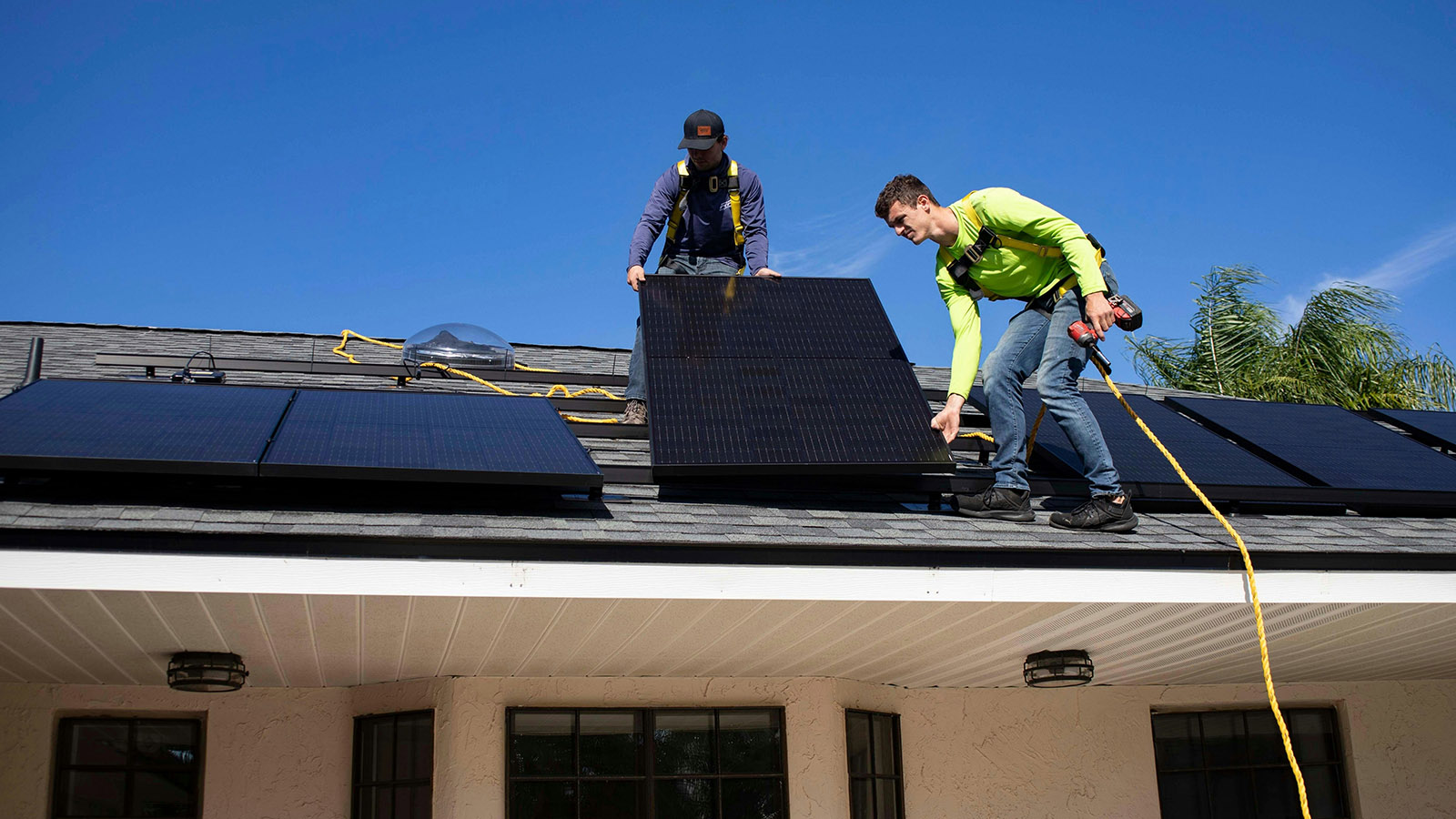
The solar energy sector is experiencing unprecedented growth, with over 7.1 million jobs in solar PV alone as of 2023. For professionals considering a career shift into renewable energy, solar offers pathways across R&D, manufacturing, project development, and operations.
